
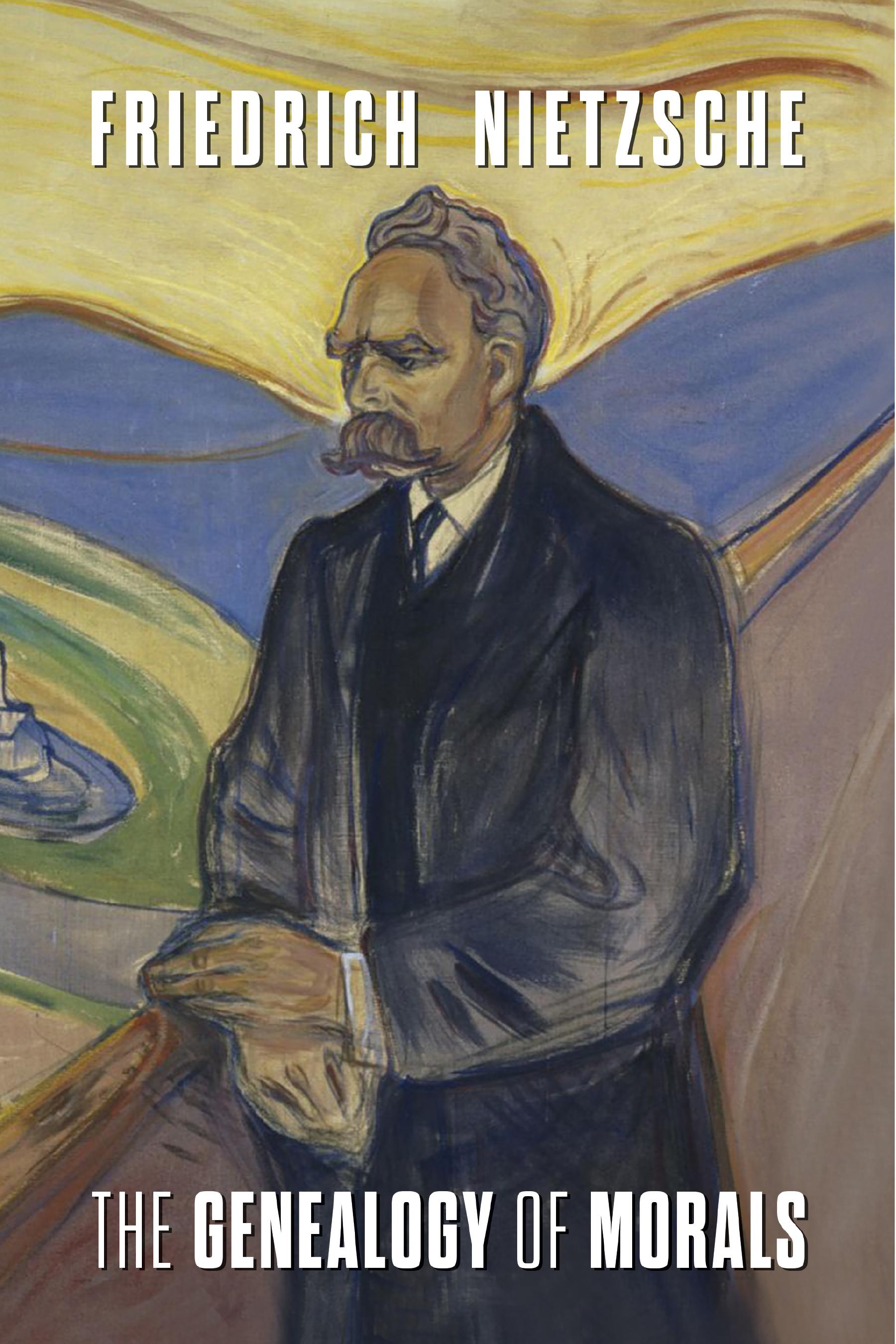
"Human history would be noting but a record of stupidity save for the cunning contributions of the weak."
The Genealogy of Morals is a collection of essays by Friedrich Nietzsche, one of the most interesting philosophers of the 19th century. His three interrelated treatises expand and follow through on concepts Nietzsche sketched out in Beyond Good and Evil. Important works on ethics and politics, the essays contain the author's "thoughts on the origin of our moral prejudices". It was written in response to his friend Paul Rée’s genealogical hypothesis of morality put forth in his work "The Origin of the Moral Sensations".
Finding Rée’s theory unsatisfactory, Nietzsche calls for an examination of moral values themselves.
The three essays are among Nietzsche's most sustained, cohesive and important works as they offer an interpretation and history of ethics which raises profoundly disquieting issues about the violence of both.
The Genealogy of Morals is a collection of essays by Friedrich Nietzsche, one of the most interesting philosophers of the 19th century. His three interrelated treatises expand and follow through on concepts Nietzsche sketched out in Beyond Good and Evil. Important works on ethics and politics, the essays contain the author's "thoughts on the origin of our moral prejudices". It was written in response to his friend Paul Rée’s genealogical hypothesis of morality put forth in his work "The Origin of the Moral Sensations".
Finding Rée’s theory unsatisfactory, Nietzsche calls for an examination of moral values themselves.
The three essays are among Nietzsche's most sustained, cohesive and important works as they offer an interpretation and history of ethics which raises profoundly disquieting issues about the violence of both.
- In the first essay Nietzsche sets up a contrast between what he calls "master" morality and "slave" morality and shows how strength and action have often been replaced by passivity and pessimism.
- The second essay, looks into the origins of guilt and punishment, and how the concept of justice was born.
- In the third essay, Nietzsche dissects the meaning of ascetic ideals showing that culture and morality, rather than being eternal truths, are human-made.
Betal nemt med kort, Klarna, Apple Pay eller Google Pay. Ikke tilfreds? Du har altid 14 dages fortrydelsesret. Læs mere i vores vilkår. Har du spørgsmål, så send os en mail på hello@memmo.org.
Memmo gør det nemmere at studere – uanset hvor du er i verden. Hos os samler du dine kursusbøger og smarte studieværktøjer ét sted: resuméer, quizzer, podcasts og flashcards. Og så er der Ted, din studieven, der svarer på alt, du undrer dig over. Over 50 000 studerende studerer allerede her – bygget til at hjælpe dig med at lære hurtigere og stresse mindre.
Du kan måske også lide
Køb bogen0