
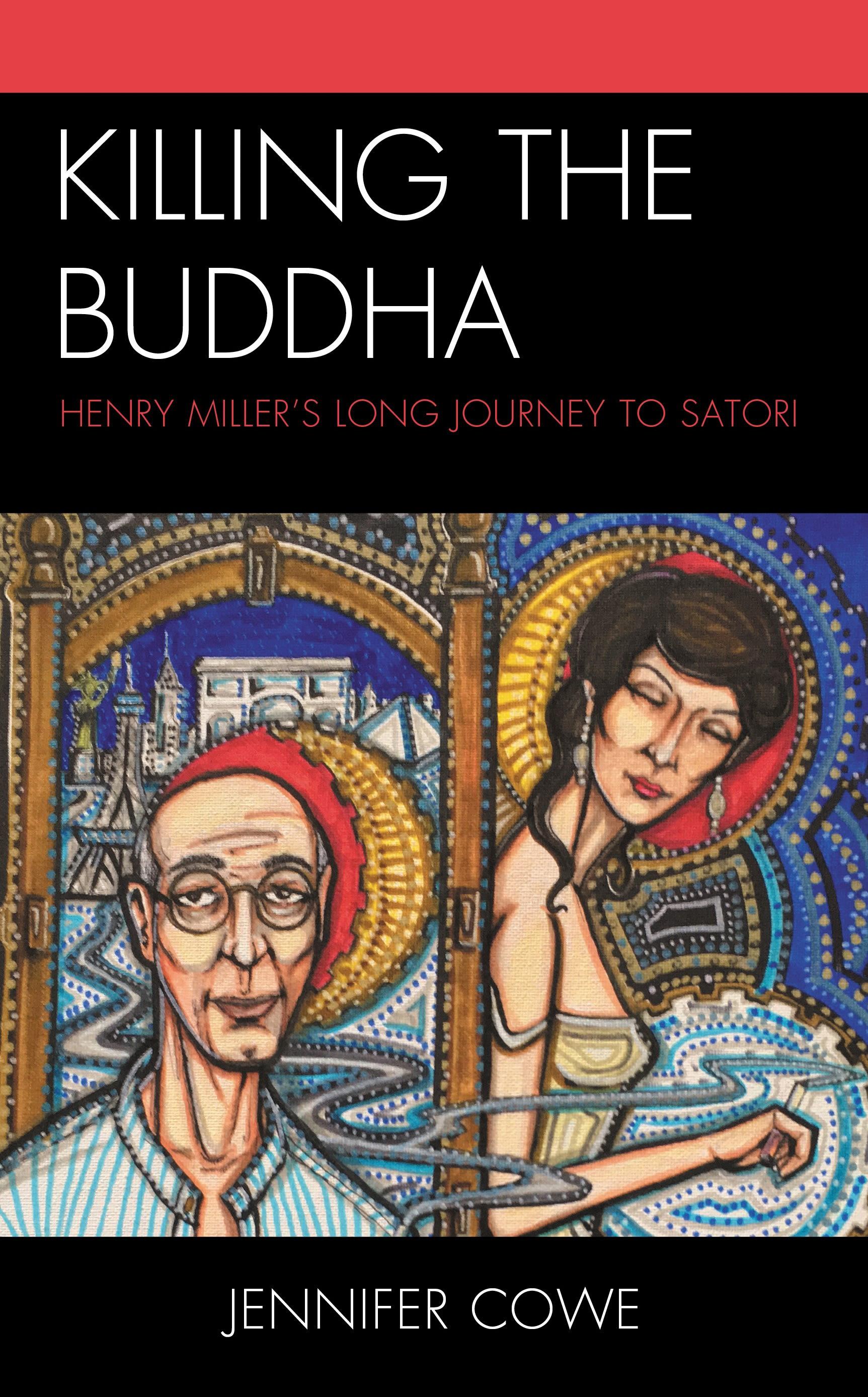
Incorporating the novels, pamphlets and letters of Henry Miller, Killing the Buddha argues for Miller’s written work to be considered as a whole in relation to the theme of Zen Buddhism, specifically the concept of Satori (awakening). By reading Miller’s literary output and letters as a spiritual journey to awakening, it is possible to chart his development as a writer, and offer insight into his repetitive use of biographical material. Reflecting upon the influence of Otto Rank and Henri Bergson on Miller’s conceptualization of the role of the writer, and then by examining his complex rejection of Surrealism, it is possible to show Miller’s burgeoning Zen Buddhism as a life-long quest for acceptance and authenticity explicitly explored within his work. With close readings of the ‘Obelisk Trilogy’ of the 1930s (Tropic of Cancer, Tropic of Capricorn and Black Spring) and The Rosy Crucifixion Trilogy (1949-1960), Miller’s complex journey to Satori is shown as a continuous progression from his early notorious novels through to the essays and pamphlets of his later career.
Betal nemt med kort, Klarna, Apple Pay eller Google Pay. Ikke tilfreds? Du har altid 14 dages fortrydelsesret. Læs mere i vores vilkår. Har du spørgsmål, så send os en mail på hello@memmo.org.
Memmo gør det nemmere at studere – uanset hvor du er i verden. Hos os samler du dine kursusbøger og smarte studieværktøjer ét sted: resuméer, quizzer, podcasts og flashcards. Og så er der Ted, din studieven, der svarer på alt, du undrer dig over. Over 50 000 studerende studerer allerede her – bygget til at hjælpe dig med at lære hurtigere og stresse mindre.