
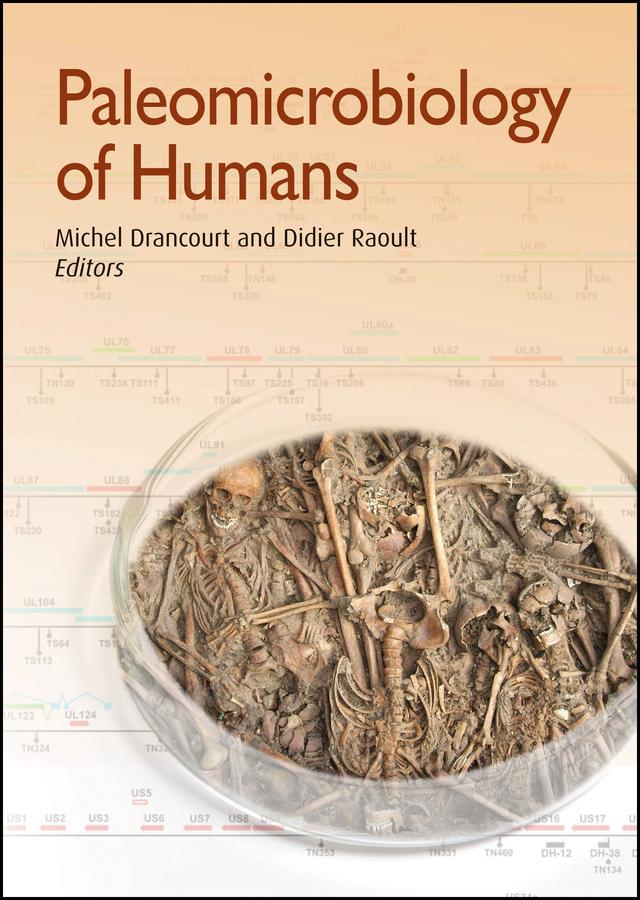
Only recently was it determined that two of the world's most devastating plagues, the plague of Justinian and the medieval Black Death, were caused by distinct strains of the same pathogen. Use of paleomicrobiological techniques led to this discovery. This work is just one example of the historical mysteries that this emerging field has helped to clarify. Others, such as when tuberculosis began to afflict humans, the role of lice in plague pandemics, and the history of smallpox, are explored and further illuminated in Paleomicrobiology of Humans.
Led by editors Michel Drancourt and Didier Raoult, the book's expert contributors address larger issues using paleomicrobiology. These include the recognition of human remains associated with epidemic outbreaks, identification of the graves of disasters, and the discovery of demographic structures that reveal the presence of an epidemic moment. In addition, the book reviews the technical approaches and controversies associated with recovering and sequencing very old DNA and surveys modern human diseases that have ancient roots.
Essentially, paleomicrobiologists aim to identify past epidemics at the crossroads of different specialties, including anthropology, medicine, molecular biology, and microbiology. Thus, this book is of great interest not only to microbiologists but to medical historians and anthropologists as well.
Paleomicrobiology of Humans is the first comprehensive book to examine so many aspects of this new, multidisciplinary, scientific field.
Betal nemt med kort, Klarna, Apple Pay eller Google Pay. Ikke tilfreds? Du har altid 14 dages fortrydelsesret. Læs mere i vores vilkår. Har du spørgsmål, så send os en mail på hello@memmo.org.
Memmo gør det nemmere at studere – uanset hvor du er i verden. Hos os samler du dine kursusbøger og smarte studieværktøjer ét sted: resuméer, quizzer, podcasts og flashcards. Og så er der Ted, din studieven, der svarer på alt, du undrer dig over. Over 50 000 studerende studerer allerede her – bygget til at hjælpe dig med at lære hurtigere og stresse mindre.