
Life in an Indigenous town during an understudied era of Haitian history
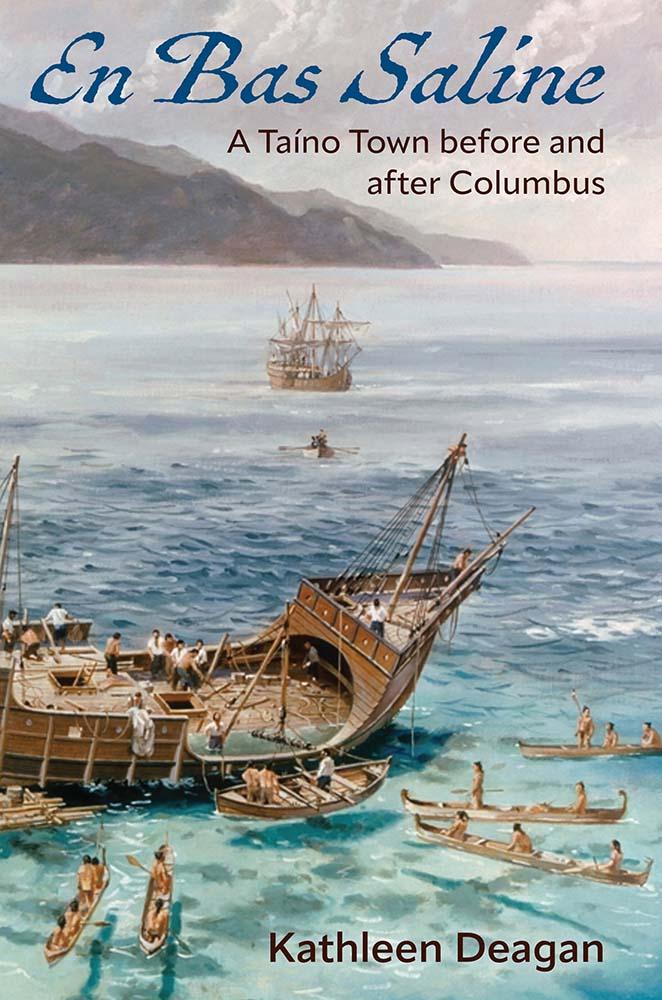
This book details the Indigenous Taíno occupation at En Bas Saline in Hispaniola between AD 1250 and 1520, showing how the community coped with the dramatic changes imposed by Spanish contact. En Bas Saline is the largest late precontact Taíno town recorded in what is now Haiti; the only one that has been extensively excavated and analyzed; and one of few with archaeologically documented occupation both before and after the arrival of Columbus in 1492. It is thought to be the site of La Navidad, Columbus’s first settlement, where the cacique Guacanagarí offered refuge and shelter after the sinking of the Santa María.
Kathleen Deagan provides an intrasite and spatial analysis of En Bas Saline by focusing on households, foodways, ceramics, and crafts and offers insights into social organization and chiefly power in this political center through domestic and ornamental material culture. Postcontact changes are seen in patterns of gendered behavior, as well as in the power base of the caciques, challenging the traditional assumption that Taíno society was devastatingly disrupted almost immediately after contact. En Bas Saline is the only archaeological account of the consequences of contact from the perspective of the Taíno peoples’ lived experience.
Betal nemt med kort, Klarna, Apple Pay eller Google Pay. Ikke tilfreds? Du har altid 14 dages fortrydelsesret. Læs mere i vores vilkår. Har du spørgsmål, så send os en mail på hello@memmo.org.
Memmo gør det nemmere at studere – uanset hvor du er i verden. Hos os samler du dine kursusbøger og smarte studieværktøjer ét sted: resuméer, quizzer, podcasts og flashcards. Og så er der Ted, din studieven, der svarer på alt, du undrer dig over. Over 50 000 studerende studerer allerede her – bygget til at hjælpe dig med at lære hurtigere og stresse mindre.