
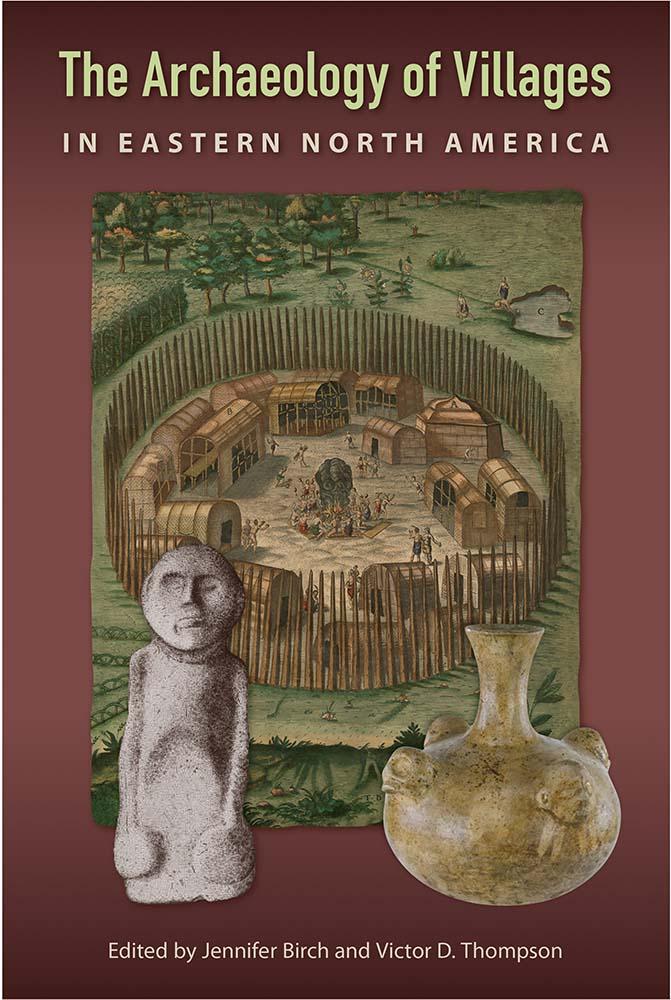
The emergence of village societies out of hunter-gatherer groups profoundly transformed social relations in every part of the world where such communities formed. Drawing on the latest archaeological and historical evidence, this volume explores the development of villages in eastern North America from the Late Archaic period to the eighteenth century.
Sites analyzed here include the Kolomoki village in Georgia, Mississippian communities in Tennessee, palisaded villages in the Appalachian Highlands of Virginia, and Iroquoian settlements in New York and Ontario. Contributors use rich data sets and contemporary social theory to describe what these villages looked like, what their rules and cultural norms were, what it meant to be a villager, what cosmological beliefs and ritual systems were held at these sites, and how villages connected with each other in regional networks. They focus on how power dynamics played out at the local level and among interacting communities.
Highlighting the similarities and differences in the histories of village formation in the region, these essays trace the processes of negotiation, cooperation, and competition that arose as part of village life and changed societies. This volume shows how studying these village communities helps archaeologists better understand the forces behind human cultural change.
Betal nemt med kort, Klarna, Apple Pay eller Google Pay. Ikke tilfreds? Du har altid 14 dages fortrydelsesret. Læs mere i vores vilkår. Har du spørgsmål, så send os en mail på hello@memmo.org.
Memmo gør det nemmere at studere – uanset hvor du er i verden. Hos os samler du dine kursusbøger og smarte studieværktøjer ét sted: resuméer, quizzer, podcasts og flashcards. Og så er der Ted, din studieven, der svarer på alt, du undrer dig over. Over 50 000 studerende studerer allerede her – bygget til at hjælpe dig med at lære hurtigere og stresse mindre.
Du kan måske også lide
Køb bogen0