
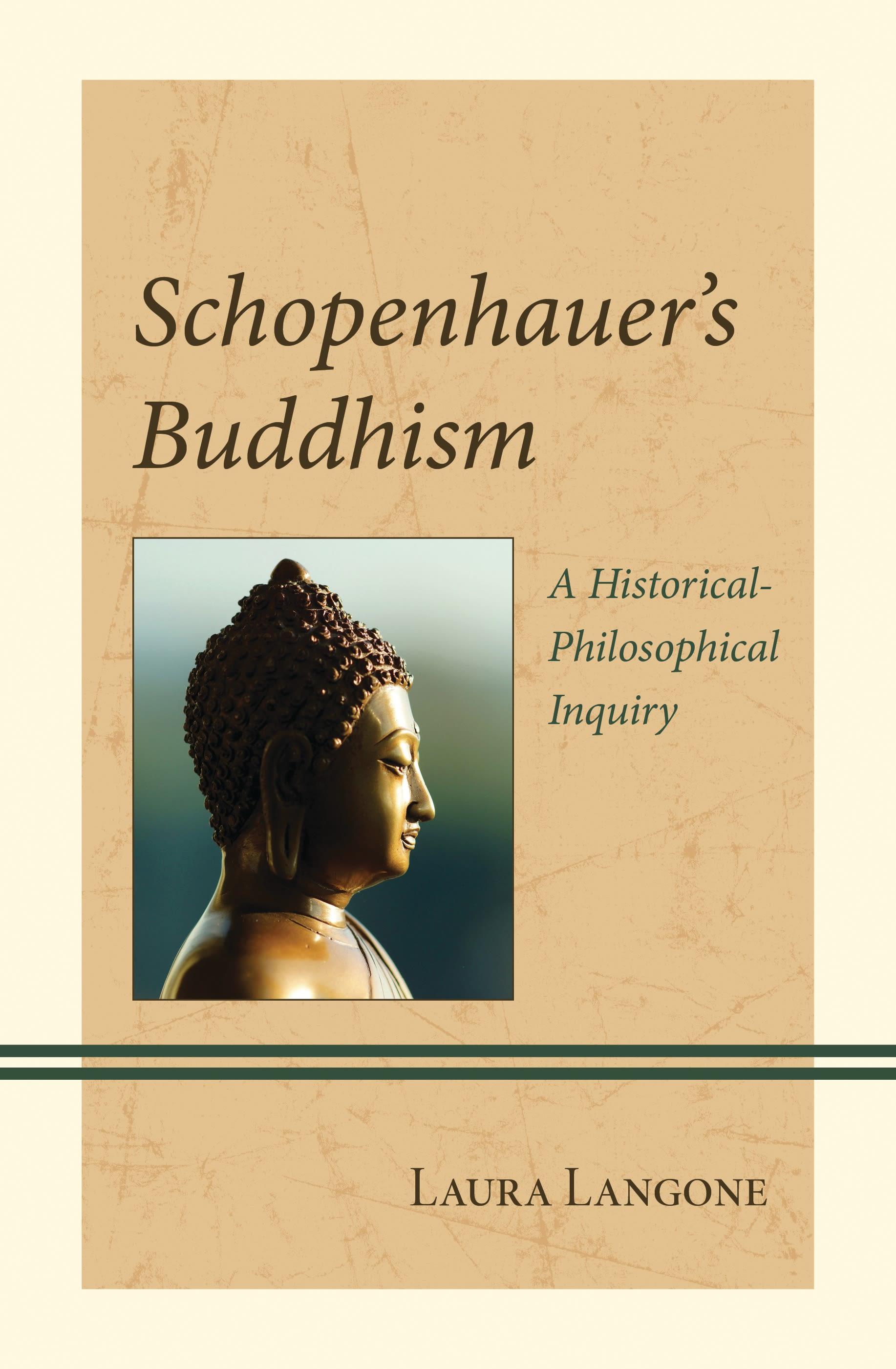
In a letter from May 10, 1852, to Adam von Doß, Arthur Schopenhauer declared himself to be a Buddhist. From 1825 until his death, he never stopped searching for more information on Buddhism, with his thirst for knowledge of it growing over time. Schopenhauer’s Buddhism: A Historical-Philosophical Inquiry is the first study to do justice to Schopenhauer’s passion for Buddhism, reconstructing the notions of Buddhism he acquired through his readings on Buddhism as well as their influence on his thought. Laura Langone examines what Buddhism meant for Schopenhauer, what kind of Buddhism Schopenhauer had in mind, and how Buddhism shaped his philosophy. This book examines how the assimilation of Buddhist tenets through his Buddhist sources led him to incorporate the Buddhist concept of palingenesis into his philosophical system, which introduced a radically new metaphysical framework. Ultimately, Schopenhauer’s incorporation of Buddhist palingenesis illustrates how Buddhism deeply spurred him to develop new and innovative ideas previously unthinkable in Western philosophy.
Betal nemt med kort, Klarna, Apple Pay eller Google Pay. Ikke tilfreds? Du har altid 14 dages fortrydelsesret. Læs mere i vores vilkår. Har du spørgsmål, så send os en mail på hello@memmo.org.
Memmo gør det nemmere at studere – uanset hvor du er i verden. Hos os samler du dine kursusbøger og smarte studieværktøjer ét sted: resuméer, quizzer, podcasts og flashcards. Og så er der Ted, din studieven, der svarer på alt, du undrer dig over. Over 50 000 studerende studerer allerede her – bygget til at hjælpe dig med at lære hurtigere og stresse mindre.