
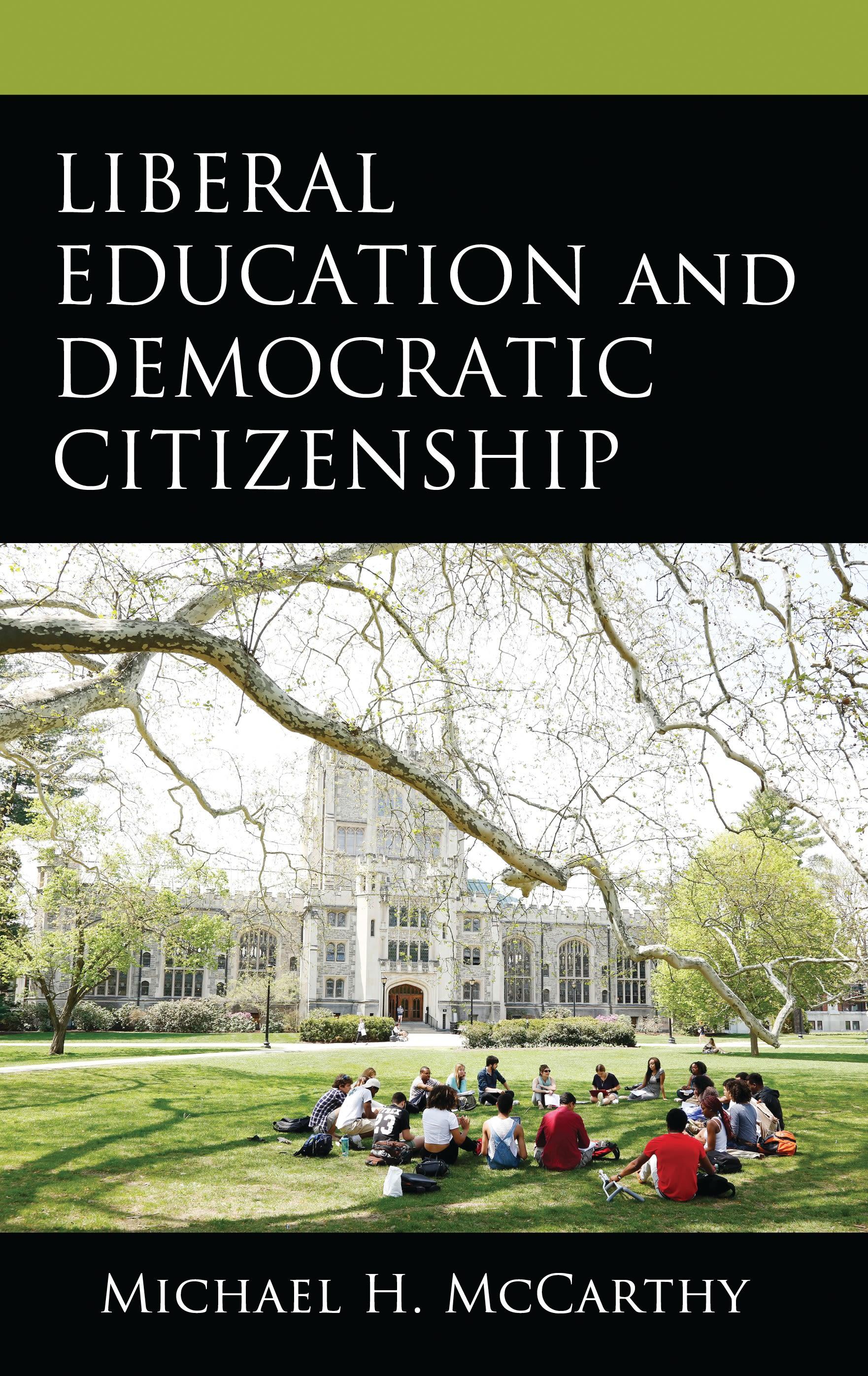
In Liberal Education and Democratic Citizenship, Michael H. McCarthy carefully describes the many crises confronting American democracy and identifies their philosophical, cultural, and institutional origins. He argues that a liberal education, properly understood, can address several of these crises effectively.
The book’s successive chapters explore the sources, areas, and levels of division in contemporary America, and show how they have created important disagreements about the major challenges we presently face and the credible solutions they require. McCarthy articulates what a liberal education actually is and why it is vitally important for both our personal and civic lives. He also clarifies the critical contrast between effective freedom, the aim of a liberal education, and the concepts of freedom within economic and political liberalism.
McCarthy addresses the distinctive educational challenges presented by modernity and post-modernity: their moral aspirations, acute historical consciousness, and passion for radical criticism, as well as the traditional (Tocqueville) and contemporary (William Galston and Charles Taylor) discontents of American democracy. A central part of the book’s unfolding argument is the enduring cultural contrast between the principles and aspirations of civic republicanism and the imperial assumptions of economics. This juxtaposition helps us to understand the power and limitations of the “stories we Americans live by” as well as the civic virtues we commonly need to create a free, just, and multi-racial America. These critical virtues, McCarthy argues, are the specific goal of a liberal and democratic education
The book’s successive chapters explore the sources, areas, and levels of division in contemporary America, and show how they have created important disagreements about the major challenges we presently face and the credible solutions they require. McCarthy articulates what a liberal education actually is and why it is vitally important for both our personal and civic lives. He also clarifies the critical contrast between effective freedom, the aim of a liberal education, and the concepts of freedom within economic and political liberalism.
McCarthy addresses the distinctive educational challenges presented by modernity and post-modernity: their moral aspirations, acute historical consciousness, and passion for radical criticism, as well as the traditional (Tocqueville) and contemporary (William Galston and Charles Taylor) discontents of American democracy. A central part of the book’s unfolding argument is the enduring cultural contrast between the principles and aspirations of civic republicanism and the imperial assumptions of economics. This juxtaposition helps us to understand the power and limitations of the “stories we Americans live by” as well as the civic virtues we commonly need to create a free, just, and multi-racial America. These critical virtues, McCarthy argues, are the specific goal of a liberal and democratic education
Betal nemt med kort, Klarna, Apple Pay eller Google Pay. Ikke tilfreds? Du har altid 14 dages fortrydelsesret. Læs mere i vores vilkår. Har du spørgsmål, så send os en mail på hello@memmo.org.
Memmo gør det nemmere at studere – uanset hvor du er i verden. Hos os samler du dine kursusbøger og smarte studieværktøjer ét sted: resuméer, quizzer, podcasts og flashcards. Og så er der Ted, din studieven, der svarer på alt, du undrer dig over. Over 50 000 studerende studerer allerede her – bygget til at hjælpe dig med at lære hurtigere og stresse mindre.