
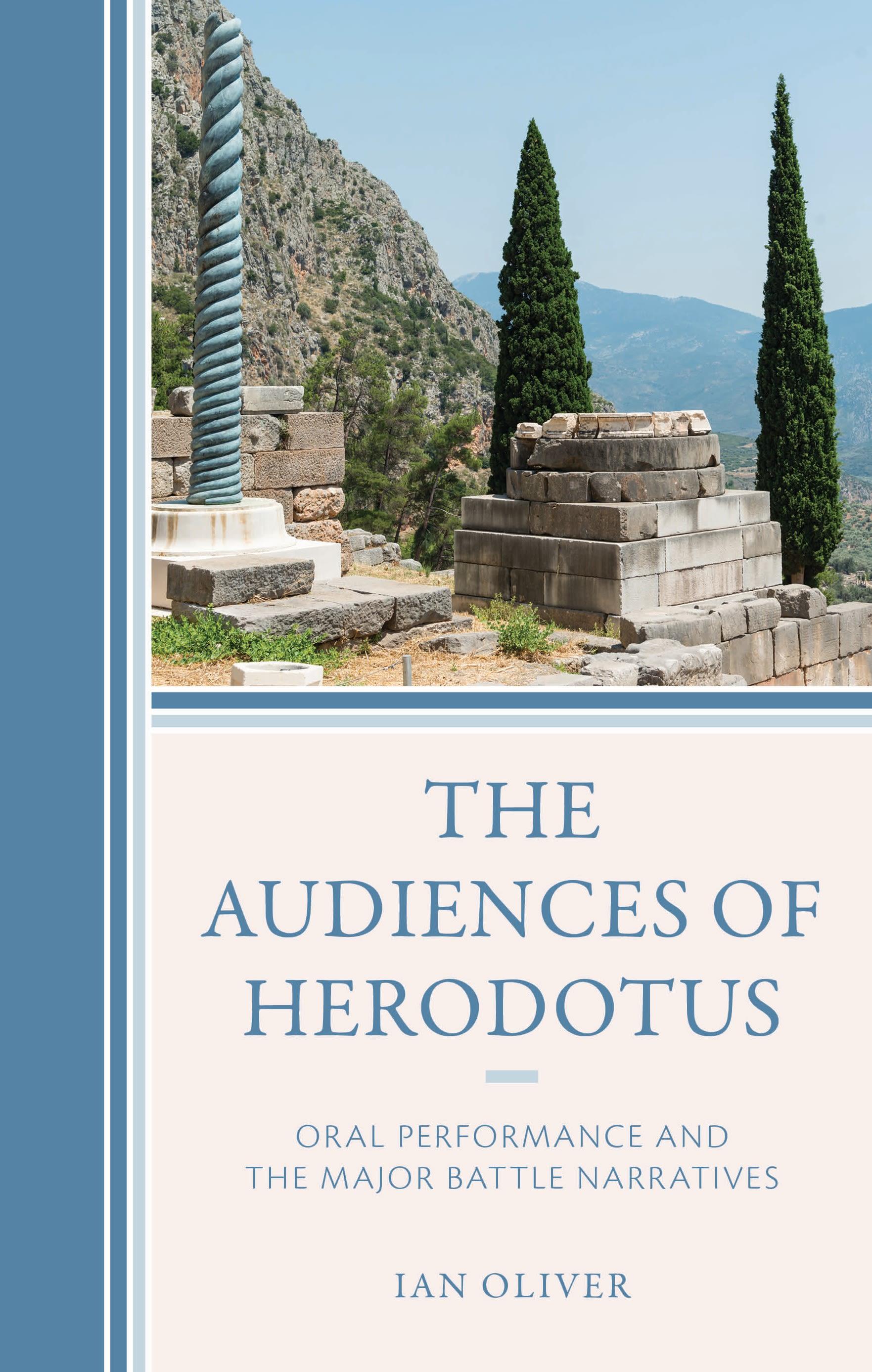
By recognizing the pervasive influence that Herodotus’s career as an oral performer had on his composition of the Histories, The Audiences of Herodotus: Oral Performance and the Battle Narratives argues that the Histories’ versions of the three most important battles in the Persian Wars—the battles of Thermopylae, Salamis, and Plataea—persistently and disproportionately advance the interests, biases, and political agendas of distinct audiences in the mid-fifth century, well before Herodotus assembled his famous work of history as it survives to us. The Salamis and Plataea narratives reflect a mid-century audience of Athenians and their allies; the Thermopylae narrative reflects an Amphictyonic audience gathered at the Pythian Festival. Ian Oliver concludes that, as a participant in a culture of wisdom performance (epideixis), Herodotus originally composed short, ideologically motivated performance pieces that he intended to promote tendentious reinterpretations of these momentous events, then relied on these narratives when he composed his final text: the unitary Histories.
Betal nemt med kort, Klarna, Apple Pay eller Google Pay. Ikke tilfreds? Du har altid 14 dages fortrydelsesret. Læs mere i vores vilkår. Har du spørgsmål, så send os en mail på hello@memmo.org.
Memmo gør det nemmere at studere – uanset hvor du er i verden. Hos os samler du dine kursusbøger og smarte studieværktøjer ét sted: resuméer, quizzer, podcasts og flashcards. Og så er der Ted, din studieven, der svarer på alt, du undrer dig over. Over 50 000 studerende studerer allerede her – bygget til at hjælpe dig med at lære hurtigere og stresse mindre.