
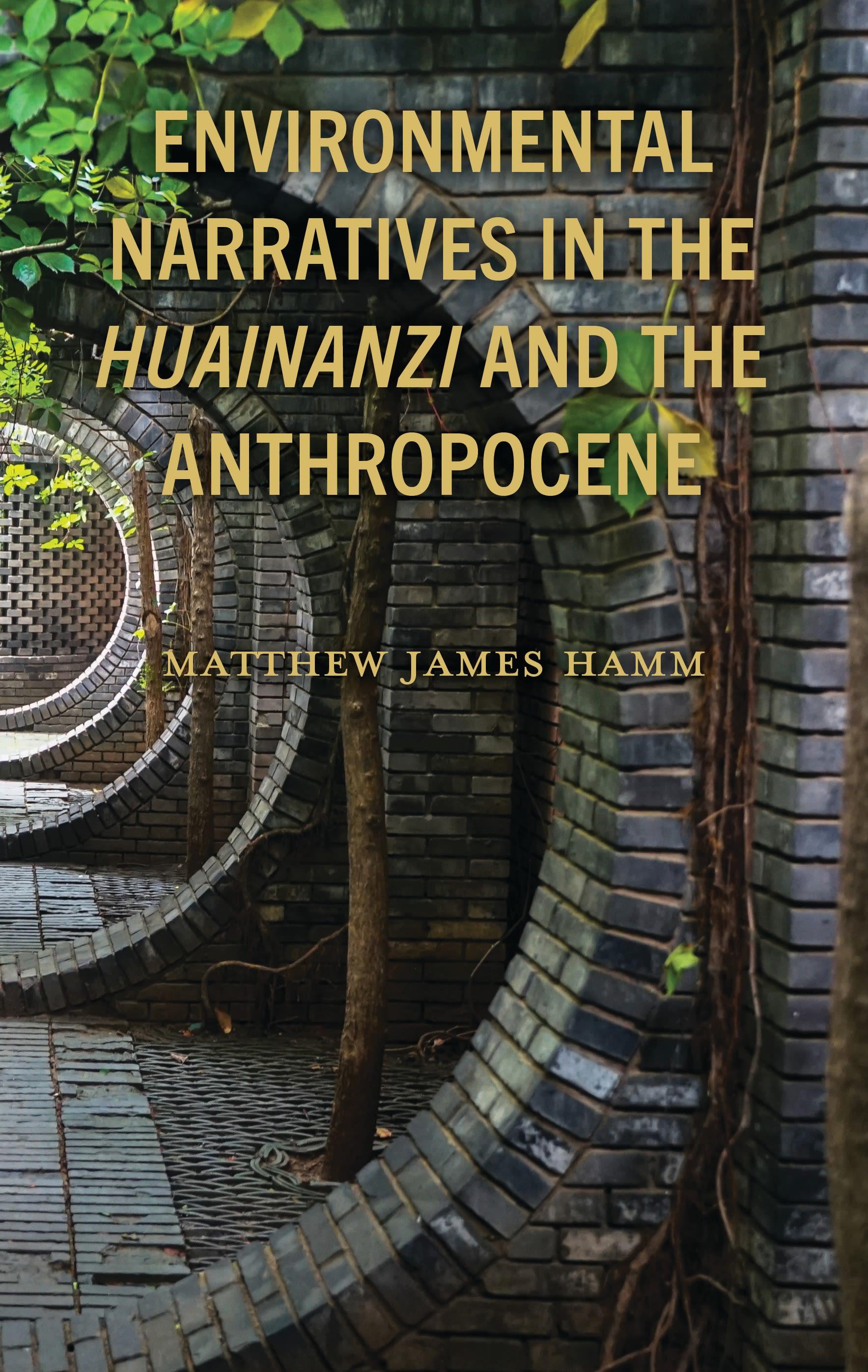
Environmental Narratives in the Huainanzi and the Anthropocene analyzes the contemporary discourse of the Anthropocene using the Huainanzi ???, an eastern Eurasian text from the second century BCE. Written to preserve and strengthen the Han Empire (202 BCE–220 CE), the Huainanzi describes a mode of rulership premised on periodizing the present as the end of history that domesticates humans and non-humans. Matthew James Hamm provides a contextualized reading of the Huainanzi’s argument and uses it as a theoretical lens to read Anthropocene scholarship in the sciences, social sciences, and humanities. Hamm argues that—irrespective of the name or historical narrative used to describe it—the idea of the Anthropocene as a new epoch not only lacks empirical evidence, but also empowers the existing periodization of modernity to provide ideological support for environmentally destructive neoliberal structures rooted in Western European imperial orders. By doing so, the Anthropocene framework actively inhibits the transformative social change needed to address global environmental crises such as climate change and mass extinction. Consequently, this book rejects periodization as a conceptual framework for addressing those issues and advocates for greater scholarly engagement with environmental theories outside the European and Anglo-American traditions, such as the Huainanzi.
Betal nemt med kort, Klarna, Apple Pay eller Google Pay. Ikke tilfreds? Du har altid 14 dages fortrydelsesret. Læs mere i vores vilkår. Har du spørgsmål, så send os en mail på hello@memmo.org.
Memmo gør det nemmere at studere – uanset hvor du er i verden. Hos os samler du dine kursusbøger og smarte studieværktøjer ét sted: resuméer, quizzer, podcasts og flashcards. Og så er der Ted, din studieven, der svarer på alt, du undrer dig over. Over 50 000 studerende studerer allerede her – bygget til at hjælpe dig med at lære hurtigere og stresse mindre.