
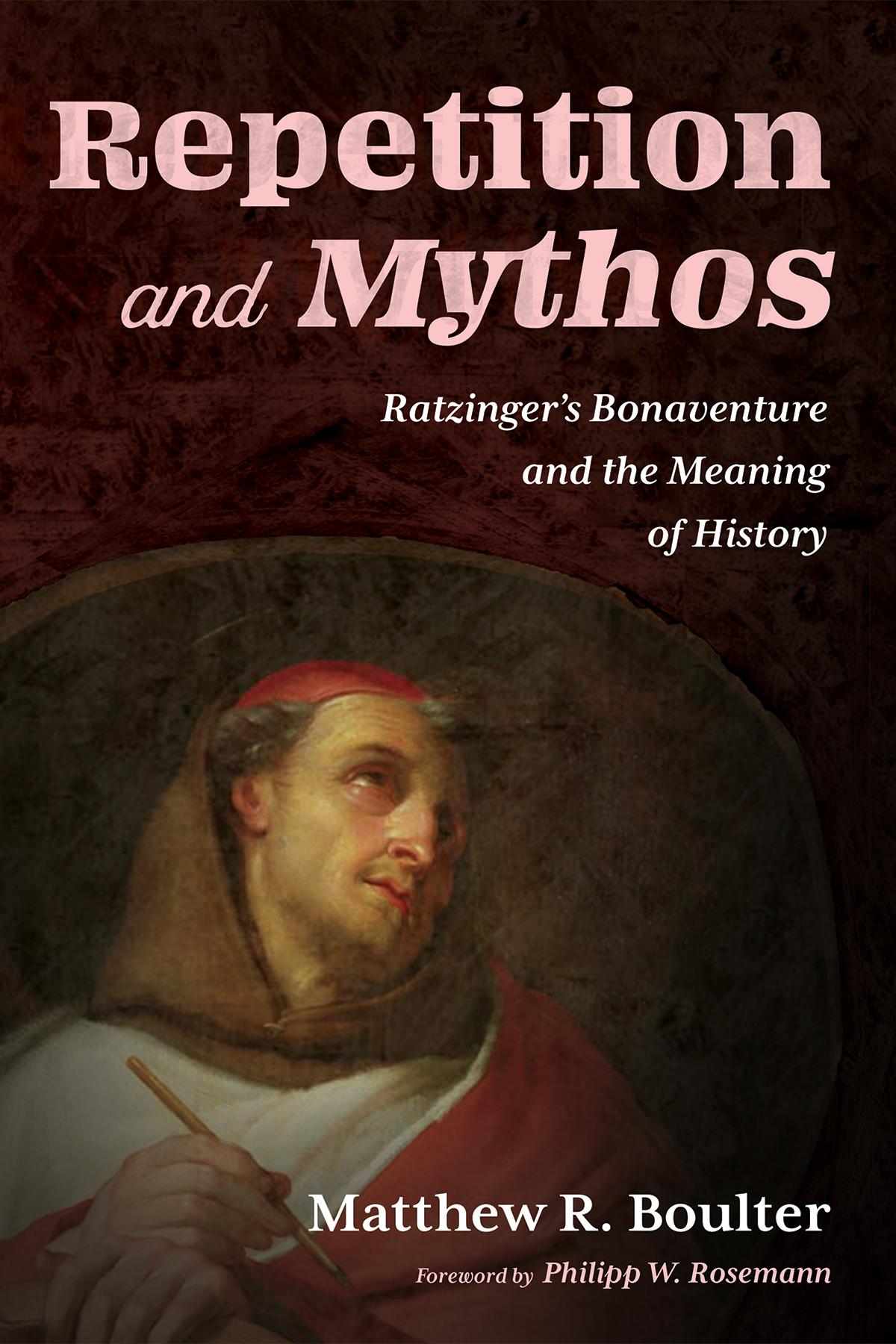
Writing his Habilitationsschrift as a young man in the late 1950s, future Pontiff Joseph Ratzinger argues that, when St. Bonaventure composed his Collationes in Hexaemeron in the spring of 1273, not since St. Augustine's De Civitate Dei contra Paganos had the world seen such a ground-breaking work on the logos of history. Indeed, for Ratzinger's Bonaventure, history is "first philosophy." The thirteenth-century Franciscan rails against the widespread assumption, rooted the newly "rediscovered" Aristotle, of history's unintelligibility. For Bonaventure, mythos mediates the difference between science and history, yielding a non-positivistic approach to the latter. Building on the dynamics of Plato's Line, Boulter show that the days of creation, narrated by Bonaventure, structure both history and thought. Because, like a story, it has beginning and end, history as a whole can be grasped. Hence, eschatological knowledge of the end of the world is possible. Yet this work also shows how the false "progress myths" of modernity are counterfeit versions of true, spiritual advancement of the kind embodied by saints such as Francis and Bonaventure himself. What is the logos of history? It turns out that it is mythos.
Betal nemt med kort, Klarna, Apple Pay eller Google Pay. Ikke tilfreds? Du har altid 14 dages fortrydelsesret. Læs mere i vores vilkår. Har du spørgsmål, så send os en mail på hello@memmo.org.
Memmo gør det nemmere at studere – uanset hvor du er i verden. Hos os samler du dine kursusbøger og smarte studieværktøjer ét sted: resuméer, quizzer, podcasts og flashcards. Og så er der Ted, din studieven, der svarer på alt, du undrer dig over. Over 50 000 studerende studerer allerede her – bygget til at hjælpe dig med at lære hurtigere og stresse mindre.
Du kan måske også lide
Køb bogen0