
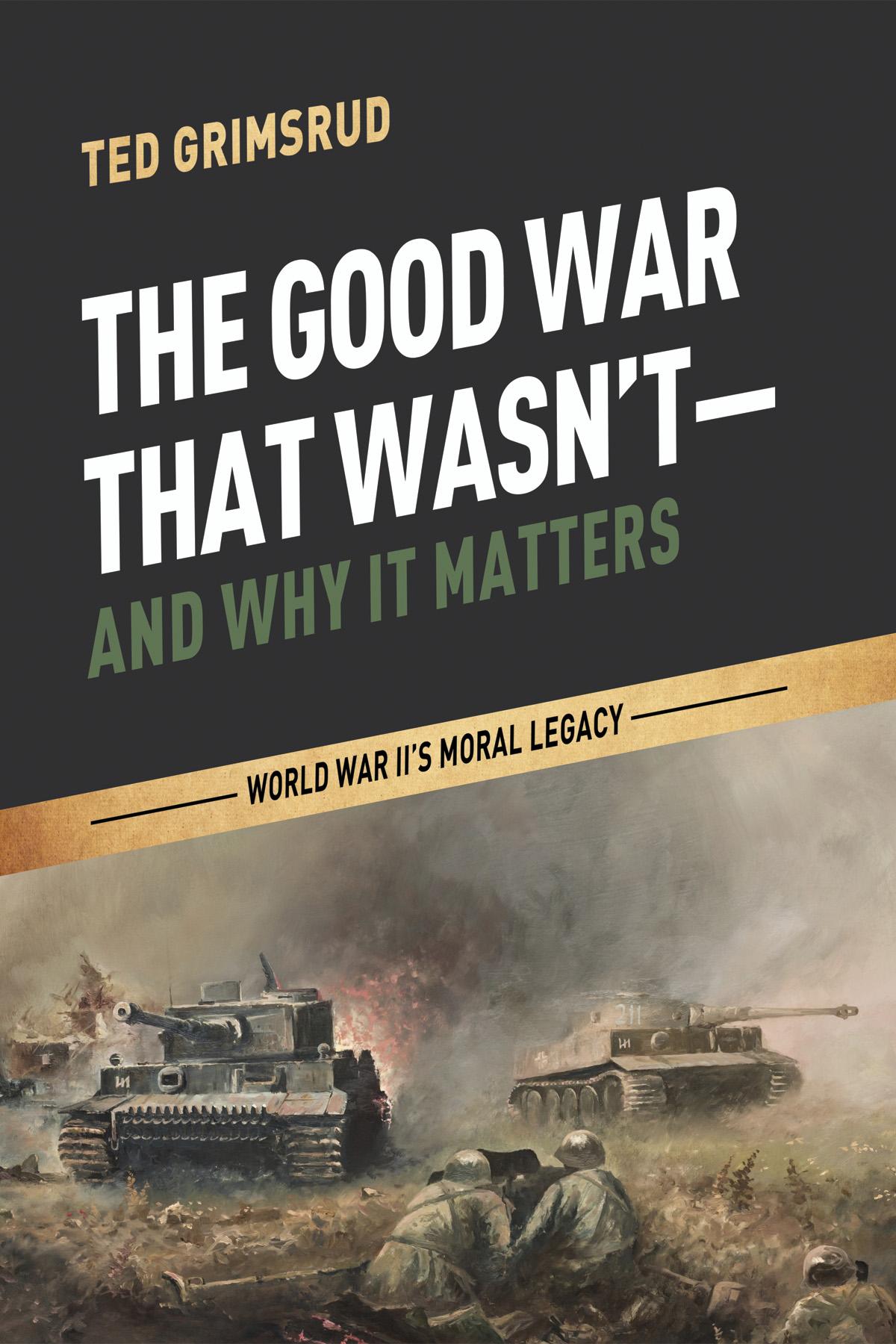
A war is always a moral event. However, the most destructive war in human history has not received much moral scrutiny. The Good War That Wasn't--and Why It Matters examines the moral legacy of this war, especially for the United States.
Drawing on the just war tradition and on moral values expressed in widely circulated statements of purpose for the war, the book asks: How did American participation in the war fit with just cause and just conduct criteria?
Subsequently the book considers the impact of the war on American foreign policy in the years that followed. How did American actions cohere (or not) with the stated purposes for the war, especially self-determination for the peoples of the world and disarmament?
Finally, the book looks at the witness of war opponents. Values expressed by war advocates were not actually furthered by the war. However, many war opponents did inspire efforts that effectively worked toward the goals of disarmament and self-determination.
The Good War That Wasn't--and Why It Matters develops its arguments in pragmatic terms. It focuses on moral reasoning in a commonsense way in its challenge to widely held assumptions about World War II.
Betal nemt med kort, Klarna, Apple Pay eller Google Pay. Ikke tilfreds? Du har altid 14 dages fortrydelsesret. Læs mere i vores vilkår. Har du spørgsmål, så send os en mail på hello@memmo.org.
Memmo gør det nemmere at studere – uanset hvor du er i verden. Hos os samler du dine kursusbøger og smarte studieværktøjer ét sted: resuméer, quizzer, podcasts og flashcards. Og så er der Ted, din studieven, der svarer på alt, du undrer dig over. Over 50 000 studerende studerer allerede her – bygget til at hjælpe dig med at lære hurtigere og stresse mindre.
Du kan måske også lide
Køb bogen0