
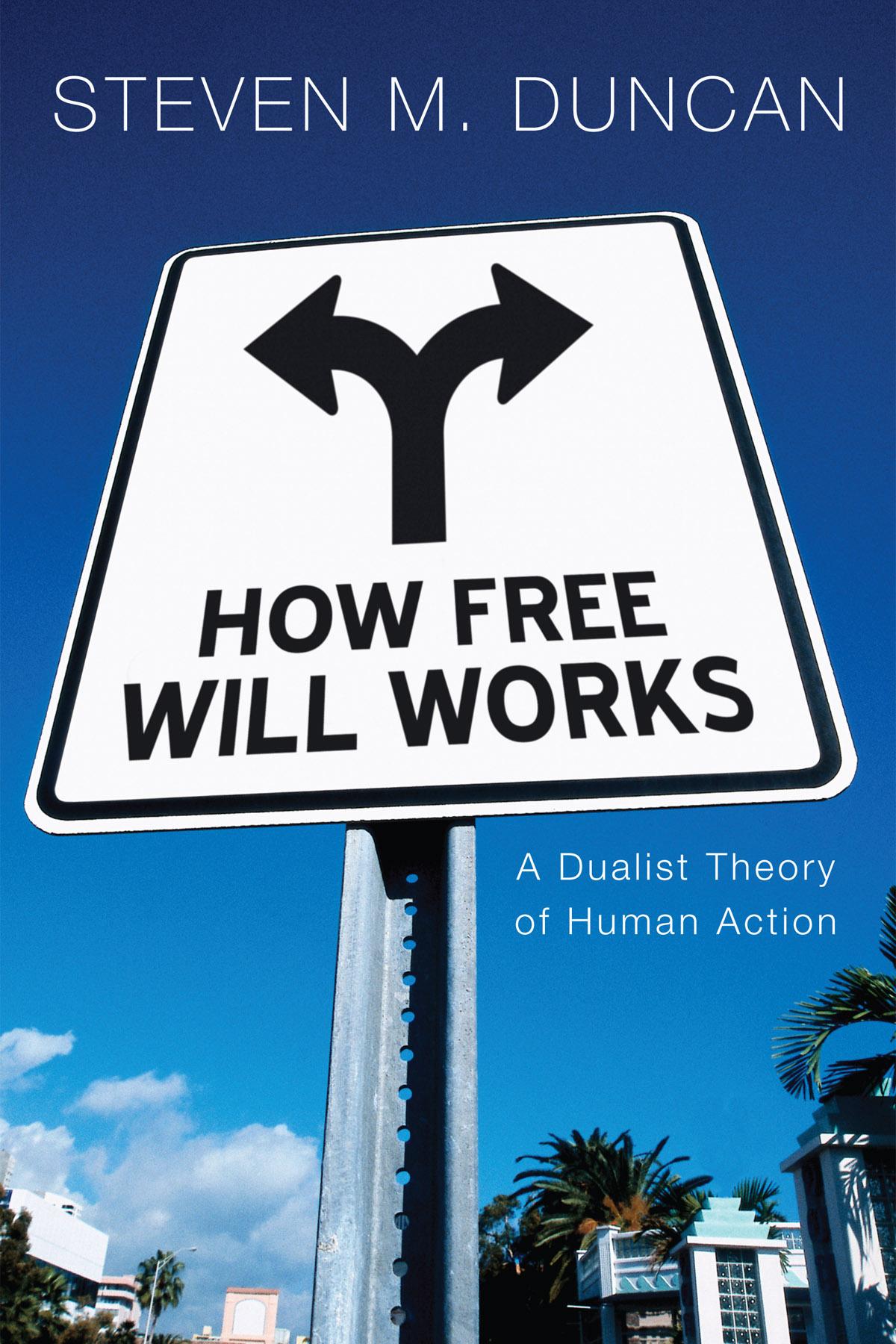
In How Free Will Works, Steven M. Duncan provides not merely discussions of, but potential answers to two of the most vexed questions discussed by philosophers concerning free choice. First, supposing that the mind and the body are separate substances of opposed natures, how is it possible for them to interact such that an entirely non-physical immanent mental act can give rise to changes in the external world? Second, supposing that there is free will, how is it possible for our acts of volition/free choice to be neither causally determined nor merely chance/random events?
This book spells out a new way of envisaging the mind/body relation and the nature of mind/body causal interaction that avoids the traditional "interaction problem." It also explains how it is possible for free choice neither to require an efficient cause nor to act as an efficient cause while nevertheless affecting the processes in the physical world through which intentional action is realized in human behavior. In the second half of the book, the theory developed in the first part of the book is applied to the difficult issues arising from the Christian doctrine of salvation: sin, grace, and redemption.
Betal nemt med kort, Klarna, Apple Pay eller Google Pay. Ikke tilfreds? Du har altid 14 dages fortrydelsesret. Læs mere i vores vilkår. Har du spørgsmål, så send os en mail på hello@memmo.org.
Memmo gør det nemmere at studere – uanset hvor du er i verden. Hos os samler du dine kursusbøger og smarte studieværktøjer ét sted: resuméer, quizzer, podcasts og flashcards. Og så er der Ted, din studieven, der svarer på alt, du undrer dig over. Over 50 000 studerende studerer allerede her – bygget til at hjælpe dig med at lære hurtigere og stresse mindre.
Du kan måske også lide
Køb bogen0