
Autobiography has seen enormous expansions and challenges over the past decades. One of these expansions has been in comics, and it is an expansion that pushes back against any postmodern notion of the death of the author/subject, while also demanding new approaches from critics.
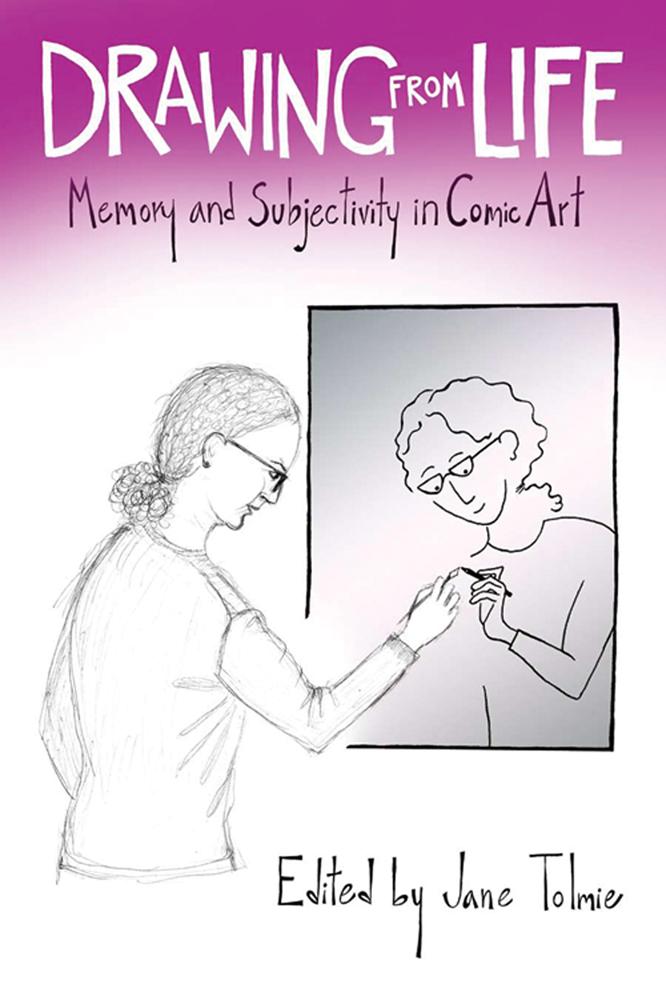
Drawing from Life: Memory and Subjectivity in Comic Art is a collection of essays about autobiography, semi-autobiography, fictionalized autobiography, memory, and self-narration in sequential art, or comics. Contributors come from a range of academic backgrounds including English, American studies, comparative literature, gender studies, art history, and cultural studies. The book engages with well-known figures such as Art Spiegelman, Marjane Satrapi, and Alison Bechdel; with cult-status figures such as Martin Vaughn-James; and with lesser-known works by artists such as Frédéric Boilet.
Negotiations between artist/writer/body and drawn/written/text raise questions of how comics construct identity, and are read and perceived, requiring a critical turn towards theorizing the comics' viewer. At stake in comic memoir and semi-autobiography is embodiment. Remembering a scene with the intent of rendering it in sequential art requires nonlinear thinking and engagement with physicality. Who was in the room and where? What was worn? Who spoke first? What images dominated the encounter? Did anybody smile? Man or mouse? Unhinged from the summary paragraph, the comics artist must confront the fact of the flesh, or the corporeal world, and they do so with fascinating results.
Drawing from Life: Memory and Subjectivity in Comic Art is a collection of essays about autobiography, semi-autobiography, fictionalized autobiography, memory, and self-narration in sequential art, or comics. Contributors come from a range of academic backgrounds including English, American studies, comparative literature, gender studies, art history, and cultural studies. The book engages with well-known figures such as Art Spiegelman, Marjane Satrapi, and Alison Bechdel; with cult-status figures such as Martin Vaughn-James; and with lesser-known works by artists such as Frédéric Boilet.
Negotiations between artist/writer/body and drawn/written/text raise questions of how comics construct identity, and are read and perceived, requiring a critical turn towards theorizing the comics' viewer. At stake in comic memoir and semi-autobiography is embodiment. Remembering a scene with the intent of rendering it in sequential art requires nonlinear thinking and engagement with physicality. Who was in the room and where? What was worn? Who spoke first? What images dominated the encounter? Did anybody smile? Man or mouse? Unhinged from the summary paragraph, the comics artist must confront the fact of the flesh, or the corporeal world, and they do so with fascinating results.
Betal nemt med kort, Klarna, Apple Pay eller Google Pay. Ikke tilfreds? Du har altid 14 dages fortrydelsesret. Læs mere i vores vilkår. Har du spørgsmål, så send os en mail på hello@memmo.org.
Memmo gør det nemmere at studere – uanset hvor du er i verden. Hos os samler du dine kursusbøger og smarte studieværktøjer ét sted: resuméer, quizzer, podcasts og flashcards. Og så er der Ted, din studieven, der svarer på alt, du undrer dig over. Over 50 000 studerende studerer allerede her – bygget til at hjælpe dig med at lære hurtigere og stresse mindre.
Du kan måske også lide
Køb bogen0