
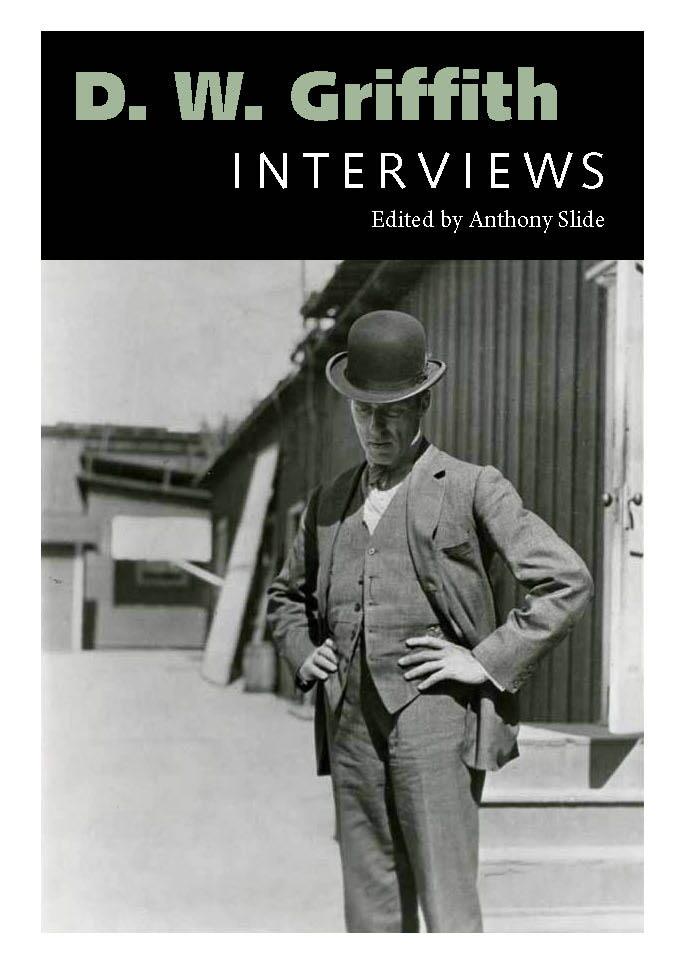
D. W. Griffith (1875–1948) is one of the most influential figures in the history of the motion picture. As director of The Birth of a Nation, he is also one of the most controversial. He raised the cinema to a new level of art, entertainment, and innovation, and at the same time he illustrated, for the first time, its potential to influence an audience and propagandize a cause.
Collected together here are virtually all of the “interviews” given by D. W. Griffith from the first in 1914 to the last in 1948. Some of the interviews concentrate on specific films, including The Birth of a Nation, Intolerance, and, most substantially, Hearts of the World, while others provide the director with an opportunity to expound on topics of personal interest, including the importance of proper exhibition of his and other’s films, and his search for truth and beauty on screen.
The interviews are taken from many sources, including leading newspapers, trade papers, and fan magazines. They are often marked by humor and by a desire to please the interviewer and thus the reader. Griffith may not have been particularly enthusiastic about giving interviews, but he seems always determined to put on a good show.
Ultimately, D. W. Griffith: Interviews provides the reader with a unique insight into the mind and filmmaking techniques of a director whose work and philosophy is as relevant today as it was when he was at the height of his fame in the 1910s and 1920s.
Collected together here are virtually all of the “interviews” given by D. W. Griffith from the first in 1914 to the last in 1948. Some of the interviews concentrate on specific films, including The Birth of a Nation, Intolerance, and, most substantially, Hearts of the World, while others provide the director with an opportunity to expound on topics of personal interest, including the importance of proper exhibition of his and other’s films, and his search for truth and beauty on screen.
The interviews are taken from many sources, including leading newspapers, trade papers, and fan magazines. They are often marked by humor and by a desire to please the interviewer and thus the reader. Griffith may not have been particularly enthusiastic about giving interviews, but he seems always determined to put on a good show.
Ultimately, D. W. Griffith: Interviews provides the reader with a unique insight into the mind and filmmaking techniques of a director whose work and philosophy is as relevant today as it was when he was at the height of his fame in the 1910s and 1920s.
Betal nemt med kort, Klarna, Apple Pay eller Google Pay. Ikke tilfreds? Du har altid 14 dages fortrydelsesret. Læs mere i vores vilkår. Har du spørgsmål, så send os en mail på hello@memmo.org.
Memmo gør det nemmere at studere – uanset hvor du er i verden. Hos os samler du dine kursusbøger og smarte studieværktøjer ét sted: resuméer, quizzer, podcasts og flashcards. Og så er der Ted, din studieven, der svarer på alt, du undrer dig over. Over 50 000 studerende studerer allerede her – bygget til at hjælpe dig med at lære hurtigere og stresse mindre.
Du kan måske også lide
Køb bogen0