
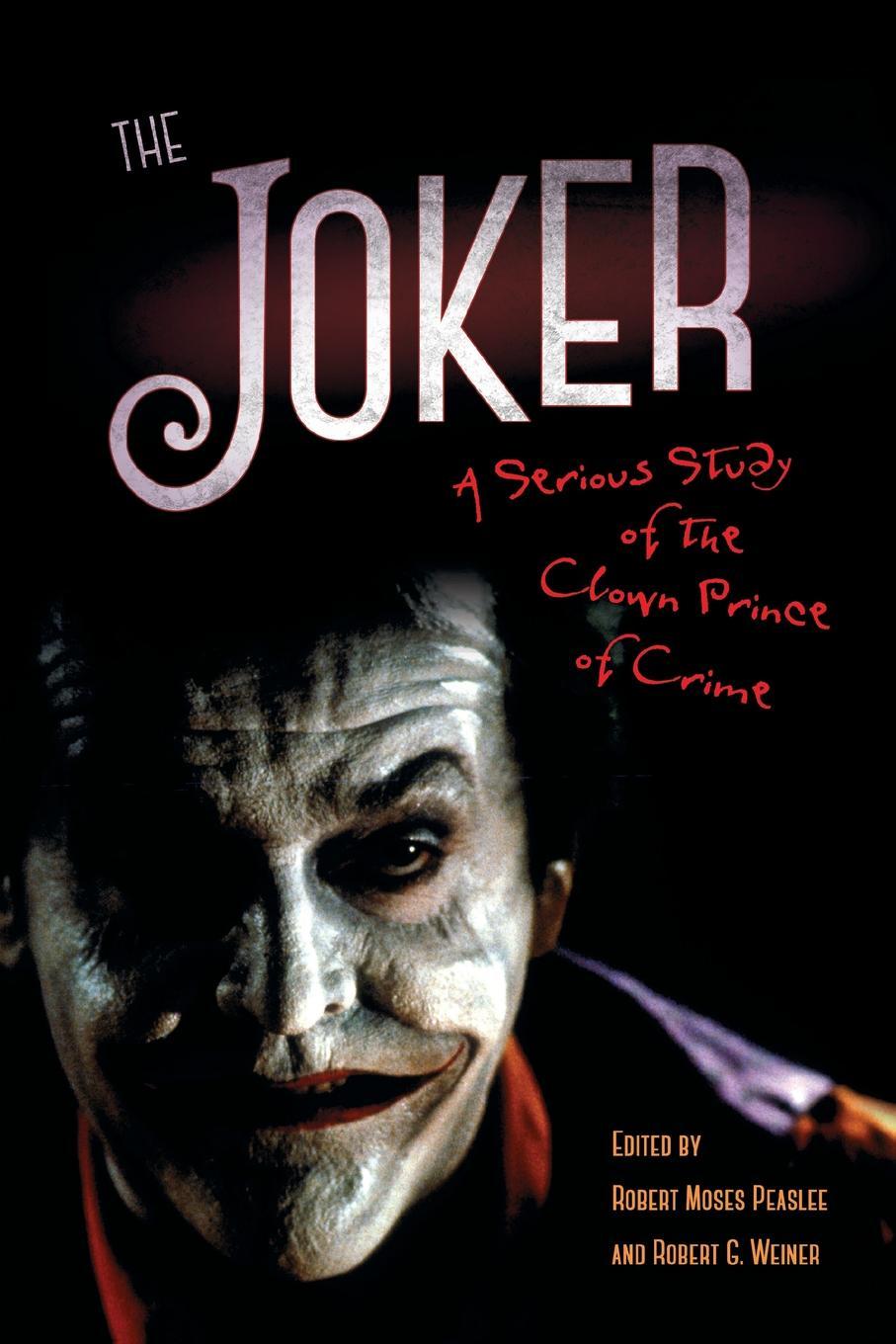
Along with Batman, Spider-Man, and Superman, the Joker stands out as one of the most recognizable comics characters in popular culture. While there has been a great deal of scholarly attention on superheroes, very little has been done to understand supervillains. This is the first academic work to provide a comprehensive study of this villain, illustrating why the Joker appears so relevant to audiences today.
Batman's foe has cropped up in thousands of comics, numerous animated series, and three major blockbuster feature films since 1966. Actually, the Joker debuted in DC comics Batman 1 (1940) as the typical gangster, but the character evolved steadily into one of the most ominous in the history of sequential art. Batman and the Joker almost seemed to define each other as opposites, hero and nemesis, in a kind of psychological duality. Scholars from a wide array of disciplines look at the Joker through the lens of feature films, video games, comics, politics, magic and mysticism, psychology, animation, television, performance studies, and philosophy. As the first volume that examines the Joker as complex cultural and cross-media phenomenon, this collection adds to our understanding of the role comic book and cinematic villains play in the world and the ways various media affect their interpretation. Connecting the Clown Prince of Crime to bodies of thought as divergent as Karl Marx and Friedrich Nietzsche, contributors demonstrate the frightening ways in which we get the monsters we need.
Batman's foe has cropped up in thousands of comics, numerous animated series, and three major blockbuster feature films since 1966. Actually, the Joker debuted in DC comics Batman 1 (1940) as the typical gangster, but the character evolved steadily into one of the most ominous in the history of sequential art. Batman and the Joker almost seemed to define each other as opposites, hero and nemesis, in a kind of psychological duality. Scholars from a wide array of disciplines look at the Joker through the lens of feature films, video games, comics, politics, magic and mysticism, psychology, animation, television, performance studies, and philosophy. As the first volume that examines the Joker as complex cultural and cross-media phenomenon, this collection adds to our understanding of the role comic book and cinematic villains play in the world and the ways various media affect their interpretation. Connecting the Clown Prince of Crime to bodies of thought as divergent as Karl Marx and Friedrich Nietzsche, contributors demonstrate the frightening ways in which we get the monsters we need.
Betal nemt med kort, Klarna, Apple Pay eller Google Pay. Ikke tilfreds? Du har altid 14 dages fortrydelsesret. Læs mere i vores vilkår. Har du spørgsmål, så send os en mail på hello@memmo.org.
Memmo gør det nemmere at studere – uanset hvor du er i verden. Hos os samler du dine kursusbøger og smarte studieværktøjer ét sted: resuméer, quizzer, podcasts og flashcards. Og så er der Ted, din studieven, der svarer på alt, du undrer dig over. Over 50 000 studerende studerer allerede her – bygget til at hjælpe dig med at lære hurtigere og stresse mindre.
Du kan måske også lide
Køb bogen0