
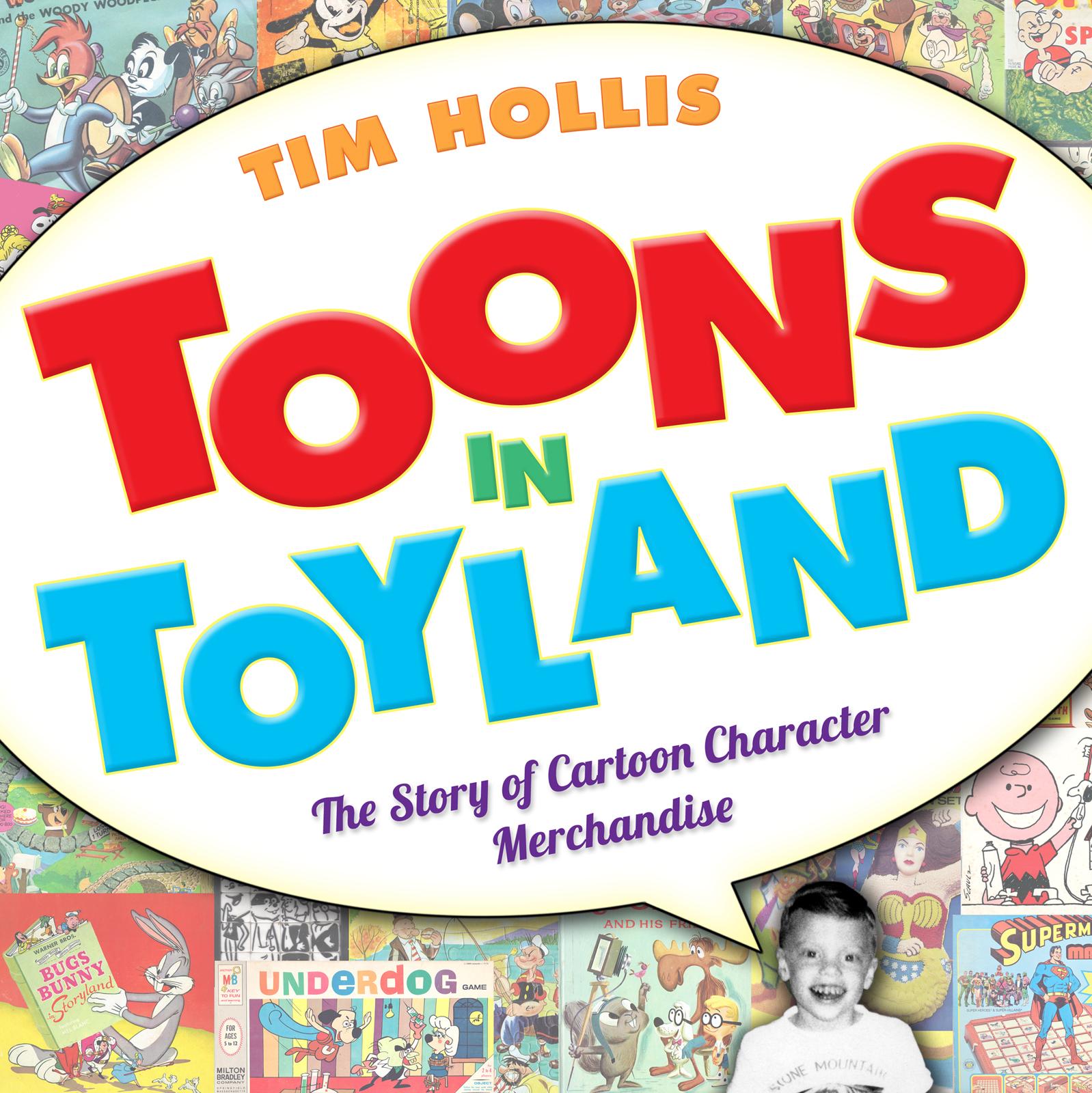
Every living American adult likely prized one childhood toy that featured the happy image of an animated cartoon or comic strip character. There is an ever-growing market for these collectibles, and stacks of books pose as pricing guides. Yet Tim Hollis is the first to examine the entire story of character licensing and merchandising from a historical view.
Toons in Toyland focuses mainly on the post-World War II years, circa 1946-1980, when the last baby boomers were in high school. During those years, the mass merchandising of cartoon characters peaked. However, the concept of licensing cartoon characters for toys, trinkets, and other merchandise dates back to the very first newspaper comics character, the Yellow Kid, who debuted in 1896 and was soon appearing on a variety of items. Eventually, cartoon producers and comic strip artists counted on merchandising as a major part of their revenue stream. It still plays a tremendous role in the success of the Walt Disney Company and many others today.
Chapters examine storybooks (such as Little Golden Books), comic books, records, board games, jigsaw puzzles, optical toys (including View-Master and Kenner's Give-a-Show Projector), and holiday paraphernalia. Extending even beyond toys, food companies licensed characters galore--remember the Peanuts characters plugging bread and Dolly Madison snacks? And roadside attractions, amusement parks, campgrounds, and restaurants--think Yogi Bear and Jellystone Park Campgrounds--all bought a bit of cartoon magic to lure the green waves of tourists' dollars.
Toons in Toyland focuses mainly on the post-World War II years, circa 1946-1980, when the last baby boomers were in high school. During those years, the mass merchandising of cartoon characters peaked. However, the concept of licensing cartoon characters for toys, trinkets, and other merchandise dates back to the very first newspaper comics character, the Yellow Kid, who debuted in 1896 and was soon appearing on a variety of items. Eventually, cartoon producers and comic strip artists counted on merchandising as a major part of their revenue stream. It still plays a tremendous role in the success of the Walt Disney Company and many others today.
Chapters examine storybooks (such as Little Golden Books), comic books, records, board games, jigsaw puzzles, optical toys (including View-Master and Kenner's Give-a-Show Projector), and holiday paraphernalia. Extending even beyond toys, food companies licensed characters galore--remember the Peanuts characters plugging bread and Dolly Madison snacks? And roadside attractions, amusement parks, campgrounds, and restaurants--think Yogi Bear and Jellystone Park Campgrounds--all bought a bit of cartoon magic to lure the green waves of tourists' dollars.
Sider: 312
Kategori: Film- & Medievetenskap
e-ISBN: 9781626745001
Forsendelsesvægt: 1.2 kg
Sendes inden for: 1-2 dage
Betal nemt med kort, Klarna, Apple Pay eller Google Pay. Ikke tilfreds? Du har altid 14 dages fortrydelsesret. Læs mere i vores vilkår. Har du spørgsmål, så send os en mail på hello@memmo.org.
Memmo gør det nemmere at studere – uanset hvor du er i verden. Hos os samler du dine kursusbøger og smarte studieværktøjer ét sted: resuméer, quizzer, podcasts og flashcards. Og så er der Ted, din studieven, der svarer på alt, du undrer dig over. Over 50 000 studerende studerer allerede her – bygget til at hjælpe dig med at lære hurtigere og stresse mindre.
Du kan måske også lide
Køb bogen0