
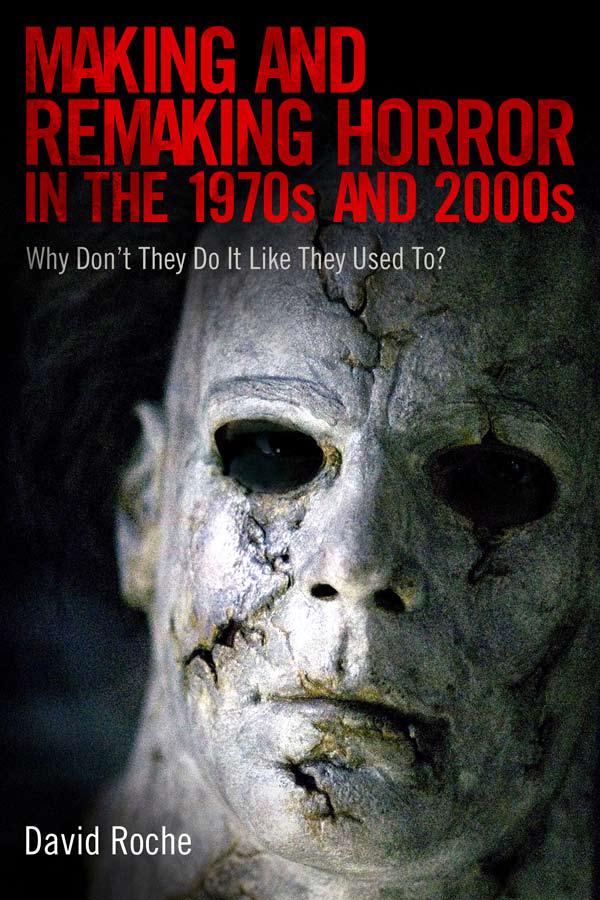
In Making and Remaking Horror in the 1970s and 2000s author David Roche takes up the assumption shared by many fans and scholars that original horror movies are more “disturbing,” and thus better than the remakes. He assesses the qualities of movies, old and recast, according to criteria that include subtext, originality, and cohesion. With a methodology that combines a formalist and cultural studies approach, Roche sifts aspects of the American horror movie that have been widely addressed (class, the patriarchal family, gender, and the opposition between terror and horror) and those that have been somewhat neglected (race, the Gothic, style, and verisimilitude). Containing seventy-eight black-and-white illustrations, the book is grounded in a close comparative analysis of the politics and aesthetics of four of the most significant independent American horror movies of the 1970s—The Texas Chain Saw Massacre, The Hills Have Eyes, Dawn of the Dead, and Halloween—and their twenty-first-century remakes.
To what extent can the politics of these films be described as “disturbing” insomuch as they promote subversive subtexts that undermine essentialist perspectives? Do the politics of the film lie on the surface or are they wedded to the film's aesthetics? Early in the book, Roche explores historical contexts, aspects of identity (race, ethnicity, and class), and the structuring role played by the motif of the American nuclear family. He then asks to what extent these films disrupt genre expectations and attempt to provoke emotions of dread, terror, and horror through their representations of the monstrous and the formal strategies employed? In this inquiry, he examines definitions of the genre and its metafictional nature. Roche ends with a meditation on the extent to which the technical limitations of the horror films of the 1970s actually contribute to this “disturbing” quality. Moving far beyond the genre itself, Making and Remaking Horror studies the redux as a form of adaptation and enables a more complete discussion of the evolution of horror in contemporary American cinema.
To what extent can the politics of these films be described as “disturbing” insomuch as they promote subversive subtexts that undermine essentialist perspectives? Do the politics of the film lie on the surface or are they wedded to the film's aesthetics? Early in the book, Roche explores historical contexts, aspects of identity (race, ethnicity, and class), and the structuring role played by the motif of the American nuclear family. He then asks to what extent these films disrupt genre expectations and attempt to provoke emotions of dread, terror, and horror through their representations of the monstrous and the formal strategies employed? In this inquiry, he examines definitions of the genre and its metafictional nature. Roche ends with a meditation on the extent to which the technical limitations of the horror films of the 1970s actually contribute to this “disturbing” quality. Moving far beyond the genre itself, Making and Remaking Horror studies the redux as a form of adaptation and enables a more complete discussion of the evolution of horror in contemporary American cinema.
Betal nemt med kort, Klarna, Apple Pay eller Google Pay. Ikke tilfreds? Du har altid 14 dages fortrydelsesret. Læs mere i vores vilkår. Har du spørgsmål, så send os en mail på hello@memmo.org.
Memmo gør det nemmere at studere – uanset hvor du er i verden. Hos os samler du dine kursusbøger og smarte studieværktøjer ét sted: resuméer, quizzer, podcasts og flashcards. Og så er der Ted, din studieven, der svarer på alt, du undrer dig over. Over 50 000 studerende studerer allerede her – bygget til at hjælpe dig med at lære hurtigere og stresse mindre.
Du kan måske også lide
Køb bogen0