
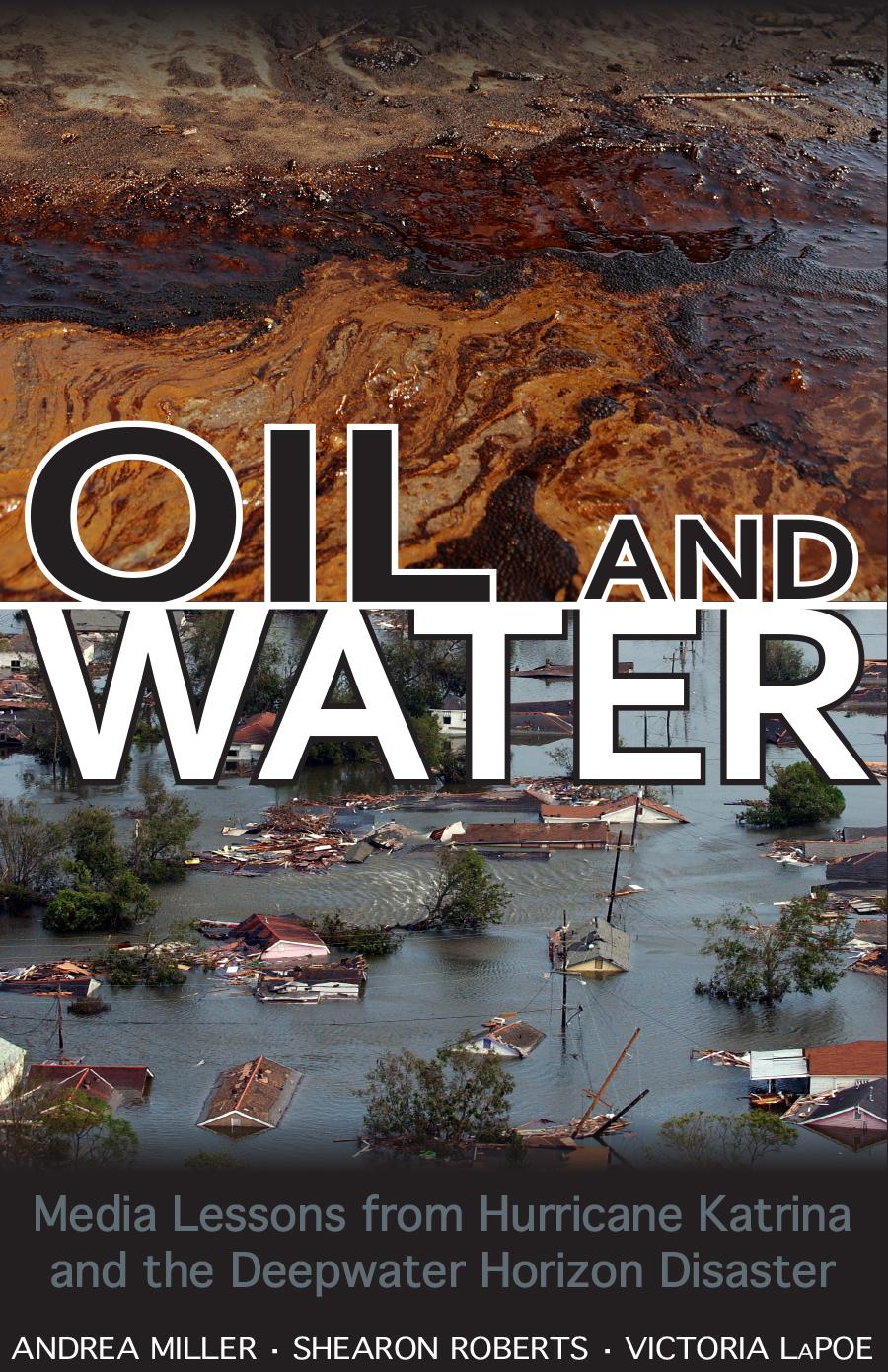
Along the Gulf Coast, history is often referenced as pre-Katrina or post-Katrina. However, the natural disaster that appalled the world in 2005 has been joined by another catastrophe, this one man-made—the greatest environmental and maritime accident of all time, the Deepwater Horizon Oil Spill. In less than five years, the Gulf Coast has experienced two colossal disasters, very different, yet very similar. And these two equally complex crises have resulted in a steep learning curve for all, but especially the journalists covering these enduring stories.
In Oil and Water, the authors explore the media-fed experiences, the visuals and narratives associated with both disasters. Katrina journalists have reluctantly had to transform into oil spill journalists. The authors look at this process of growth from the viewpoints not only of the journalists, but also of the public and of the scientific community. Through a detailed analysis of the journalists' content, the authors tackle significant questions. This book assesses the quality of journalism and the effects that quality may have on the public. The authors argue that regardless of the type of journalism involved or the immensity of the events covered, successful reportage still depends on the fundamentals of journalism and the importance of following these tenets consistently in a crisis atmosphere, especially when confronted with enduring crises that are just years apart.
In Oil and Water, the authors explore the media-fed experiences, the visuals and narratives associated with both disasters. Katrina journalists have reluctantly had to transform into oil spill journalists. The authors look at this process of growth from the viewpoints not only of the journalists, but also of the public and of the scientific community. Through a detailed analysis of the journalists' content, the authors tackle significant questions. This book assesses the quality of journalism and the effects that quality may have on the public. The authors argue that regardless of the type of journalism involved or the immensity of the events covered, successful reportage still depends on the fundamentals of journalism and the importance of following these tenets consistently in a crisis atmosphere, especially when confronted with enduring crises that are just years apart.
Betal nemt med kort, Klarna, Apple Pay eller Google Pay. Ikke tilfreds? Du har altid 14 dages fortrydelsesret. Læs mere i vores vilkår. Har du spørgsmål, så send os en mail på hello@memmo.org.
Memmo gør det nemmere at studere – uanset hvor du er i verden. Hos os samler du dine kursusbøger og smarte studieværktøjer ét sted: resuméer, quizzer, podcasts og flashcards. Og så er der Ted, din studieven, der svarer på alt, du undrer dig over. Over 50 000 studerende studerer allerede her – bygget til at hjælpe dig med at lære hurtigere og stresse mindre.
Du kan måske også lide
Køb bogen0