
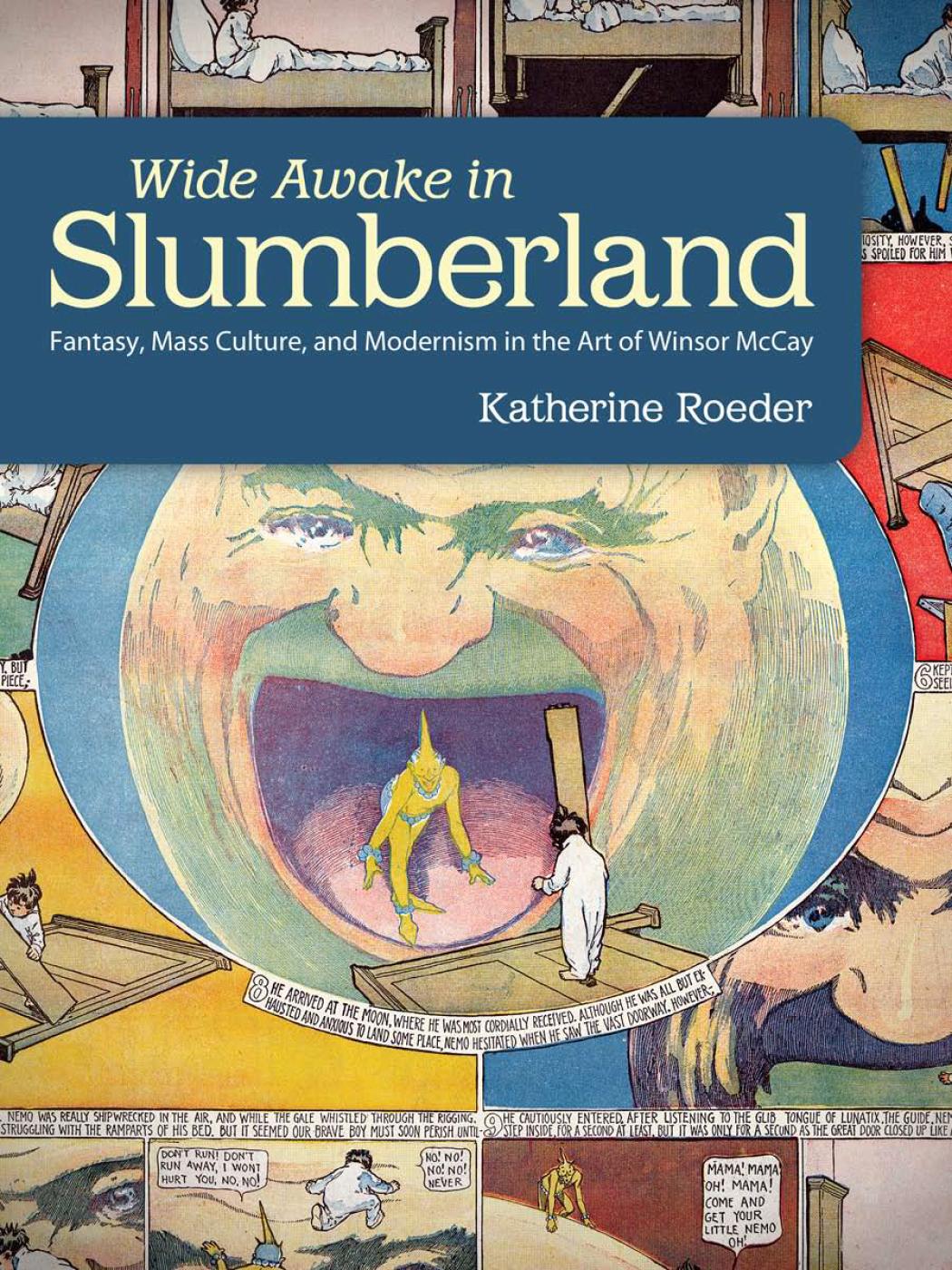
Cartoonist Winsor McCay (1869-1934) is rightfully celebrated for the skillful draftmanship and inventive design sense he displayed in the comic strips Little Nemo in Slumberland and Dream of the Rarebit Fiend. McCay crafted narratives of anticipation, abundance, and unfulfilled longing. This book explores McCay's interest in dream imagery in relation to the larger preoccupation with fantasy that dominated the popular culture of early twentieth-century urban America.
McCay's role as a pioneer of early comics has been documented; yet, no existing study approaches him and his work from an art historical perspective, giving close readings of individual artworks while situating his output within the larger visual culture and the rise of modernism. From circus posters and vaudeville skits to department store window displays and amusement park rides, McCay found fantastical inspiration in New York City's burgeoning entertainment and retail districts. Wide Awake in Slumberland connects McCay's work to relevant children's literature, advertising, architecture, and motion pictures in order to demonstrate the artist's sophisticated blending and remixing of multiple forms from mass culture.
Studying this interconnection in McCay's work and, by extension, the work of other early twentieth-century cartoonists, Roeder traces the web of relationships connecting fantasy, leisure, and consumption. Readings of McCay's drawings and the eighty-one black-and-white and color illustrations reveal a man who was both a ready participant and an incisive critic of the rising culture of fantasy and consumerism.
McCay's role as a pioneer of early comics has been documented; yet, no existing study approaches him and his work from an art historical perspective, giving close readings of individual artworks while situating his output within the larger visual culture and the rise of modernism. From circus posters and vaudeville skits to department store window displays and amusement park rides, McCay found fantastical inspiration in New York City's burgeoning entertainment and retail districts. Wide Awake in Slumberland connects McCay's work to relevant children's literature, advertising, architecture, and motion pictures in order to demonstrate the artist's sophisticated blending and remixing of multiple forms from mass culture.
Studying this interconnection in McCay's work and, by extension, the work of other early twentieth-century cartoonists, Roeder traces the web of relationships connecting fantasy, leisure, and consumption. Readings of McCay's drawings and the eighty-one black-and-white and color illustrations reveal a man who was both a ready participant and an incisive critic of the rising culture of fantasy and consumerism.
Betal nemt med kort, Klarna, Apple Pay eller Google Pay. Ikke tilfreds? Du har altid 14 dages fortrydelsesret. Læs mere i vores vilkår. Har du spørgsmål, så send os en mail på hello@memmo.org.
Memmo gør det nemmere at studere – uanset hvor du er i verden. Hos os samler du dine kursusbøger og smarte studieværktøjer ét sted: resuméer, quizzer, podcasts og flashcards. Og så er der Ted, din studieven, der svarer på alt, du undrer dig over. Over 50 000 studerende studerer allerede her – bygget til at hjælpe dig med at lære hurtigere og stresse mindre.
Du kan måske også lide
Køb bogen0