
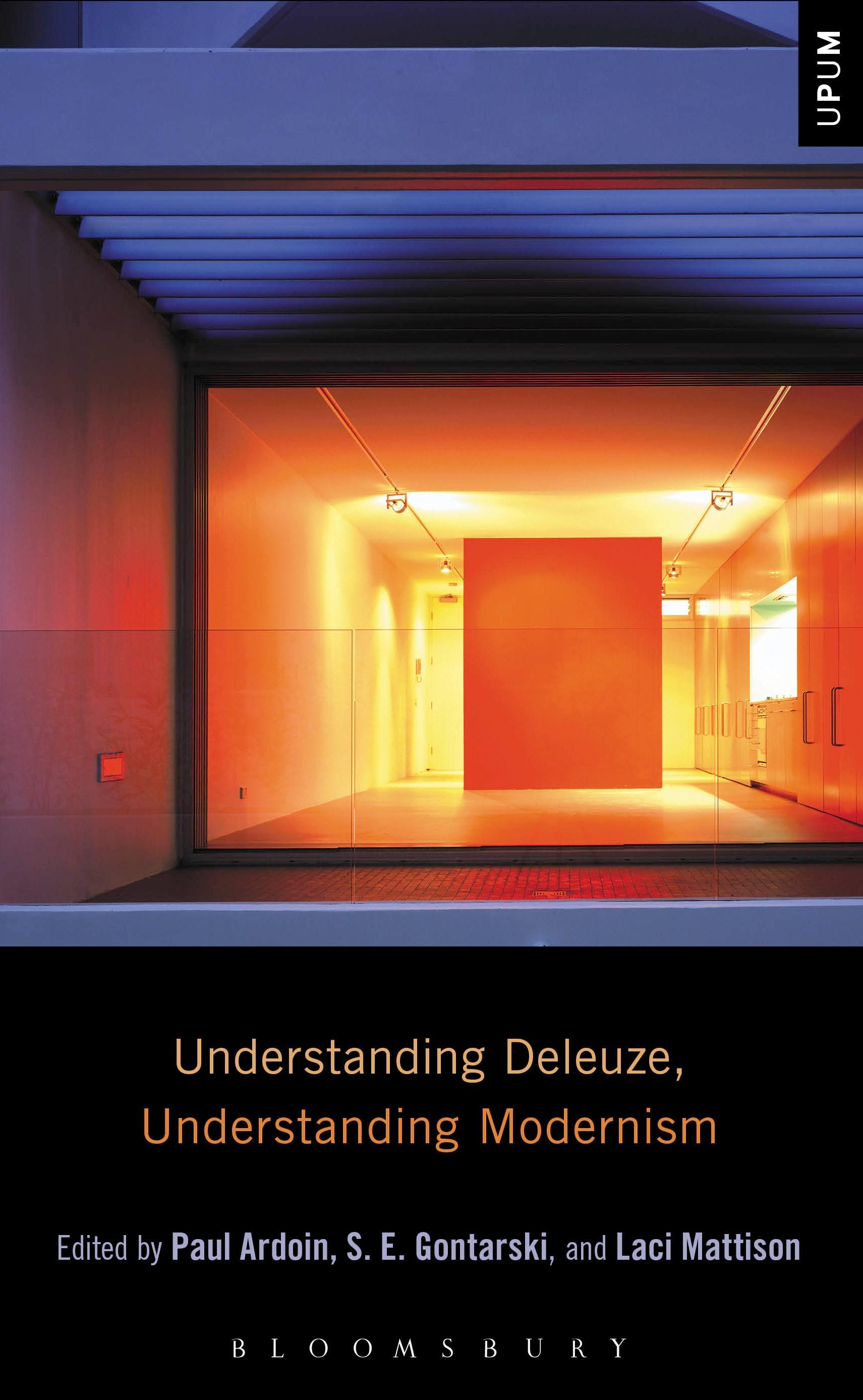
Understanding Deleuze, Understanding Modernism explores the multi-faceted and formative impact of Gilles Deleuze on the development and our understanding of modernist thought in its philosophical, literary, and more broadly cultural manifestations.
Gilles Deleuze himself rethought philosophical history with a series of books and essays on individual philosophers such as Kant, Spinoza, Leibniz, Nietzsche, and Bergson and authors such as Proust, Kafka, Beckett and Woolf, on the one hand, and Bacon, Messiaen, and Pollock, among others, in other arts. This volume acknowledges Deleuze's profound impact on a century of art and thought and the origin of that impact in his own understanding of modernism.
Understanding Deleuze, Understanding Modernism begins by "conceptualizing" Deleuze by offering close readings of some of his most important works. The contributors offer new readings that illuminate the context of Deleuze's work, either by reading one of Deleuze's texts against or in the context of his entire body of work or by challenging Deleuze's readings of other philosophers. A central section on Deleuze and his aesthetics maps the relationships between Deleuze's thought and modernist literature. The volume's final section features an extended glossary of Deleuze's key terms, with each definition having its own expert contributor.
Gilles Deleuze himself rethought philosophical history with a series of books and essays on individual philosophers such as Kant, Spinoza, Leibniz, Nietzsche, and Bergson and authors such as Proust, Kafka, Beckett and Woolf, on the one hand, and Bacon, Messiaen, and Pollock, among others, in other arts. This volume acknowledges Deleuze's profound impact on a century of art and thought and the origin of that impact in his own understanding of modernism.
Understanding Deleuze, Understanding Modernism begins by "conceptualizing" Deleuze by offering close readings of some of his most important works. The contributors offer new readings that illuminate the context of Deleuze's work, either by reading one of Deleuze's texts against or in the context of his entire body of work or by challenging Deleuze's readings of other philosophers. A central section on Deleuze and his aesthetics maps the relationships between Deleuze's thought and modernist literature. The volume's final section features an extended glossary of Deleuze's key terms, with each definition having its own expert contributor.
Betal nemt med kort, Klarna, Apple Pay eller Google Pay. Ikke tilfreds? Du har altid 14 dages fortrydelsesret. Læs mere i vores vilkår. Har du spørgsmål, så send os en mail på hello@memmo.org.
Memmo gør det nemmere at studere – uanset hvor du er i verden. Hos os samler du dine kursusbøger og smarte studieværktøjer ét sted: resuméer, quizzer, podcasts og flashcards. Og så er der Ted, din studieven, der svarer på alt, du undrer dig over. Over 50 000 studerende studerer allerede her – bygget til at hjælpe dig med at lære hurtigere og stresse mindre.