
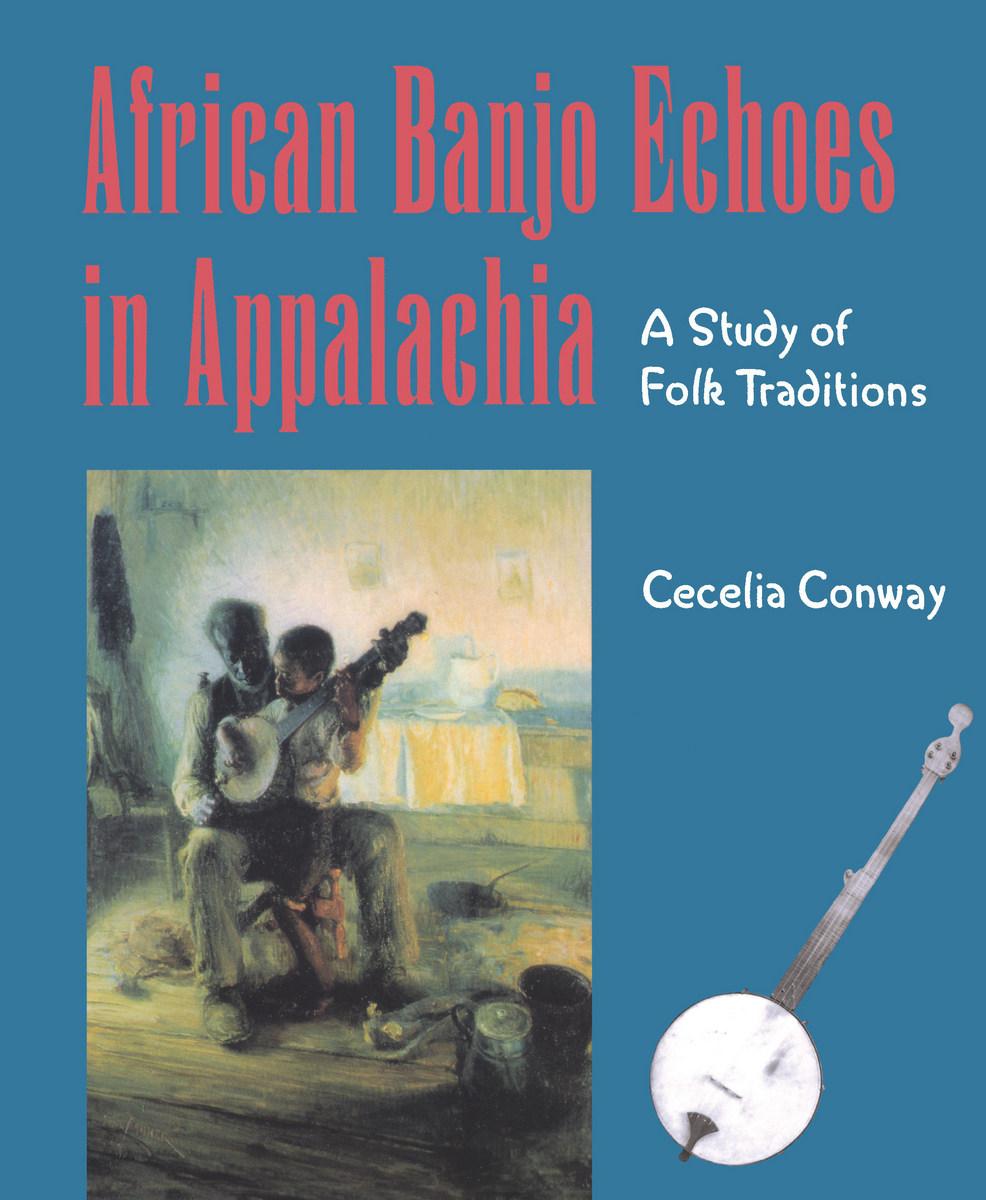
Throughout the Upland South, the banjo has become an emblem of white mountain folk, who are generally credited with creating the short-thumb-string banjo, developing its downstroking playing styles and repertory, and spreading its influence to the national consciousness. In this groundbreaking study, however, Cecelia Conway demonstrates that these European Americans borrowed the banjo from African Americans and adapted it to their own musical culture. Like many aspects of the African-American tradition, the influence of black banjo music has been largely unrecorded and nearly forgotten—until now.
Drawing in part on interviews with elderly African-American banjo players from the Piedmont—among the last American representatives of an African banjo-playing tradition that spans several centuries—Conway reaches beyond the written records to reveal the similarity of pre-blues black banjo lyric patterns, improvisational playing styles, and the accompanying singing and dance movements to traditional West African music performances. The author then shows how Africans had, by the mid-eighteenth century, transformed the lyrical music of the gourd banjo as they dealt with the experience of slavery in America.
By the mid-nineteenth century, white southern musicians were learning the banjo playing styles of their African-American mentors and had soon created or popularized a five-string, wooden-rim banjo. Some of these white banjo players remained in the mountain hollows, but others dispersed banjo music to distant musicians and the American public through popular minstrel shows.
By the turn of the century, traditional black and white musicians still shared banjo playing, and Conway shows that this exchange gave rise to a distinct and complex new genre—the banjo song. Soon, however, black banjo players put down their banjos, set their songs with increasingly assertive commentary to the guitar, and left the banjo and its story to white musicians. But the banjo still echoed at the crossroads between the West African griots, the traveling country guitar bluesmen, the banjo players of the old-time southern string bands, and eventually the bluegrass bands.
Drawing in part on interviews with elderly African-American banjo players from the Piedmont—among the last American representatives of an African banjo-playing tradition that spans several centuries—Conway reaches beyond the written records to reveal the similarity of pre-blues black banjo lyric patterns, improvisational playing styles, and the accompanying singing and dance movements to traditional West African music performances. The author then shows how Africans had, by the mid-eighteenth century, transformed the lyrical music of the gourd banjo as they dealt with the experience of slavery in America.
By the mid-nineteenth century, white southern musicians were learning the banjo playing styles of their African-American mentors and had soon created or popularized a five-string, wooden-rim banjo. Some of these white banjo players remained in the mountain hollows, but others dispersed banjo music to distant musicians and the American public through popular minstrel shows.
By the turn of the century, traditional black and white musicians still shared banjo playing, and Conway shows that this exchange gave rise to a distinct and complex new genre—the banjo song. Soon, however, black banjo players put down their banjos, set their songs with increasingly assertive commentary to the guitar, and left the banjo and its story to white musicians. But the banjo still echoed at the crossroads between the West African griots, the traveling country guitar bluesmen, the banjo players of the old-time southern string bands, and eventually the bluegrass bands.
Betal nemt med kort, Klarna, Apple Pay eller Google Pay. Ikke tilfreds? Du har altid 14 dages fortrydelsesret. Læs mere i vores vilkår. Har du spørgsmål, så send os en mail på hello@memmo.org.
Memmo gør det nemmere at studere – uanset hvor du er i verden. Hos os samler du dine kursusbøger og smarte studieværktøjer ét sted: resuméer, quizzer, podcasts og flashcards. Og så er der Ted, din studieven, der svarer på alt, du undrer dig over. Over 50 000 studerende studerer allerede her – bygget til at hjælpe dig med at lære hurtigere og stresse mindre.
Du kan måske også lide
Køb bogen0