
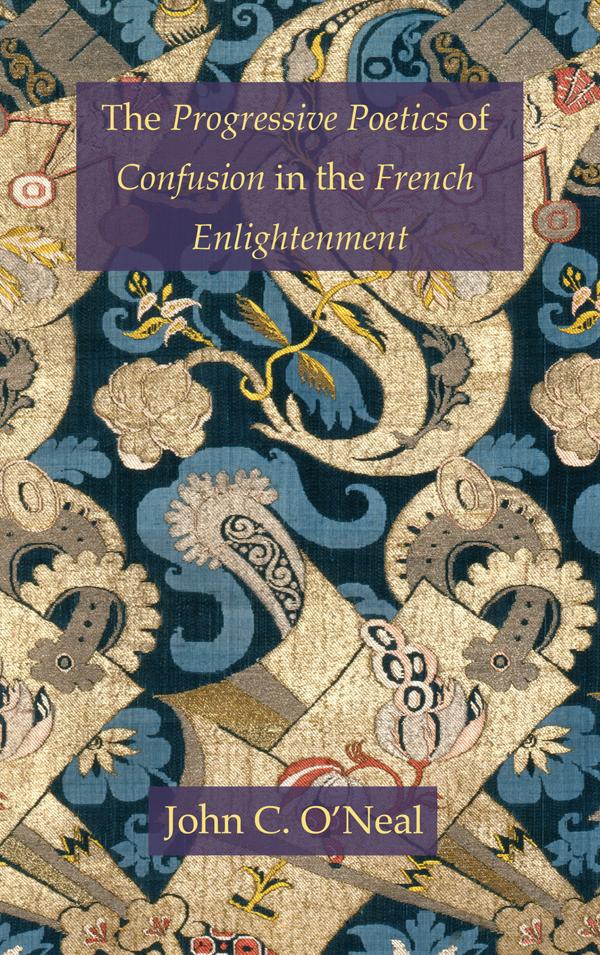
In The Progressive Poetics of Confusion in the French Enlightenment, John C. O'Neal draws largely on the etymological meaning of the word confusion as the action of mixing or blending in order to trace the development of this project which, he claims, aimed to reject dogmatic thinking in all of its forms and recognized the need to embrace complexity. Eighteenth-century thinkers used the notion of confusion in a progressive way to reorganize social classes, literary forms, metaphysical substances, scientific methods, and cultural categories such as taste and gender.
In this new work, O'Neal explores some of the paradoxes of the Enlightenment's theories of knowledge. Each of the chapters in this book attempts to address the questions raised by the eighteenth century's particular approach to confusion as a paradoxical reorganizing principle for the period's progressive agenda. Perhaps the most paradoxical thinker of his times, Diderot occupies a central place in this study of confusion. Other authors include Marivaux, Crébillon, Voltaire, and Pinel, among others. Rousseau and Sade serve as counterexamples to this kind of enlightenment but ultimately do not so much oppose the period's poetics of confusion as they complement it. The final chapter on Sade combines contemporary discussions of politics, society, culture, philosophy, and science in an encyclopedic way that at once reflects the entire period's tendencies and establishes important differences between Sade's thinking and that of the mainstream philosophies. Ultimately, confusion serves, O'Neal argues, as an overarching positive notion for the Enlightenment and its progressive ideals.
In this new work, O'Neal explores some of the paradoxes of the Enlightenment's theories of knowledge. Each of the chapters in this book attempts to address the questions raised by the eighteenth century's particular approach to confusion as a paradoxical reorganizing principle for the period's progressive agenda. Perhaps the most paradoxical thinker of his times, Diderot occupies a central place in this study of confusion. Other authors include Marivaux, Crébillon, Voltaire, and Pinel, among others. Rousseau and Sade serve as counterexamples to this kind of enlightenment but ultimately do not so much oppose the period's poetics of confusion as they complement it. The final chapter on Sade combines contemporary discussions of politics, society, culture, philosophy, and science in an encyclopedic way that at once reflects the entire period's tendencies and establishes important differences between Sade's thinking and that of the mainstream philosophies. Ultimately, confusion serves, O'Neal argues, as an overarching positive notion for the Enlightenment and its progressive ideals.
Sider: 240
Kategori: Litteraturvetenskap & Teori
e-ISBN: 9781611490251
Forsendelsesvægt: 1.2 kg
Sendes inden for: 1-2 dage
Betal nemt med kort, Klarna, Apple Pay eller Google Pay. Ikke tilfreds? Du har altid 14 dages fortrydelsesret. Læs mere i vores vilkår. Har du spørgsmål, så send os en mail på hello@memmo.org.
Memmo gør det nemmere at studere – uanset hvor du er i verden. Hos os samler du dine kursusbøger og smarte studieværktøjer ét sted: resuméer, quizzer, podcasts og flashcards. Og så er der Ted, din studieven, der svarer på alt, du undrer dig over. Over 50 000 studerende studerer allerede her – bygget til at hjælpe dig med at lære hurtigere og stresse mindre.