
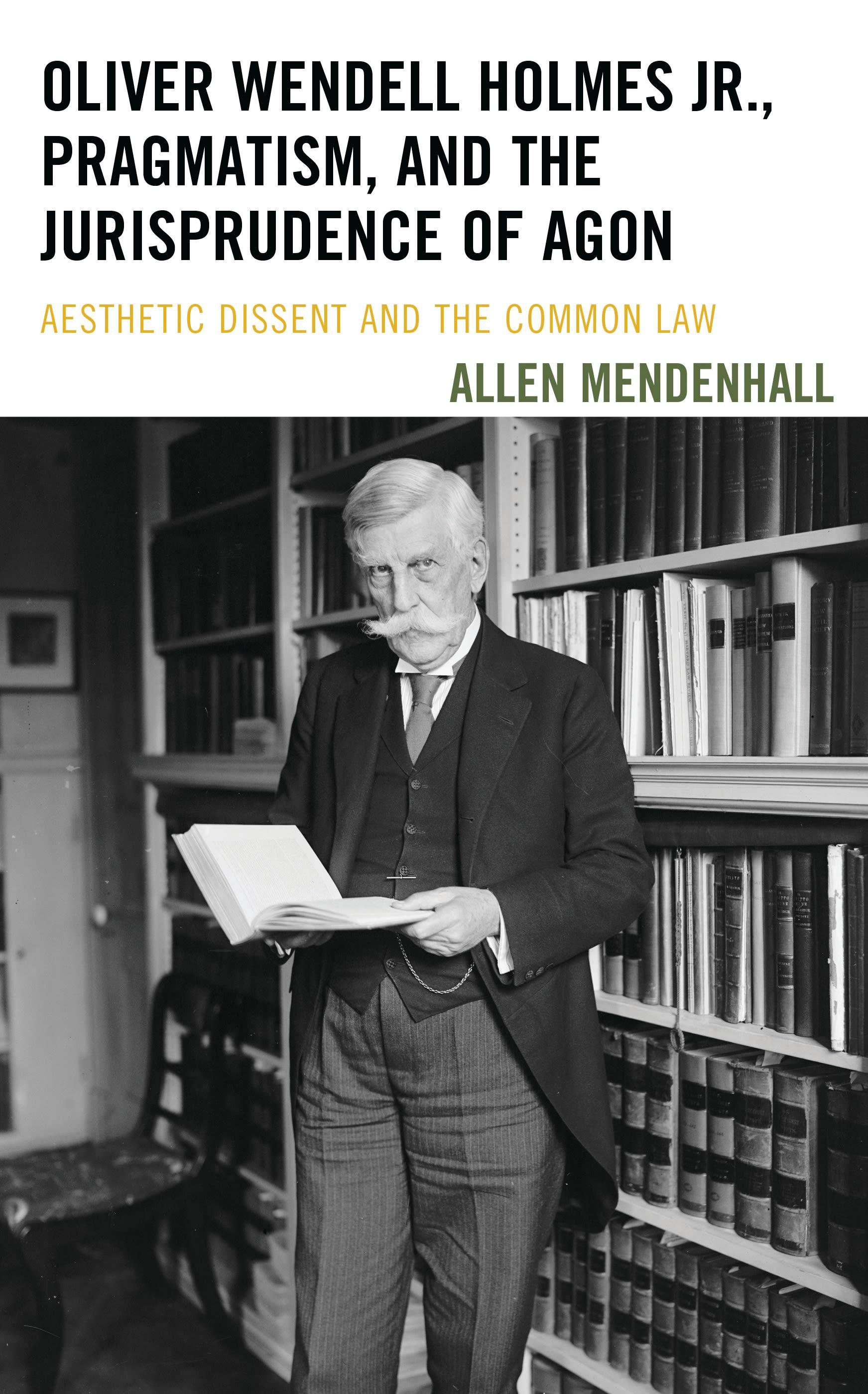
This book argues that Oliver Wendell Holmes Jr., helps us see the law through an Emersonian lens by the way in which he wrote his judicial dissents. Holmes’s literary style mimics and enacts two characteristics of Ralph Waldo Emerson’s thought: “superfluity” and the “poetics of transition,” concepts ascribed to Emerson and developed by literary critic Richard Poirier. Using this aesthetic style borrowed from Emerson and carried out by later pragmatists, Holmes not only made it more likely that his dissents would remain alive for future judges or justices (because how they were written was itself memorable, whatever the value of their content), but also shaped our understanding of dissents and, in this, our understanding of law. By opening constitutional precedent to potential change, Holmes’s dissents made room for future thought, moving our understanding of legal concepts in a more pragmatic direction and away from formalistic understandings of law. Included in this new understanding is the idea that the “canon” of judicial cases involves oppositional positions that must be sustained if the law is to serve pragmatic purposes. This process of precedent-making in a common-law system resembles the construction of the literary canon as it is conceived by Harold Bloom and Richard Posner.
Betal nemt med kort, Klarna, Apple Pay eller Google Pay. Ikke tilfreds? Du har altid 14 dages fortrydelsesret. Læs mere i vores vilkår. Har du spørgsmål, så send os en mail på hello@memmo.org.
Memmo gør det nemmere at studere – uanset hvor du er i verden. Hos os samler du dine kursusbøger og smarte studieværktøjer ét sted: resuméer, quizzer, podcasts og flashcards. Og så er der Ted, din studieven, der svarer på alt, du undrer dig over. Over 50 000 studerende studerer allerede her – bygget til at hjælpe dig med at lære hurtigere og stresse mindre.