
Front Flap:
Poet, essayist, actor, hymn-writer, wit, magazine editor, transvestite stage performer: Christopher Smart, Georgian don-turned-writer, was all of these. He was, and remains, a mercurial individual, an idiosyncratic yet strangely familiar writer of spiritual heights and material depths. His paradoxical exuberance fascinates scholars of eighteenth-century culture, and this collection of essays, a snapshot of current scholarship from both new and established Smart scholars, offers, among others, literary, theological, dramatic and philosophical perspectives on his writing. Here are new ways of reading familiar Smart works — including the astonishing, devout poem of his incarceration, Jubilate Agno — and unfamiliar ones, such as his translations and writing for children. Unexpected readers of Smart, from Coleridge to a testy anonymous annotator, are examined, and Smart's sacred translations and profane stage presence each find a place. Tom Keymer's re-evaluating afterword finds the quality of “betweenness” in Smart's work: between eras, between genres, between forms, Smart's vitality demands reassessment for each new generation of readers.
Contributors: Karina Williamson, Min Wild, Rosalind Powell, Fraser Easton, Clement Hawes, William E. Levine, Noel Chevalier, Lori A. Branch, Daniel J. Ennis, Chris Mounsey, Debbie Welham, Tom Keymer.
Back Flap:
The editors
Min Wild's monograph Christopher Smartand Satire on Smart's Midwife, was published in 2008, and various articles and reviews of a Smartian bent have followed. Her interest in that eighteenth-century favorite, the literary mode of prosopopoeia, has led her to investigate the personification of words, texts and literary modes themselves. She
lectures in eighteenth-century literature and theory at Plymouth University, UK, and reviews in the Times Literary Supplement and elsewhere.
Noel Chevalier is Associate Professor of English at Luther College, University of Regina, Canada. He has published articles on Jubilate Agno and on Smart’s challenge to “legitimate” playhouses in Mrs. Midnight’sOratory. Although his specialty lies in the eighteenth century, his teaching and research cover a diverse range of topics, from literary responses to the Bible, to the roots of globalization, to literary representations of science and scientists. He has helped create two interdisciplinary programs at Luther: one which addresses literature for students in the sciences, and one which explores the philosophical, political, economic, and cultural contexts of globalization.
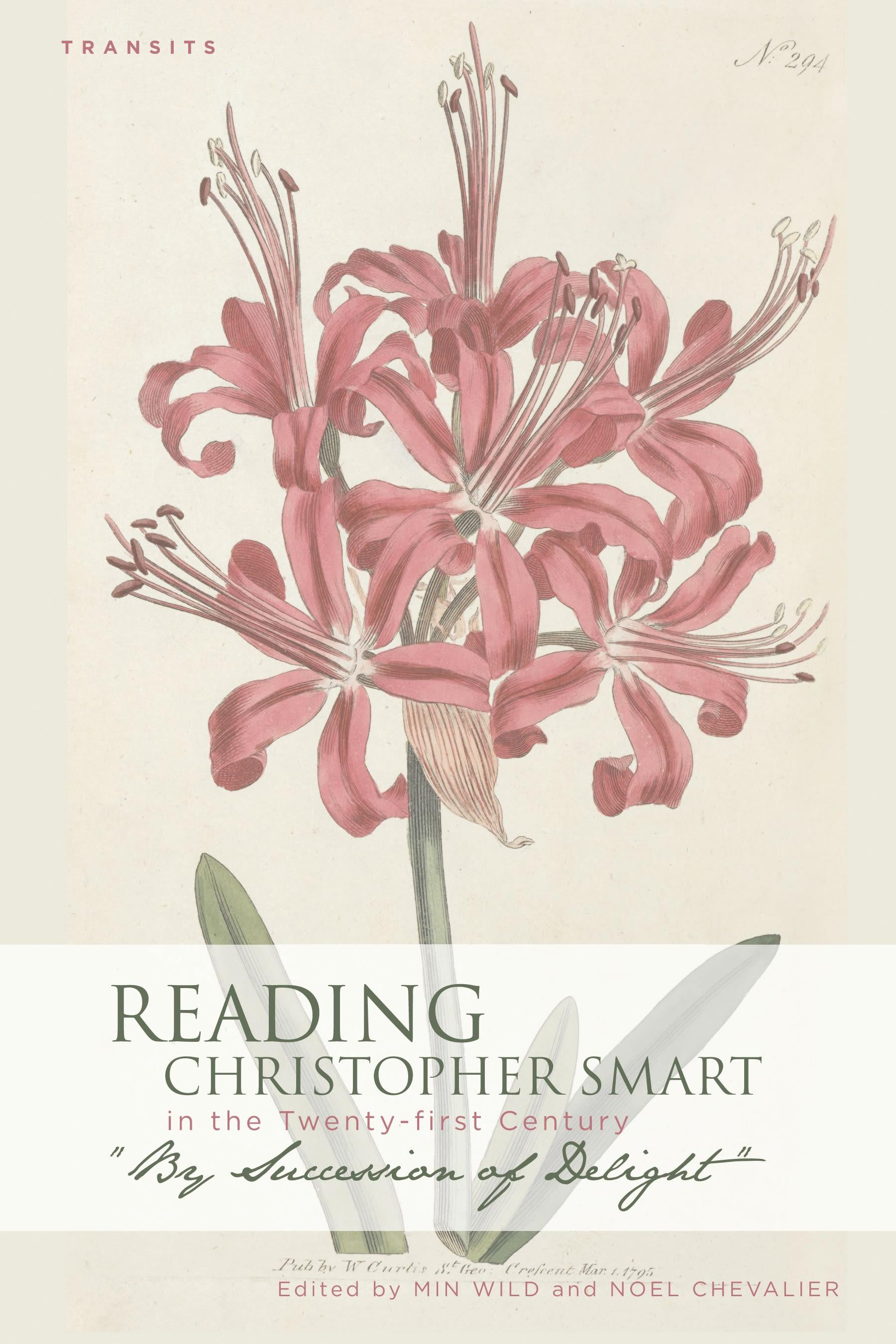
Jacket illustration: "Amaryllis sarniensis or Guernsey Amaryllis," from William Curtis, The Botanical Magazine; or, Flower-GardenDisplayed, Vol. IX. No. 294. London, 1795.
Poet, essayist, actor, hymn-writer, wit, magazine editor, transvestite stage performer: Christopher Smart, Georgian don-turned-writer, was all of these. He was, and remains, a mercurial individual, an idiosyncratic yet strangely familiar writer of spiritual heights and material depths. His paradoxical exuberance fascinates scholars of eighteenth-century culture, and this collection of essays, a snapshot of current scholarship from both new and established Smart scholars, offers, among others, literary, theological, dramatic and philosophical perspectives on his writing. Here are new ways of reading familiar Smart works — including the astonishing, devout poem of his incarceration, Jubilate Agno — and unfamiliar ones, such as his translations and writing for children. Unexpected readers of Smart, from Coleridge to a testy anonymous annotator, are examined, and Smart's sacred translations and profane stage presence each find a place. Tom Keymer's re-evaluating afterword finds the quality of “betweenness” in Smart's work: between eras, between genres, between forms, Smart's vitality demands reassessment for each new generation of readers.
Contributors: Karina Williamson, Min Wild, Rosalind Powell, Fraser Easton, Clement Hawes, William E. Levine, Noel Chevalier, Lori A. Branch, Daniel J. Ennis, Chris Mounsey, Debbie Welham, Tom Keymer.
Back Flap:
The editors
Min Wild's monograph Christopher Smartand Satire on Smart's Midwife, was published in 2008, and various articles and reviews of a Smartian bent have followed. Her interest in that eighteenth-century favorite, the literary mode of prosopopoeia, has led her to investigate the personification of words, texts and literary modes themselves. She
lectures in eighteenth-century literature and theory at Plymouth University, UK, and reviews in the Times Literary Supplement and elsewhere.
Noel Chevalier is Associate Professor of English at Luther College, University of Regina, Canada. He has published articles on Jubilate Agno and on Smart’s challenge to “legitimate” playhouses in Mrs. Midnight’sOratory. Although his specialty lies in the eighteenth century, his teaching and research cover a diverse range of topics, from literary responses to the Bible, to the roots of globalization, to literary representations of science and scientists. He has helped create two interdisciplinary programs at Luther: one which addresses literature for students in the sciences, and one which explores the philosophical, political, economic, and cultural contexts of globalization.
Jacket illustration: "Amaryllis sarniensis or Guernsey Amaryllis," from William Curtis, The Botanical Magazine; or, Flower-GardenDisplayed, Vol. IX. No. 294. London, 1795.
Sider: 274
Kategori: Litteraturvetenskap & Teori
e-ISBN: 9781611485202
Forsendelsesvægt: 1.2 kg
Sendes inden for: 1-2 dage
Betal nemt med kort, Klarna, Apple Pay eller Google Pay. Ikke tilfreds? Du har altid 14 dages fortrydelsesret. Læs mere i vores vilkår. Har du spørgsmål, så send os en mail på hello@memmo.org.
Memmo gør det nemmere at studere – uanset hvor du er i verden. Hos os samler du dine kursusbøger og smarte studieværktøjer ét sted: resuméer, quizzer, podcasts og flashcards. Og så er der Ted, din studieven, der svarer på alt, du undrer dig over. Over 50 000 studerende studerer allerede her – bygget til at hjælpe dig med at lære hurtigere og stresse mindre.