
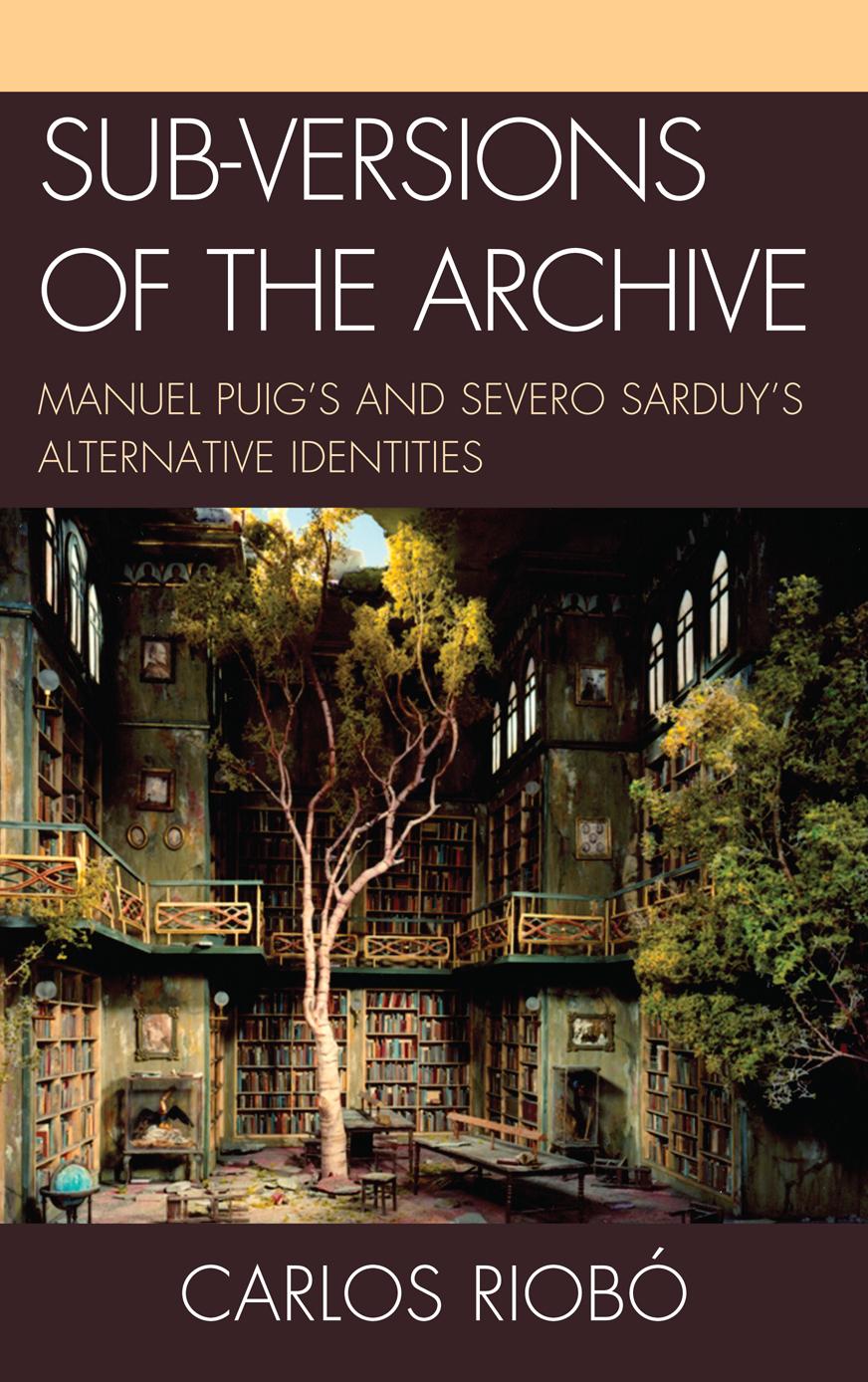
Sub-Versions of the Archive: Manuel Puig's and Severo Sarduy's Alternative Identities analyzes recent theories of the archive to examine how Manuel Puig and Severo Sarduy reformulate the Latin American literary tradition. This study focuses on eclectic theories of the archive as both repository and danger, drawing from an array of sources both within and outside the Hispanic literary tradition: from Borges, Foucault, Arrom, Derrida, González Echevarría, and Guillory to digital media and biotechnology. This book also applies theories of cultural contamination (Maria Lugones) and symbolic capital (Pierre Bourdieu) to the novels of Puig and Sarduy to explore the representation of marginal cultures within a body of literature that previously altered or elided these subaltern cultures from the tradition.
Through close readings and critical theoretical applications, this book demonstrates how archival fiction continues to be one of the most popular strategies among Latin American novelists and, most importantly, how they have successfully managed to find new ways to inscribe their alternative fictions within this tradition. Puig's and Sarduy's novels reproduce discourses-popular culture and the mass media-that lack prestige within the traditional archive. These discourses mirror realities of marginal groups-gay people, children, the poor, the illiterate, women, and racial minorities. Their cultural variants, sub-versions of hegemonic masterstories, are endowed with truth-bearing power for them, but were previously left out of the archive as legitimate novelistic models.
To date, this is the only study of contemporary Latin American fiction that puts current theories of the archive-especially that of Roberto González Echevarría-to practice in such a systematic way. Riobó's analysis of how Puig and Sarduy reformulate the Latin American canon is both a necessary complement of González Echevarría's work and an intelligent answer to the first of his projected masterstories. Riobó's multidisciplinary approach
Through close readings and critical theoretical applications, this book demonstrates how archival fiction continues to be one of the most popular strategies among Latin American novelists and, most importantly, how they have successfully managed to find new ways to inscribe their alternative fictions within this tradition. Puig's and Sarduy's novels reproduce discourses-popular culture and the mass media-that lack prestige within the traditional archive. These discourses mirror realities of marginal groups-gay people, children, the poor, the illiterate, women, and racial minorities. Their cultural variants, sub-versions of hegemonic masterstories, are endowed with truth-bearing power for them, but were previously left out of the archive as legitimate novelistic models.
To date, this is the only study of contemporary Latin American fiction that puts current theories of the archive-especially that of Roberto González Echevarría-to practice in such a systematic way. Riobó's analysis of how Puig and Sarduy reformulate the Latin American canon is both a necessary complement of González Echevarría's work and an intelligent answer to the first of his projected masterstories. Riobó's multidisciplinary approach
Betal nemt med kort, Klarna, Apple Pay eller Google Pay. Ikke tilfreds? Du har altid 14 dages fortrydelsesret. Læs mere i vores vilkår. Har du spørgsmål, så send os en mail på hello@memmo.org.
Memmo gør det nemmere at studere – uanset hvor du er i verden. Hos os samler du dine kursusbøger og smarte studieværktøjer ét sted: resuméer, quizzer, podcasts og flashcards. Og så er der Ted, din studieven, der svarer på alt, du undrer dig over. Over 50 000 studerende studerer allerede her – bygget til at hjælpe dig med at lære hurtigere og stresse mindre.