
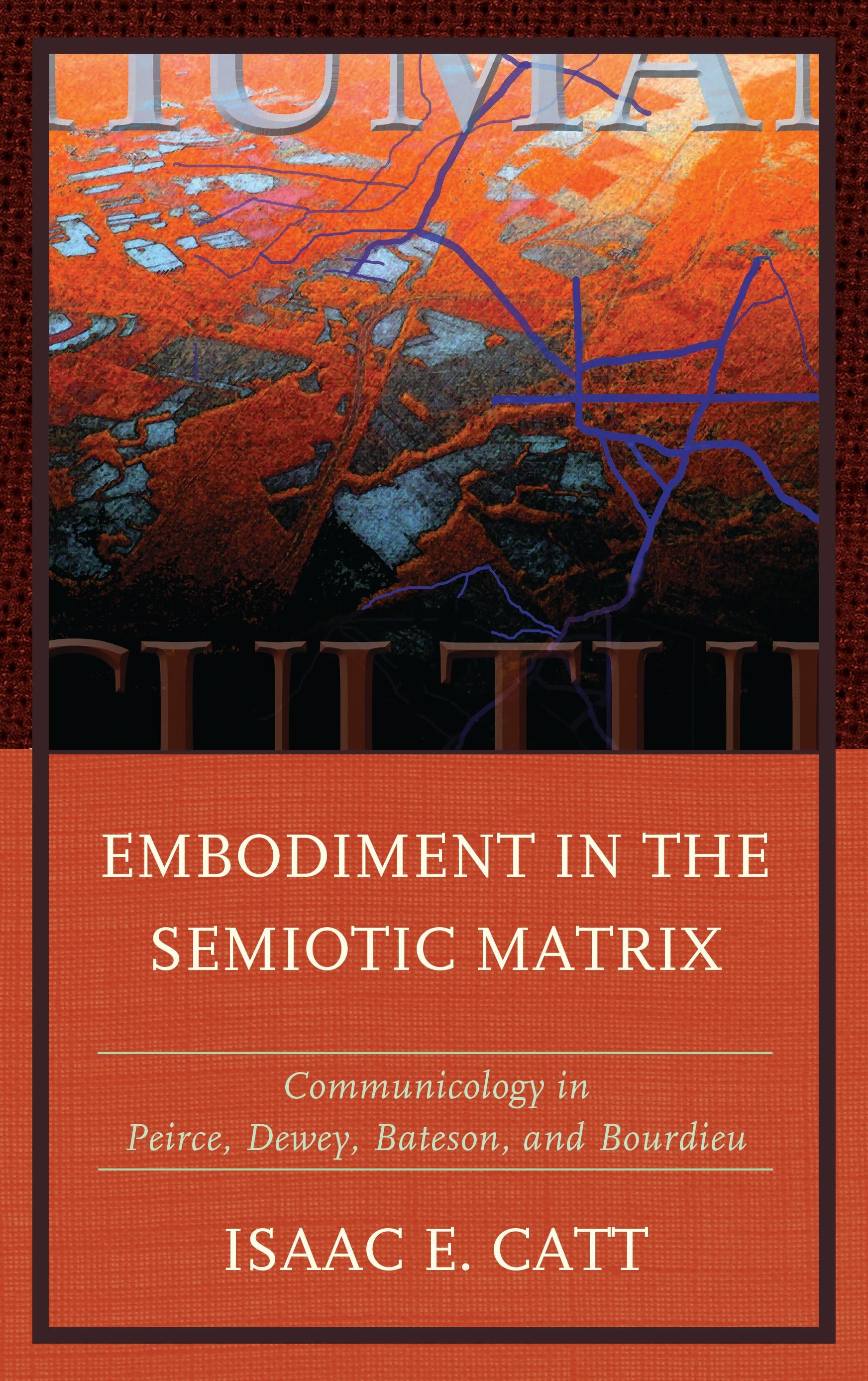
Communicology is widely accepted on the international scene as a new name for the study of human communication. It replaces several equivocal disciplinary conceptions such as "communication," which may fail to distinguish the science of communication from its object of investigation or the message-centered "communication studies," which often obfuscates information exchange with the experience of shared meaning in human encounters. Communicology differs from the American mainstream social science of communication not only because it is grounded in communication theory rather than information theory, but also because it advances a philosophically informed ecological perspective on human discourse. This book is intended as a contribution to the philosophy of communication and the human science of communicology. Semiotic phenomenology is thoroughly described as the synthetic logic that combines a philosophy of consciousness with a science of culture and conduct to explicate the lifeworld habitus. Consciousness is viewed as cultural-semiotic and experience as personal-phenomenological. This is a reciprocal, reflexive relationship in which culture is conceived as consciousness of communication and communication the manifest experience of culture. The book describes embodiment so conceived, including the history of the matrix idea in American pragmatism and European philosophy as they commingled in the United States to produce a unique discipline of communication, the science of embodied discourse. Important roots of this new discipline are described for the first time here in a unique synthesis of C. S. Peirce, John Dewey, Gregory Bateson, and Pierre Bourdieu. In addition, the semiotic relativity hypothesis is argued to be an important implication of this new discipline. Transcending the stale debate on language and thought, the limited conception of linguistic relativity is considerably broadened and deepened. The distinctive lifeworld of humans is argued to occur at the threshold of sign consciousness in the semiotic matrix of culture-society-person. Semiotic phenomenology is not only a synthesis of two great European philosophical movements, structuralism and phenomenology; it is also the essence of American pragmatism. This view culminates in the contemporary human science of communicology.
Betal nemt med kort, Klarna, Apple Pay eller Google Pay. Ikke tilfreds? Du har altid 14 dages fortrydelsesret. Læs mere i vores vilkår. Har du spørgsmål, så send os en mail på hello@memmo.org.
Memmo gør det nemmere at studere – uanset hvor du er i verden. Hos os samler du dine kursusbøger og smarte studieværktøjer ét sted: resuméer, quizzer, podcasts og flashcards. Og så er der Ted, din studieven, der svarer på alt, du undrer dig over. Over 50 000 studerende studerer allerede her – bygget til at hjælpe dig med at lære hurtigere og stresse mindre.