
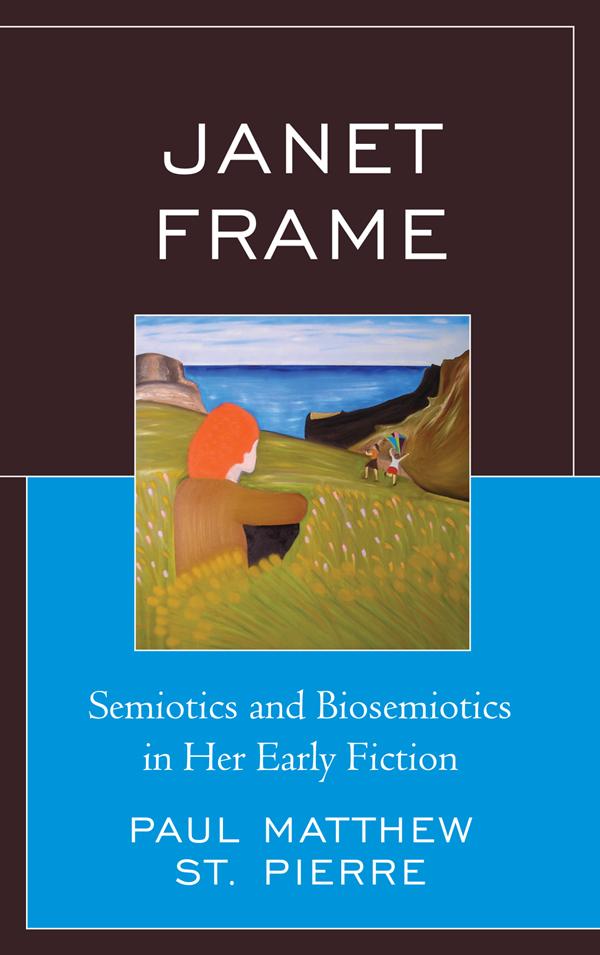
In Janet Frame: Semiotics and Biosemiotics in Her Early Fiction, Paul Matthew St. Pierre exploits the linguistic discipline of semiotics and the neurobiological discipline of biosemiotics to propose an original and dynamic reading of the first four works of fiction by New Zealand writer Janet Frame (1924-2004): The Lagoon: Stories (1951), Owls Do Cry (1957), Faces in the Water (1961), and The Edge of the Alphabet (1962). Opposing the prevailing reading of Frame's early fiction as autobiographical, deriving from her medical history, he argues her books are singular evocations of her astonishing imagination. His purpose is to fix this historical record and provide an alternative model for interpreting one of the 20th century's most stylistically demanding and rewarding writers. Semiotics and biosemiotics are his means for unlocking the early fiction and her later works to a polemical analysis focusing on language, sign transmissions, writing the body, and the biosemiotic self.
In The Lagoon, Owls Do Cry, Faces in the Water, and The Edge of the Alphabet Frame produced what St. Pierre interprets as an original semiotic and biosemiotic modeling system that she applied throughout her oeuvre of twenty books, comprising eight story collections, seven novels, a book of poetry, a children's novel, and three volumes of autobiography. Using this modeling system, she designed her fiction as a visual verbal field consisting of still and moving images generated in the imagination, located in the brains and central nervous systems of her narrators, characters, and readers, and, primarily, of the author herself. The author discusses the significations of: 1) Frame's image-signs in water, glass, photographs, film, membranes, skin, and clothing; 2) her primary sign repertoire of objects, language, and human persons in the figures of blood, skin, and sun; 3) her body-signs, including those generated in the circulatory and neurological systems of all human organisms as biosemiotic living s
In The Lagoon, Owls Do Cry, Faces in the Water, and The Edge of the Alphabet Frame produced what St. Pierre interprets as an original semiotic and biosemiotic modeling system that she applied throughout her oeuvre of twenty books, comprising eight story collections, seven novels, a book of poetry, a children's novel, and three volumes of autobiography. Using this modeling system, she designed her fiction as a visual verbal field consisting of still and moving images generated in the imagination, located in the brains and central nervous systems of her narrators, characters, and readers, and, primarily, of the author herself. The author discusses the significations of: 1) Frame's image-signs in water, glass, photographs, film, membranes, skin, and clothing; 2) her primary sign repertoire of objects, language, and human persons in the figures of blood, skin, and sun; 3) her body-signs, including those generated in the circulatory and neurological systems of all human organisms as biosemiotic living s
Betal nemt med kort, Klarna, Apple Pay eller Google Pay. Ikke tilfreds? Du har altid 14 dages fortrydelsesret. Læs mere i vores vilkår. Har du spørgsmål, så send os en mail på hello@memmo.org.
Memmo gør det nemmere at studere – uanset hvor du er i verden. Hos os samler du dine kursusbøger og smarte studieværktøjer ét sted: resuméer, quizzer, podcasts og flashcards. Og så er der Ted, din studieven, der svarer på alt, du undrer dig over. Over 50 000 studerende studerer allerede her – bygget til at hjælpe dig med at lære hurtigere og stresse mindre.