
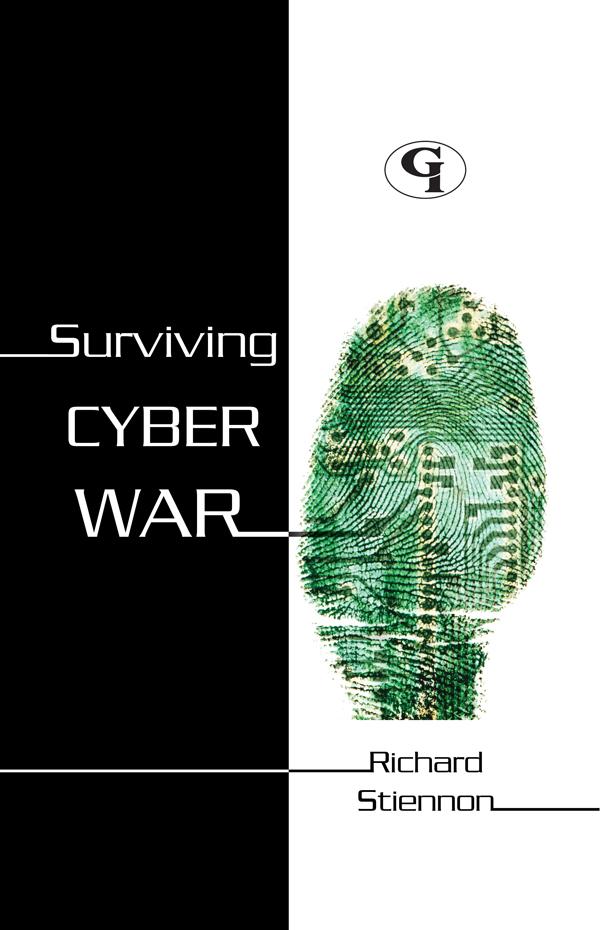
Military and intelligence leaders agree that the next major war is not likely to be fought on the battleground but in cyber space. Richard Stiennon argues the era of cyber warfare has already begun. Recent cyber attacks on United States government departments and the Pentagon corroborate this claim. China has compromised email servers at the German Chancellery, Whitehall, and the Pentagon. In August 2008, Russia launched a cyber attack against Georgia that was commensurate with their invasion of South Ossetia. This was the first time that modern cyber attacks were used in conjunction with a physical attack.
Every day, thousands of attempts are made to hack into America's critical infrastructure. These attacks, if successful, could have devastating consequences. In Surviving Cyberwar, Stiennon introduces cyberwar, outlines an effective defense against cyber threats, and explains how to prepare for future attacks.
The book:
begins with Shawn Carpenter and his discovery that China had hacked into his work place, Sandia Labs;
follows the rise of cyber espionage on the part of the Chinese People's Liberation Army (PLA) as increasingly sophisticated and overt attacks are carried out against government and military networks around the world;
moves from cyber espionage to cyberwar itself, revealing the rise of distributed denial of service (DDoS) as a means of attacking servers, websites, and countries;
provides a historical perspective on technology and warfare is provided, drawing on lessons learned from Sun Tsu to Lawrence of Arabia to Winston Churchill; and
finishes by considering how major democracies are preparing for cyberwar and predicts ways that a new era of cyber conflict is going to impact the Internet, privacy, and the way the world works.
This text is a stimulating and informative look at one of the gravest threats to Homeland Security today, offering new insights to technologists on the front lines, helping policy makers understand the challenges they face, and providing guidance for every organization to help reduce exposure to cyber threats. It is essential reading for anyone concerned with the current geopolitical state of affairs.
Every day, thousands of attempts are made to hack into America's critical infrastructure. These attacks, if successful, could have devastating consequences. In Surviving Cyberwar, Stiennon introduces cyberwar, outlines an effective defense against cyber threats, and explains how to prepare for future attacks.
The book:
begins with Shawn Carpenter and his discovery that China had hacked into his work place, Sandia Labs;
follows the rise of cyber espionage on the part of the Chinese People's Liberation Army (PLA) as increasingly sophisticated and overt attacks are carried out against government and military networks around the world;
moves from cyber espionage to cyberwar itself, revealing the rise of distributed denial of service (DDoS) as a means of attacking servers, websites, and countries;
provides a historical perspective on technology and warfare is provided, drawing on lessons learned from Sun Tsu to Lawrence of Arabia to Winston Churchill; and
finishes by considering how major democracies are preparing for cyberwar and predicts ways that a new era of cyber conflict is going to impact the Internet, privacy, and the way the world works.
This text is a stimulating and informative look at one of the gravest threats to Homeland Security today, offering new insights to technologists on the front lines, helping policy makers understand the challenges they face, and providing guidance for every organization to help reduce exposure to cyber threats. It is essential reading for anyone concerned with the current geopolitical state of affairs.
Betal nemt med kort, Klarna, Apple Pay eller Google Pay. Ikke tilfreds? Du har altid 14 dages fortrydelsesret. Læs mere i vores vilkår. Har du spørgsmål, så send os en mail på hello@memmo.org.
Memmo gør det nemmere at studere – uanset hvor du er i verden. Hos os samler du dine kursusbøger og smarte studieværktøjer ét sted: resuméer, quizzer, podcasts og flashcards. Og så er der Ted, din studieven, der svarer på alt, du undrer dig over. Over 50 000 studerende studerer allerede her – bygget til at hjælpe dig med at lære hurtigere og stresse mindre.