
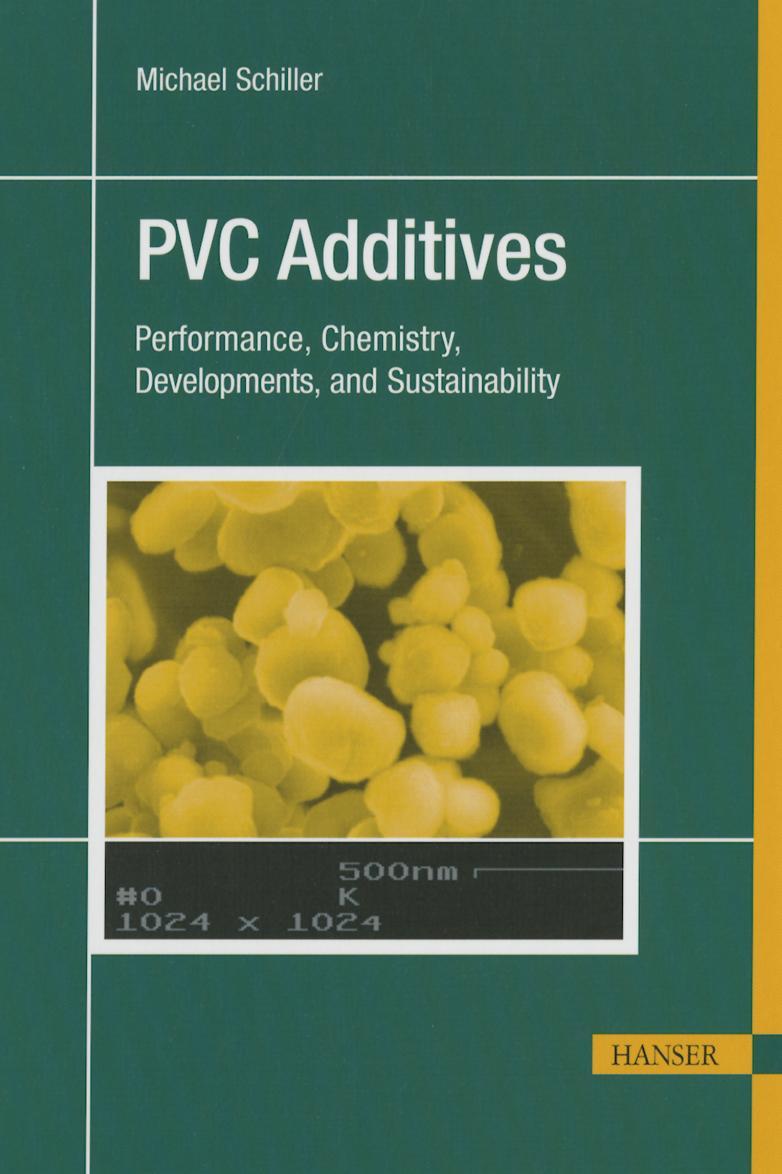
PVC differs in its stabilization compared to other commodity plastics. Various metal compounds are suitable for the stabilization of PVC: lead, tin, calcium, magnesium, zinc, rare earths, and also almost-metal-free systems. These differences are described in the introductory part of this book, with their advantages, possibilities, and problems, from the perspective of the chemist but made understandable for salespeople and technicians.
Numerous tables and figures are included, providing structures and physico-chemical data. A special section for beginners is dedicated to guiding formulations and test methods. A relatively short section deals with development trends in Europe. Sustainability is a major theme, and it is demonstrated that PVC has a strong potential to develop into a fully sustainable material.
Another section deals with the everyday problems in the processing of PVC, such as the formation of specks, photo-effects, and plate-out. Plate-out is a common problem in the processing of PVC but only relatively few publications cover it. The causes, influencing factors, and mechanisms are still poorly understood. This section, unique in the literature, provides assistance in the selection and dosage of raw materials to PVC processor, based on the influencing factors during processing.
Betal nemt med kort, Klarna, Apple Pay eller Google Pay. Ikke tilfreds? Du har altid 14 dages fortrydelsesret. Læs mere i vores vilkår. Har du spørgsmål, så send os en mail på hello@memmo.org.
Memmo gør det nemmere at studere – uanset hvor du er i verden. Hos os samler du dine kursusbøger og smarte studieværktøjer ét sted: resuméer, quizzer, podcasts og flashcards. Og så er der Ted, din studieven, der svarer på alt, du undrer dig over. Over 50 000 studerende studerer allerede her – bygget til at hjælpe dig med at lære hurtigere og stresse mindre.
Du kan måske også lide
Køb bogen0