
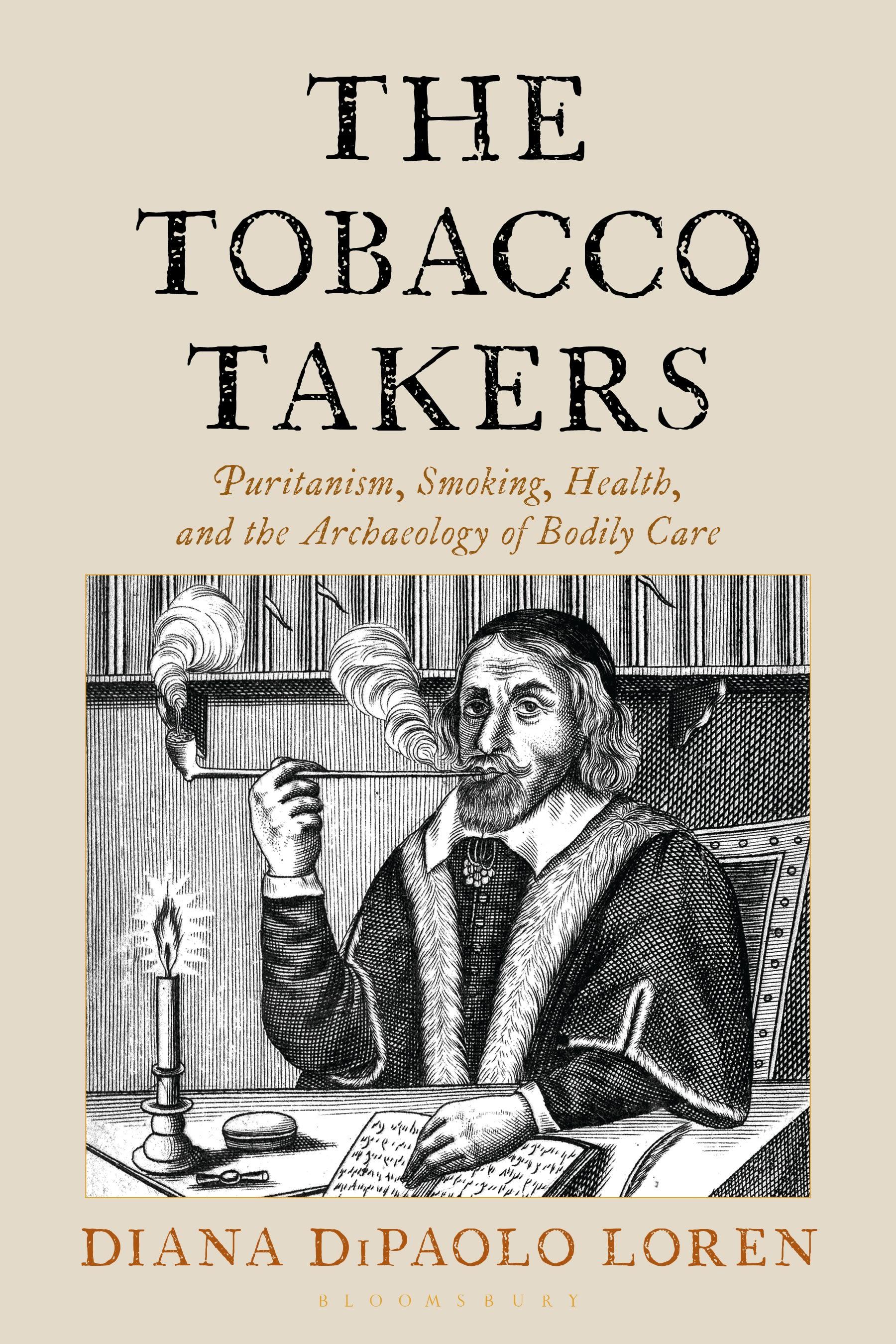
Utilizing archaeological, archival, and visual sources, this book reconsiders tobacco and smoking in the 17th-century Puritan colonies through the lens of religious beliefs and medical care.
Indigenous to the Americas and cultivated by Indigenous people for thousands of years, tobacco was introduced to Europeans in the 16th century. For Indigenous peoples in North and South America, tobacco was an important part of ceremonial life and was commonly used in healing. By the early 17th century, tobacco was found all over the globe. To keep pace with the high demand, Native American and African people labored on plantations in the Virginia colony to produce tobacco for the English world, including the Puritan colonies in the Northeast United States.
Readers may be surprised to learn that archaeological records document the popularity of smoking throughout 17th-century North America. In fact, tobacco pipes are ubiquitous in archaeological sites in the Atlantic East. While historical archaeologists have long talked about smoking in the Atlantic world, a discussion of the motivation behind early Colonial smoking is new. The assumption has been that smoking during this period was a leisure activity, but in the 17th-century Puritan world, smoking tobacco was often prescribed to alleviate numerous illnesses, as evidenced in the writings of physicians and ministers as well as pharmacopeia.
In this book, the presence of white clay tobacco pipes found in the archaeological record of Puritan colonies receives further scrutiny. For Puritans, drunkenness, excessive tobacco consumption, and conspicuous displays of prosperity were strictly forbidden. While laws in the Puritan colonies and the laws of Harvard College prohibited smoking as a form of licentious self-indulgence they did permit the medicinal use of smoking tobacco. When viewed through this lens, tobacco pipes can be viewed as an item of bodily care that addresses physical and metaphysical ailments.
Indigenous to the Americas and cultivated by Indigenous people for thousands of years, tobacco was introduced to Europeans in the 16th century. For Indigenous peoples in North and South America, tobacco was an important part of ceremonial life and was commonly used in healing. By the early 17th century, tobacco was found all over the globe. To keep pace with the high demand, Native American and African people labored on plantations in the Virginia colony to produce tobacco for the English world, including the Puritan colonies in the Northeast United States.
Readers may be surprised to learn that archaeological records document the popularity of smoking throughout 17th-century North America. In fact, tobacco pipes are ubiquitous in archaeological sites in the Atlantic East. While historical archaeologists have long talked about smoking in the Atlantic world, a discussion of the motivation behind early Colonial smoking is new. The assumption has been that smoking during this period was a leisure activity, but in the 17th-century Puritan world, smoking tobacco was often prescribed to alleviate numerous illnesses, as evidenced in the writings of physicians and ministers as well as pharmacopeia.
In this book, the presence of white clay tobacco pipes found in the archaeological record of Puritan colonies receives further scrutiny. For Puritans, drunkenness, excessive tobacco consumption, and conspicuous displays of prosperity were strictly forbidden. While laws in the Puritan colonies and the laws of Harvard College prohibited smoking as a form of licentious self-indulgence they did permit the medicinal use of smoking tobacco. When viewed through this lens, tobacco pipes can be viewed as an item of bodily care that addresses physical and metaphysical ailments.
Betal nemt med kort, Klarna, Apple Pay eller Google Pay. Ikke tilfreds? Du har altid 14 dages fortrydelsesret. Læs mere i vores vilkår. Har du spørgsmål, så send os en mail på hello@memmo.org.
Memmo gør det nemmere at studere – uanset hvor du er i verden. Hos os samler du dine kursusbøger og smarte studieværktøjer ét sted: resuméer, quizzer, podcasts og flashcards. Og så er der Ted, din studieven, der svarer på alt, du undrer dig over. Over 50 000 studerende studerer allerede her – bygget til at hjælpe dig med at lære hurtigere og stresse mindre.