
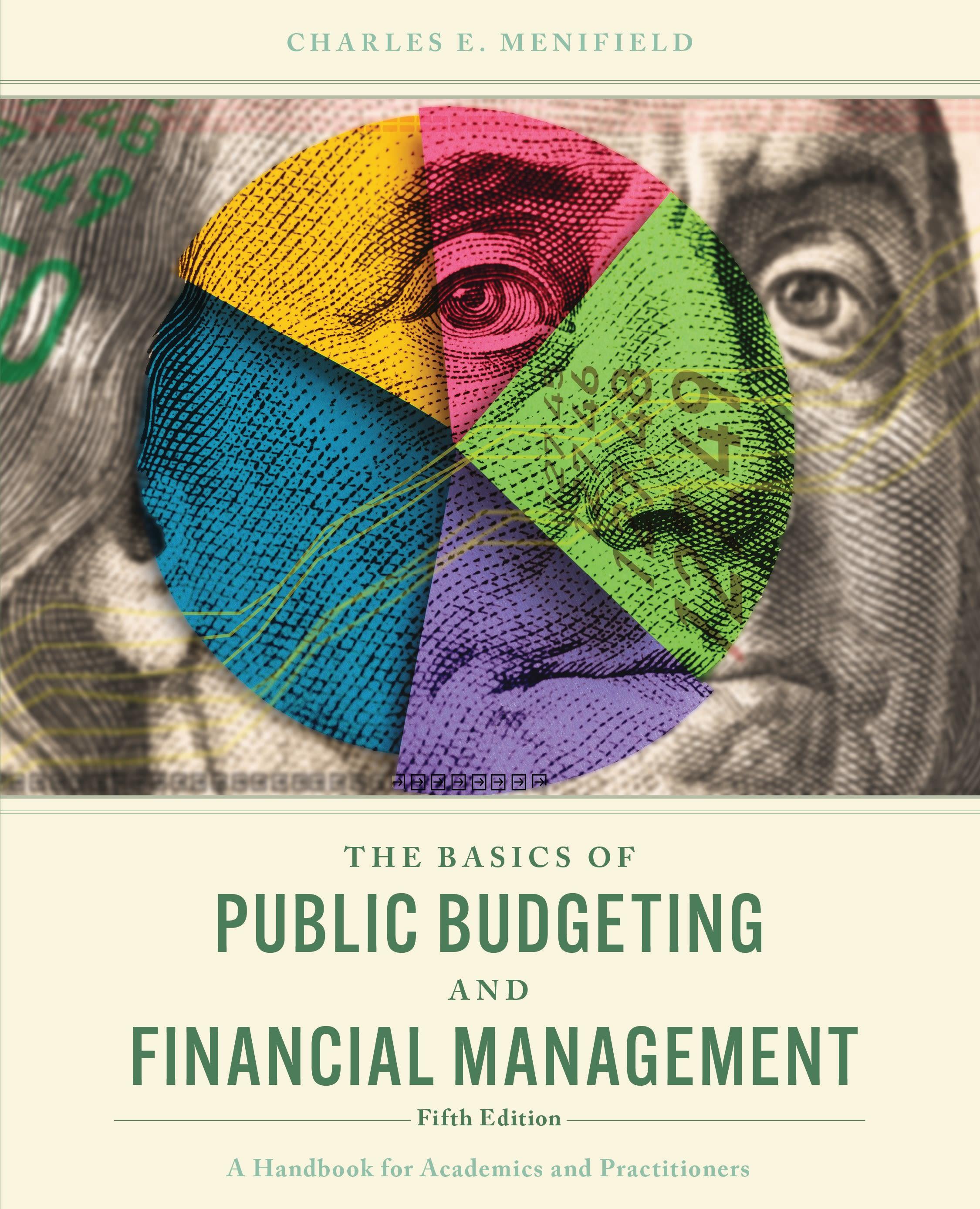
Connecting budgetary theory with practical tools, Charles E. Menifield carefully examines the key areas that every budgeting and financial management student needs to know in order to be a successful budgeteer in a local government, nonprofit, or state-level budget office. From the perspective of a bureaucrat, students examine various concepts and then work through in-class and out-of-class exercises and problems to reinforce those concepts and ideas through practical applications.
Menifield provides an overview of the basic budgeting concepts, types, and techniques to orient students, along with discussion of budget cycles and the actors involved in the process. Chapters unfold to present personal services, operating, and capital budgets, as well as the various ways to fund public budgets. Students will gain an understanding of budgeting techniques and analytical models, but also how these methods are useful in answering important policy questions. Other topics include cash management, risk management, procurement, debt management, incentivizing economic development, and cutback management strategies. Menifield concludes with an examination of different data sources, data quality and appropriateness, and the different ways to communicate budget data effectively using charts, graphs, and slides.
Each chapter provides the student with a list of important terms, phrases, and exercises that require the students to apply what they have learned in each chapter using only basic office applications. The Fifth Edition of the book provides in-class exercises for each chapter, allowing students not only to compare their responses to their peers in small groups, but also to present those responses to the entire class with the goal of improving their presentation skills. This book blends budgetary theory and practice in a volume that is easy to understand by both undergraduate and graduate students alike.
Menifield provides an overview of the basic budgeting concepts, types, and techniques to orient students, along with discussion of budget cycles and the actors involved in the process. Chapters unfold to present personal services, operating, and capital budgets, as well as the various ways to fund public budgets. Students will gain an understanding of budgeting techniques and analytical models, but also how these methods are useful in answering important policy questions. Other topics include cash management, risk management, procurement, debt management, incentivizing economic development, and cutback management strategies. Menifield concludes with an examination of different data sources, data quality and appropriateness, and the different ways to communicate budget data effectively using charts, graphs, and slides.
Each chapter provides the student with a list of important terms, phrases, and exercises that require the students to apply what they have learned in each chapter using only basic office applications. The Fifth Edition of the book provides in-class exercises for each chapter, allowing students not only to compare their responses to their peers in small groups, but also to present those responses to the entire class with the goal of improving their presentation skills. This book blends budgetary theory and practice in a volume that is easy to understand by both undergraduate and graduate students alike.
Sider: 250
Kategori: Statsvetenskap & Politik
e-ISBN: 9781538184042
Forsendelsesvægt: 1.2 kg
Sendes inden for: 1-2 dage
Betal nemt med kort, Klarna, Apple Pay eller Google Pay. Ikke tilfreds? Du har altid 14 dages fortrydelsesret. Læs mere i vores vilkår. Har du spørgsmål, så send os en mail på hello@memmo.org.
Memmo gør det nemmere at studere – uanset hvor du er i verden. Hos os samler du dine kursusbøger og smarte studieværktøjer ét sted: resuméer, quizzer, podcasts og flashcards. Og så er der Ted, din studieven, der svarer på alt, du undrer dig over. Over 50 000 studerende studerer allerede her – bygget til at hjælpe dig med at lære hurtigere og stresse mindre.