
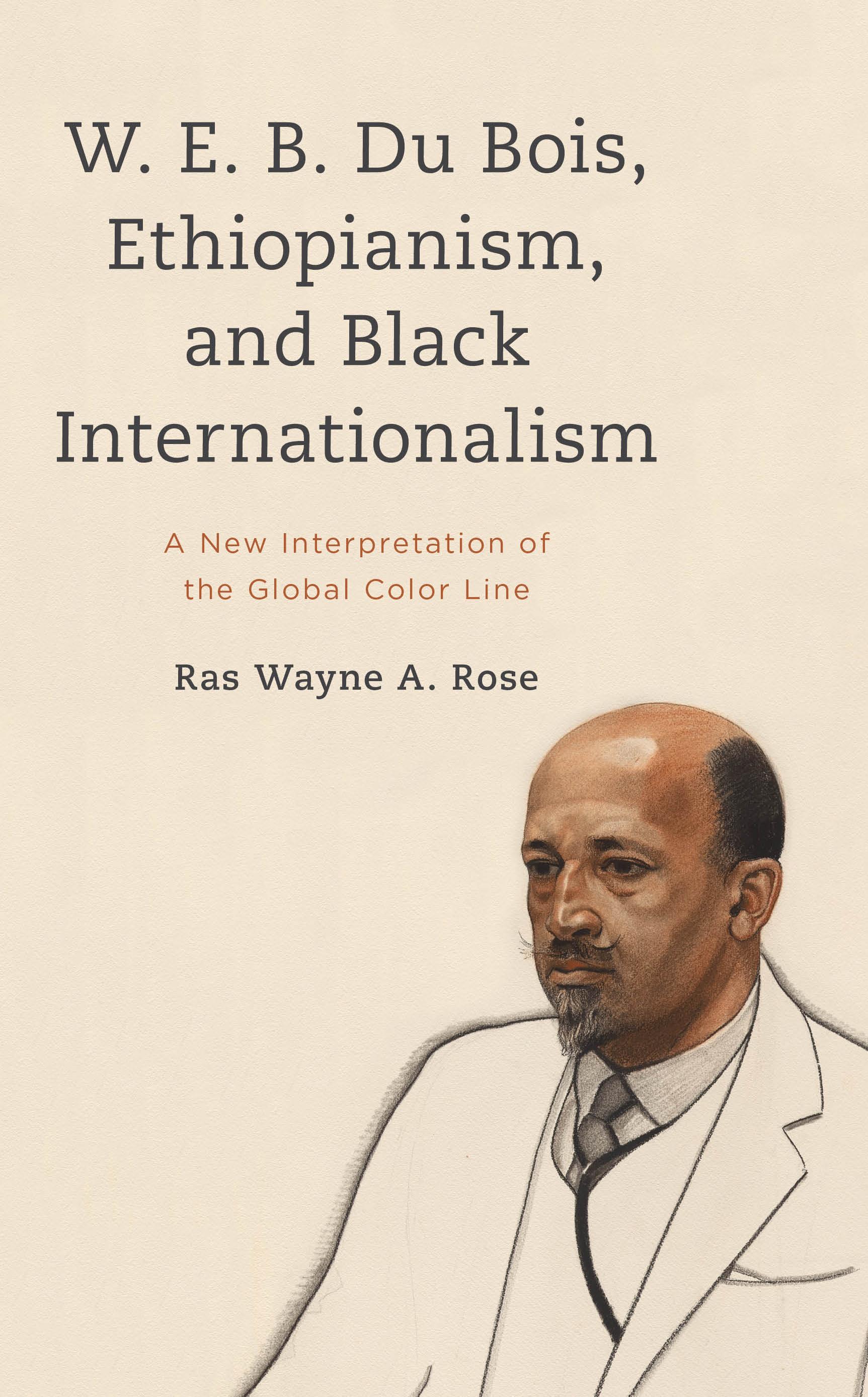
Scholarship on Black internationalism has experienced a revival. Whilst this scholarship has increasingly turned towards examining Du Bois's thoughts on the “color line” in a global rather than national context, none do so by centering his Ethiopian-centered perspective. This book provides an examination of Du Bois's efforts to link African Americans, Afro-Caribbean, and the Pan African project to Ethiopia as a response to the emerging question of Black historical identity.
For Du Bois, Ethiopia, Ethiopian history, and its monarchial leadership were essential to resolving the global problem of the “color line”. He believed that Africans in the Diaspora, especially in the United States, and Africans across Ethiopia should build reciprocal relations with Ethiopia for the benefit of the Black Race and their mutual development. Du Bois also made multiple attempts to engage and establish relations with Ethiopia and worked through official and unofficial channels to develop those relations.
By revisiting and reevaluating Du Bois's engagement strategies with Ethiopia, the book suggests ways in which his evolving Pan-Africanism might be understood differently to how it has been deployed in scholarship on Black internationalism. The book provides new perspectives on Du Bois's famous invocation of the global “color line” by uncovering his conceptual and practical reasons for specifically connecting Ethiopia to African Americans and the issues of global social and economic justice.
For Du Bois, Ethiopia, Ethiopian history, and its monarchial leadership were essential to resolving the global problem of the “color line”. He believed that Africans in the Diaspora, especially in the United States, and Africans across Ethiopia should build reciprocal relations with Ethiopia for the benefit of the Black Race and their mutual development. Du Bois also made multiple attempts to engage and establish relations with Ethiopia and worked through official and unofficial channels to develop those relations.
By revisiting and reevaluating Du Bois's engagement strategies with Ethiopia, the book suggests ways in which his evolving Pan-Africanism might be understood differently to how it has been deployed in scholarship on Black internationalism. The book provides new perspectives on Du Bois's famous invocation of the global “color line” by uncovering his conceptual and practical reasons for specifically connecting Ethiopia to African Americans and the issues of global social and economic justice.
Betal nemt med kort, Klarna, Apple Pay eller Google Pay. Ikke tilfreds? Du har altid 14 dages fortrydelsesret. Læs mere i vores vilkår. Har du spørgsmål, så send os en mail på hello@memmo.org.
Memmo gør det nemmere at studere – uanset hvor du er i verden. Hos os samler du dine kursusbøger og smarte studieværktøjer ét sted: resuméer, quizzer, podcasts og flashcards. Og så er der Ted, din studieven, der svarer på alt, du undrer dig over. Over 50 000 studerende studerer allerede her – bygget til at hjælpe dig med at lære hurtigere og stresse mindre.