
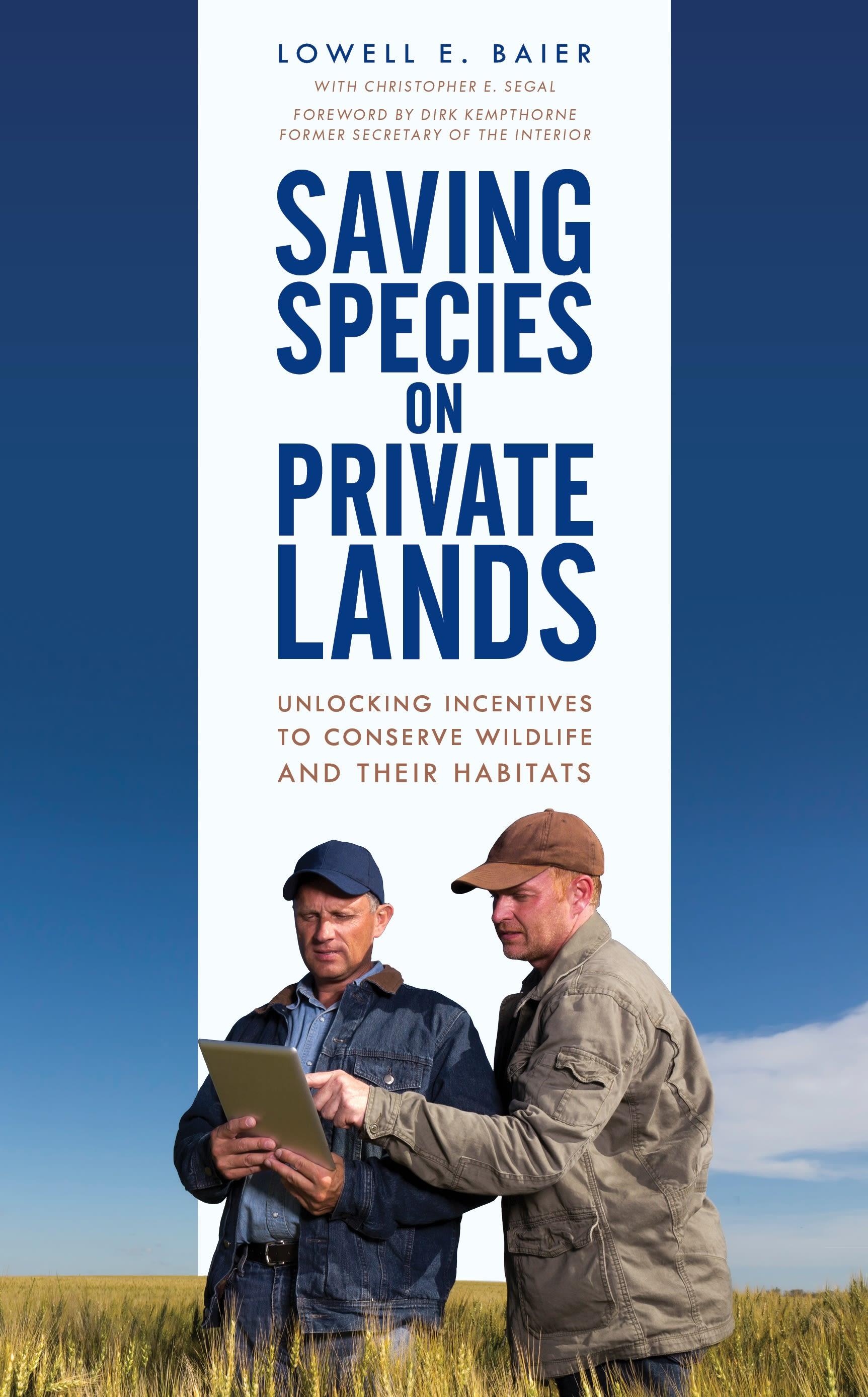
Winner, Independent Press Award - Conservation/Green, 2021
The only hope for successful conservation of America’s threatened, endangered, and at-risk wildlife is through voluntary, cooperative partnerships that focus on private land, where over 75% of at-risk species can be found. Private landowners form the bedrock of these partnerships, and they have a long history of rising to meet the challenge of conservation. But they can’t do it alone.
This book is a guide for private landowners who want to conserve wildlife. Whether engaged in farming, ranching, forestry, mining, energy development, or another business, private working lands all have value as wildlife habitat, with the proper management and financial support. This book provides landowners and their partners with a roadmap to achieve conservation compatible with their financial and personal goals.
This book introduces the art and language of land management planning as well as regulatory compliance with laws such as the Endangered Species Act of 1973. It categorizes and explains the tools used by wildlife professionals to implement conservation on private lands. Moreover it documents the multitude of federal, state, local, and private opportunities for landowners to find financial and technical assistance in managing wildlife, from working with a local NGO to accessing the $6 billion per year available through the federal Farm Bill.
The only hope for successful conservation of America’s threatened, endangered, and at-risk wildlife is through voluntary, cooperative partnerships that focus on private land, where over 75% of at-risk species can be found. Private landowners form the bedrock of these partnerships, and they have a long history of rising to meet the challenge of conservation. But they can’t do it alone.
This book is a guide for private landowners who want to conserve wildlife. Whether engaged in farming, ranching, forestry, mining, energy development, or another business, private working lands all have value as wildlife habitat, with the proper management and financial support. This book provides landowners and their partners with a roadmap to achieve conservation compatible with their financial and personal goals.
This book introduces the art and language of land management planning as well as regulatory compliance with laws such as the Endangered Species Act of 1973. It categorizes and explains the tools used by wildlife professionals to implement conservation on private lands. Moreover it documents the multitude of federal, state, local, and private opportunities for landowners to find financial and technical assistance in managing wildlife, from working with a local NGO to accessing the $6 billion per year available through the federal Farm Bill.
Betal nemt med kort, Klarna, Apple Pay eller Google Pay. Ikke tilfreds? Du har altid 14 dages fortrydelsesret. Læs mere i vores vilkår. Har du spørgsmål, så send os en mail på hello@memmo.org.
Memmo gør det nemmere at studere – uanset hvor du er i verden. Hos os samler du dine kursusbøger og smarte studieværktøjer ét sted: resuméer, quizzer, podcasts og flashcards. Og så er der Ted, din studieven, der svarer på alt, du undrer dig over. Over 50 000 studerende studerer allerede her – bygget til at hjælpe dig med at lære hurtigere og stresse mindre.