
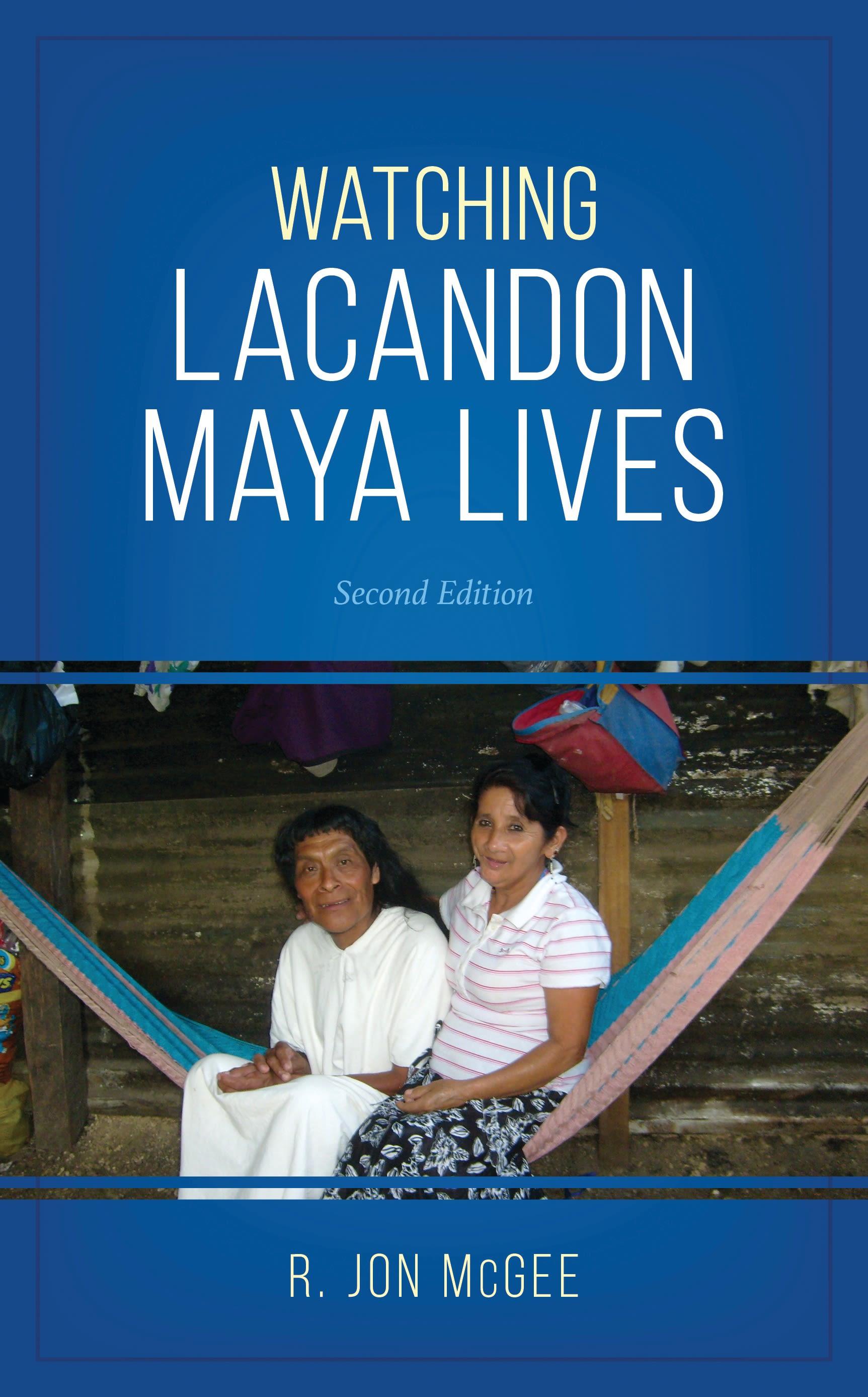
Although romanticized as the last of the ancient Maya living isolated in the forest, several generations of the Lacandon Maya have had their lives shaped by the international oil economy, tourism, and political unrest.
Watching Lacandon Maya Lives is an examination of dramatic cultural changes in a Maya rainforest farming community over the last forty years, including changes to their families, industries, religion, health and healing practices, and gender roles. The book contains several discussions of anthropological theory in accessible, jargon-free language, including how the use of different theoretical perspectives impacts an ethnographer’s fieldwork experience. While relating his own mishaps, experiences of community strife, and conflicts, Jon McGee encourages students to shed the romantic veil through which ethnographies are usually viewed and think more deeply about how events in our own lives influence how we understand the behavior of people around us.
New to the Second Edition:
Revised Introduction incorporates the author’s recent work with the Lacandon and discussions of anthropological writing, culture theory, and how events in the author’s personal life have changed his approach to anthropological fieldwork.Revised chapter, “Finding an Income in the Lacandon Jungle” focuses on families who have shifted from a subsistence farming economy to earning revenue by renting facilities to tourists, owning small community stores, working as hired labor for archaeologists, or make use of a variety of government rural aid programs created in the last two decades (Chapter 5).New chapter, “Forty Years Among the Lacandon: Some Lessons Learned,” discusses what the author’s 40 years of experience as an ethnographer has taught him about the discipline of anthropology and the concept of culture (Chapter 8)
Watching Lacandon Maya Lives is an examination of dramatic cultural changes in a Maya rainforest farming community over the last forty years, including changes to their families, industries, religion, health and healing practices, and gender roles. The book contains several discussions of anthropological theory in accessible, jargon-free language, including how the use of different theoretical perspectives impacts an ethnographer’s fieldwork experience. While relating his own mishaps, experiences of community strife, and conflicts, Jon McGee encourages students to shed the romantic veil through which ethnographies are usually viewed and think more deeply about how events in our own lives influence how we understand the behavior of people around us.
New to the Second Edition:
Revised Introduction incorporates the author’s recent work with the Lacandon and discussions of anthropological writing, culture theory, and how events in the author’s personal life have changed his approach to anthropological fieldwork.Revised chapter, “Finding an Income in the Lacandon Jungle” focuses on families who have shifted from a subsistence farming economy to earning revenue by renting facilities to tourists, owning small community stores, working as hired labor for archaeologists, or make use of a variety of government rural aid programs created in the last two decades (Chapter 5).New chapter, “Forty Years Among the Lacandon: Some Lessons Learned,” discusses what the author’s 40 years of experience as an ethnographer has taught him about the discipline of anthropology and the concept of culture (Chapter 8)
Betal nemt med kort, Klarna, Apple Pay eller Google Pay. Ikke tilfreds? Du har altid 14 dages fortrydelsesret. Læs mere i vores vilkår. Har du spørgsmål, så send os en mail på hello@memmo.org.
Memmo gør det nemmere at studere – uanset hvor du er i verden. Hos os samler du dine kursusbøger og smarte studieværktøjer ét sted: resuméer, quizzer, podcasts og flashcards. Og så er der Ted, din studieven, der svarer på alt, du undrer dig over. Over 50 000 studerende studerer allerede her – bygget til at hjælpe dig med at lære hurtigere og stresse mindre.