
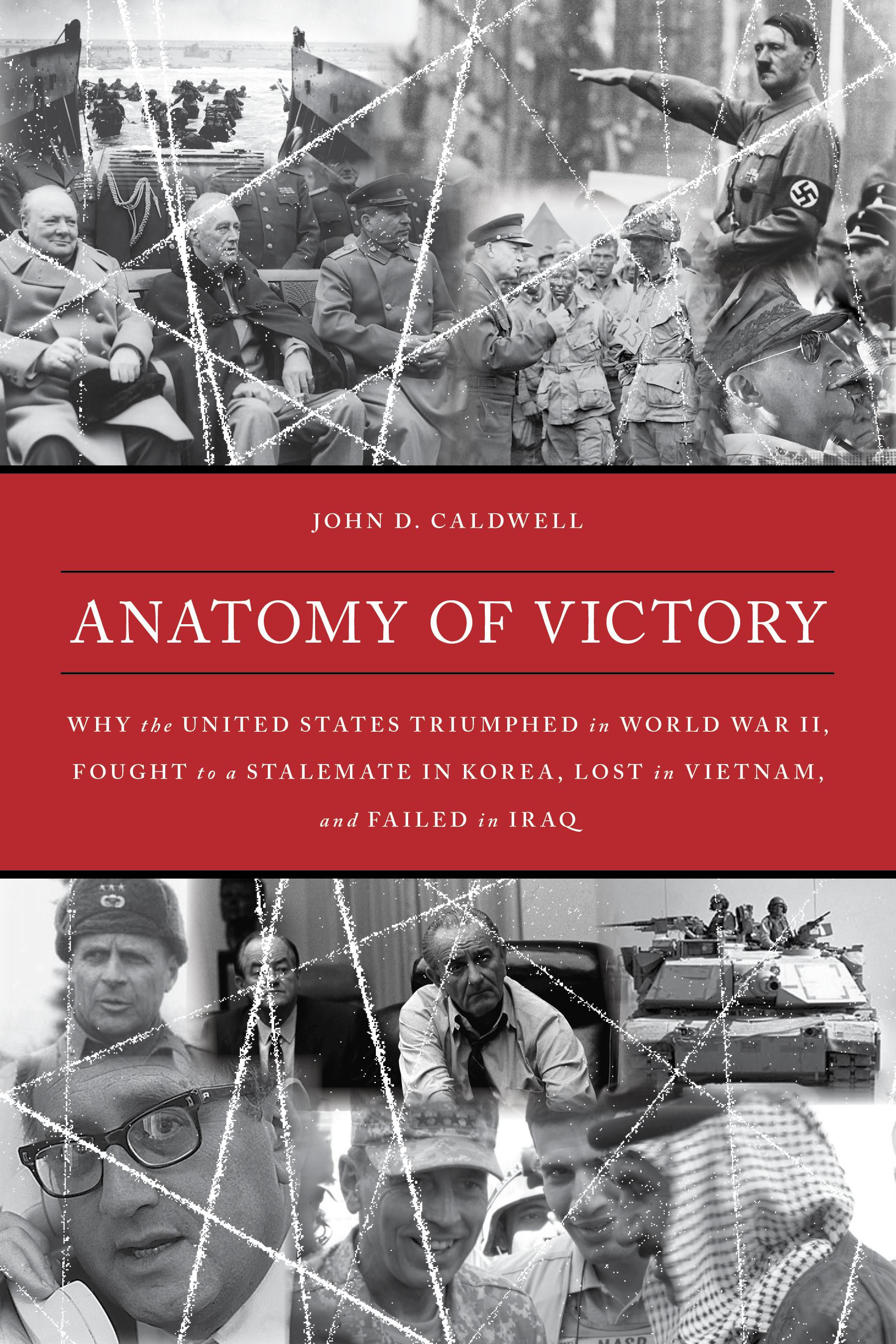
This groundbreaking book provides the first systematic comparison of America’s modern wars and why they were won or lost. John D. Caldwell uses the World War II victory as the historical benchmark for evaluating the success and failure of later conflicts. Unlike WWII, the Korean, Vietnam, and Iraqi Wars were limited, but they required enormous national commitments, produced no lasting victories, and generated bitter political controversies.
Caldwell comprehensively examines these four wars through the lens of a strategic architecture to explain how and why their outcomes were so dramatically different. He defines a strategic architecture as an interlinked set of continually evolving policies, strategies, and operations by which combatant states work toward a desired end. Policy defines the high-level goals a nation seeks to achieve once it initiates a conflict or finds itself drawn into one. Policy makers direct a broad course of action and strive to control the initiative. When they make decisions, they have to respond to unforeseen conditions to guide and determine future decisions. Effective leaders are skilled at organizing constituencies they need to succeed and communicating to them convincingly. Strategy means employing whatever resources are available to achieve policy goals in situations that are dynamic as conflicts change quickly over time. Operations are the actions that occur when politicians, soldiers, and diplomats execute plans.
A strategic architecture, Caldwell argues, is thus not a static blueprint but a dynamic vision of how a state can succeed or fail in a conflict.
Caldwell comprehensively examines these four wars through the lens of a strategic architecture to explain how and why their outcomes were so dramatically different. He defines a strategic architecture as an interlinked set of continually evolving policies, strategies, and operations by which combatant states work toward a desired end. Policy defines the high-level goals a nation seeks to achieve once it initiates a conflict or finds itself drawn into one. Policy makers direct a broad course of action and strive to control the initiative. When they make decisions, they have to respond to unforeseen conditions to guide and determine future decisions. Effective leaders are skilled at organizing constituencies they need to succeed and communicating to them convincingly. Strategy means employing whatever resources are available to achieve policy goals in situations that are dynamic as conflicts change quickly over time. Operations are the actions that occur when politicians, soldiers, and diplomats execute plans.
A strategic architecture, Caldwell argues, is thus not a static blueprint but a dynamic vision of how a state can succeed or fail in a conflict.
Betal nemt med kort, Klarna, Apple Pay eller Google Pay. Ikke tilfreds? Du har altid 14 dages fortrydelsesret. Læs mere i vores vilkår. Har du spørgsmål, så send os en mail på hello@memmo.org.
Memmo gør det nemmere at studere – uanset hvor du er i verden. Hos os samler du dine kursusbøger og smarte studieværktøjer ét sted: resuméer, quizzer, podcasts og flashcards. Og så er der Ted, din studieven, der svarer på alt, du undrer dig over. Over 50 000 studerende studerer allerede her – bygget til at hjælpe dig med at lære hurtigere og stresse mindre.