
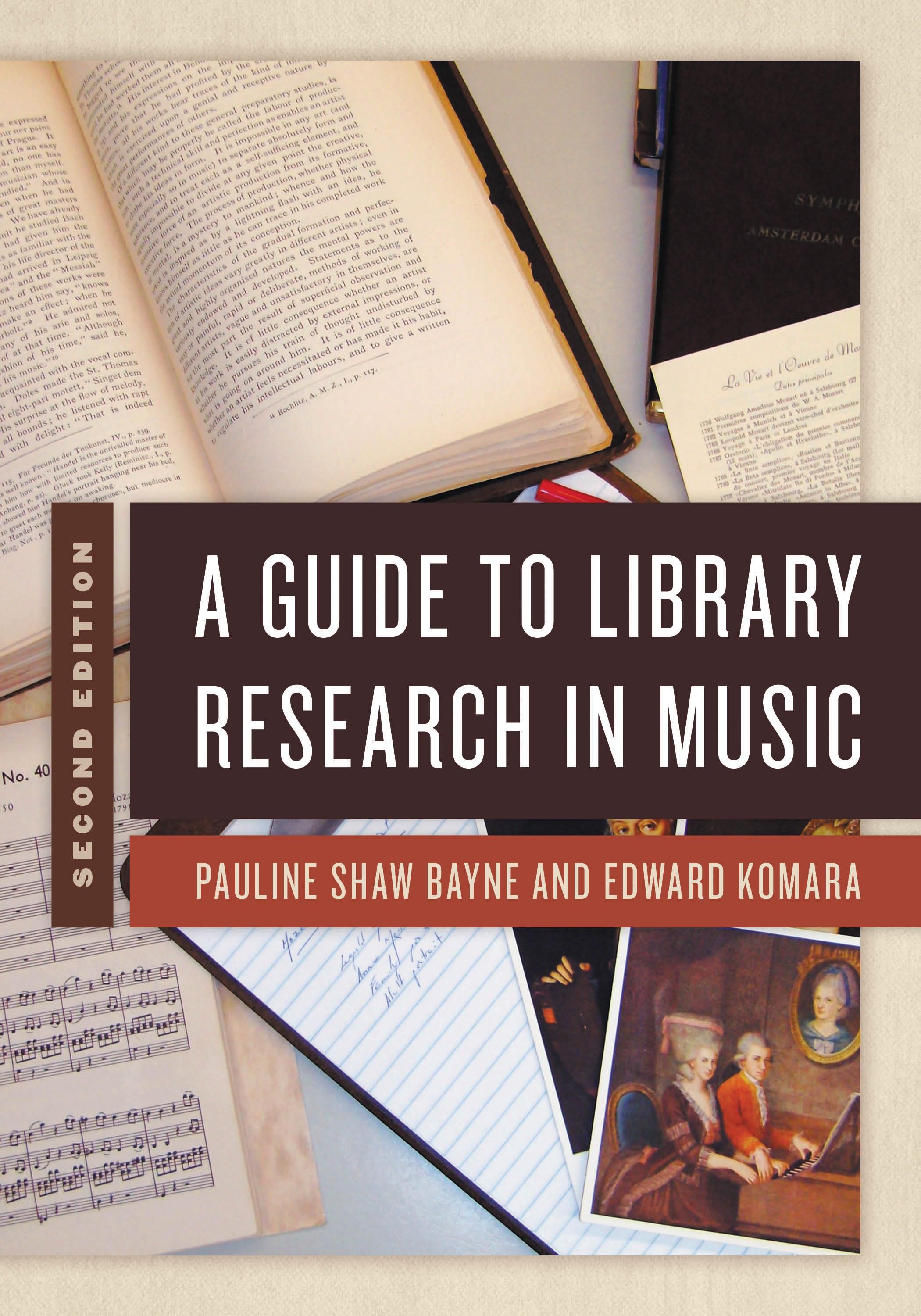
A Guide to Library Research in Music introduces students to the process and techniques for researching and writing about music. It provides examples of different types of writing, offers a thorough introduction to music literature, describes various information-searching methods and library-based organizational systems, and explores the wide array of music resources.
This second edition discusses the latest innovations in library catalog searching, new matters in digital technology, and the expansion in musical genres for library research. The book’s organization allows for three independent tracks of study.
Part 1 treats essentials of the research process, explaining starting-point resources such as library catalogs, dictionaries, and bibliographies. It addresses scholarly documentation, the use of style manuals, and basics of copyright.
Part 2 develops skills and strategies for library- and Internet-based research, describing database structures and library catalogs, subject searching in catalogs and journal indexes, keyword searching techniques, related-record searching and citation databases, and the use of experts and thematic catalogs.
Part 3 discusses the organization of a music library, emphasizing score collections, books and journals in music literature, and music teaching publications.
This second edition discusses the latest innovations in library catalog searching, new matters in digital technology, and the expansion in musical genres for library research. The book’s organization allows for three independent tracks of study.
Part 1 treats essentials of the research process, explaining starting-point resources such as library catalogs, dictionaries, and bibliographies. It addresses scholarly documentation, the use of style manuals, and basics of copyright.
Part 2 develops skills and strategies for library- and Internet-based research, describing database structures and library catalogs, subject searching in catalogs and journal indexes, keyword searching techniques, related-record searching and citation databases, and the use of experts and thematic catalogs.
Part 3 discusses the organization of a music library, emphasizing score collections, books and journals in music literature, and music teaching publications.
Betal nemt med kort, Klarna, Apple Pay eller Google Pay. Ikke tilfreds? Du har altid 14 dages fortrydelsesret. Læs mere i vores vilkår. Har du spørgsmål, så send os en mail på hello@memmo.org.
Memmo gør det nemmere at studere – uanset hvor du er i verden. Hos os samler du dine kursusbøger og smarte studieværktøjer ét sted: resuméer, quizzer, podcasts og flashcards. Og så er der Ted, din studieven, der svarer på alt, du undrer dig over. Over 50 000 studerende studerer allerede her – bygget til at hjælpe dig med at lære hurtigere og stresse mindre.