
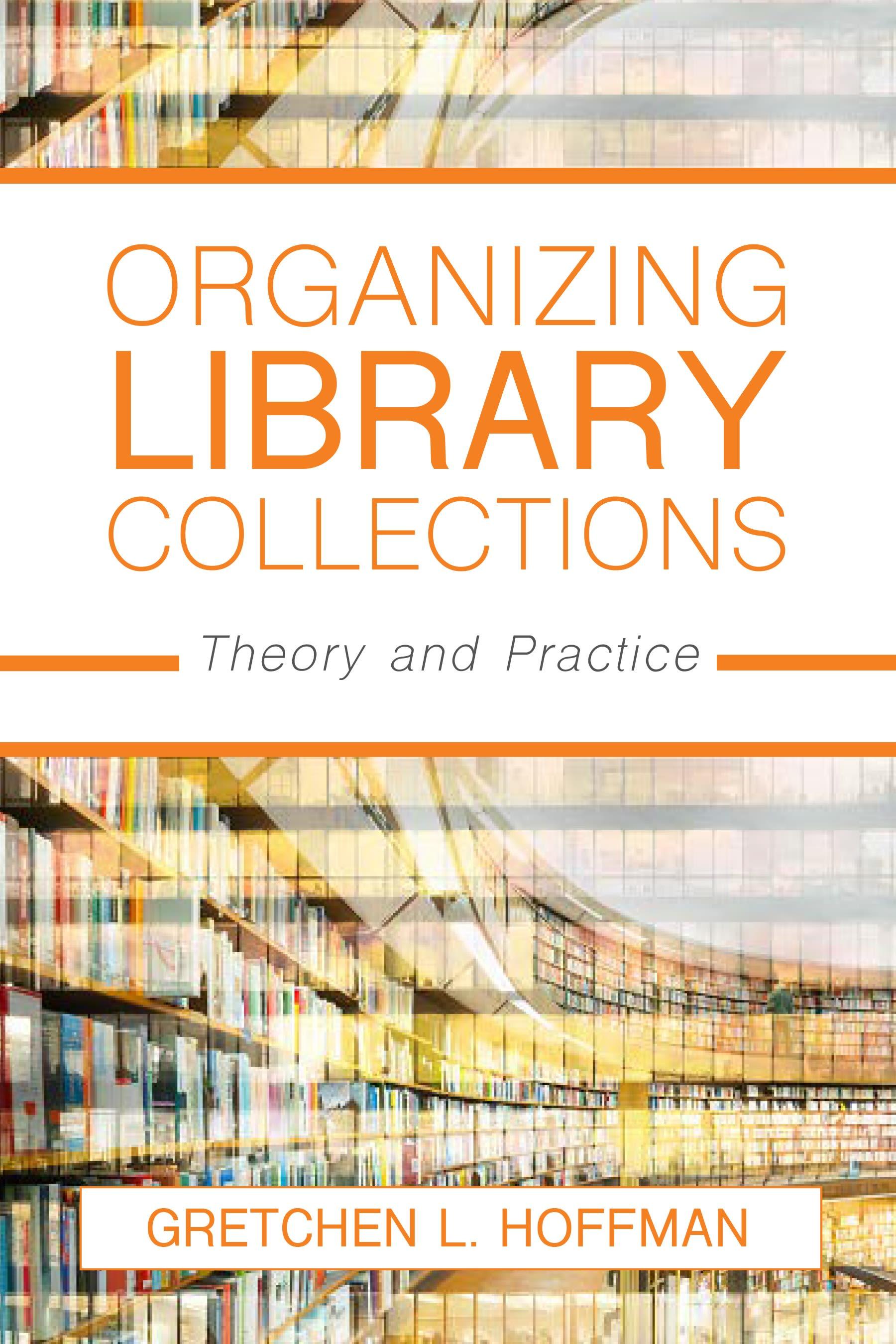
Libraries organize their collections to help library users find what they need. Organizing library collections may seem like a straightforward and streamlined process, but it can be quite complex, and there is a large body of theory and practice that shape and support this work. Learning about the organization of library collections can be challenging. Libraries have a long history of organizing their collections, there are many principles, models, standards, and tools used to organize collections, and theory and practice are changing constantly.
Written for beginning library science students, Organizing Library Collections: Theory and Practice introduces the theory and practice of organizing library collections in a clear, straightforward, and understandable way. It explains why and how libraries organize their collections, and how theory and practice work together to help library users. It introduces basic cataloging and metadata theory, describes and evaluates the major cataloging and metadata standards and tools used to organize library collections, and explains, in general, how all libraries organize their collections in practice. Yet, this book not only introduces theory and practice in general, it introduces students to a wide range of topics involved in organizing library collections. This book explores how academic, public, school, and special libraries typically organize their collections and why. It also discusses standardization and explains how cataloging and metadata standards and policies are developed. Ethical issues also are explored and ethical decision-making is addressed. In addition, several discussion questions and class activities reinforce concepts introduced in each chapter. Students should walk away from this book understanding why and how libraries organize their collections.
Written for beginning library science students, Organizing Library Collections: Theory and Practice introduces the theory and practice of organizing library collections in a clear, straightforward, and understandable way. It explains why and how libraries organize their collections, and how theory and practice work together to help library users. It introduces basic cataloging and metadata theory, describes and evaluates the major cataloging and metadata standards and tools used to organize library collections, and explains, in general, how all libraries organize their collections in practice. Yet, this book not only introduces theory and practice in general, it introduces students to a wide range of topics involved in organizing library collections. This book explores how academic, public, school, and special libraries typically organize their collections and why. It also discusses standardization and explains how cataloging and metadata standards and policies are developed. Ethical issues also are explored and ethical decision-making is addressed. In addition, several discussion questions and class activities reinforce concepts introduced in each chapter. Students should walk away from this book understanding why and how libraries organize their collections.
Betal nemt med kort, Klarna, Apple Pay eller Google Pay. Ikke tilfreds? Du har altid 14 dages fortrydelsesret. Læs mere i vores vilkår. Har du spørgsmål, så send os en mail på hello@memmo.org.
Memmo gør det nemmere at studere – uanset hvor du er i verden. Hos os samler du dine kursusbøger og smarte studieværktøjer ét sted: resuméer, quizzer, podcasts og flashcards. Og så er der Ted, din studieven, der svarer på alt, du undrer dig over. Over 50 000 studerende studerer allerede her – bygget til at hjælpe dig med at lære hurtigere og stresse mindre.