
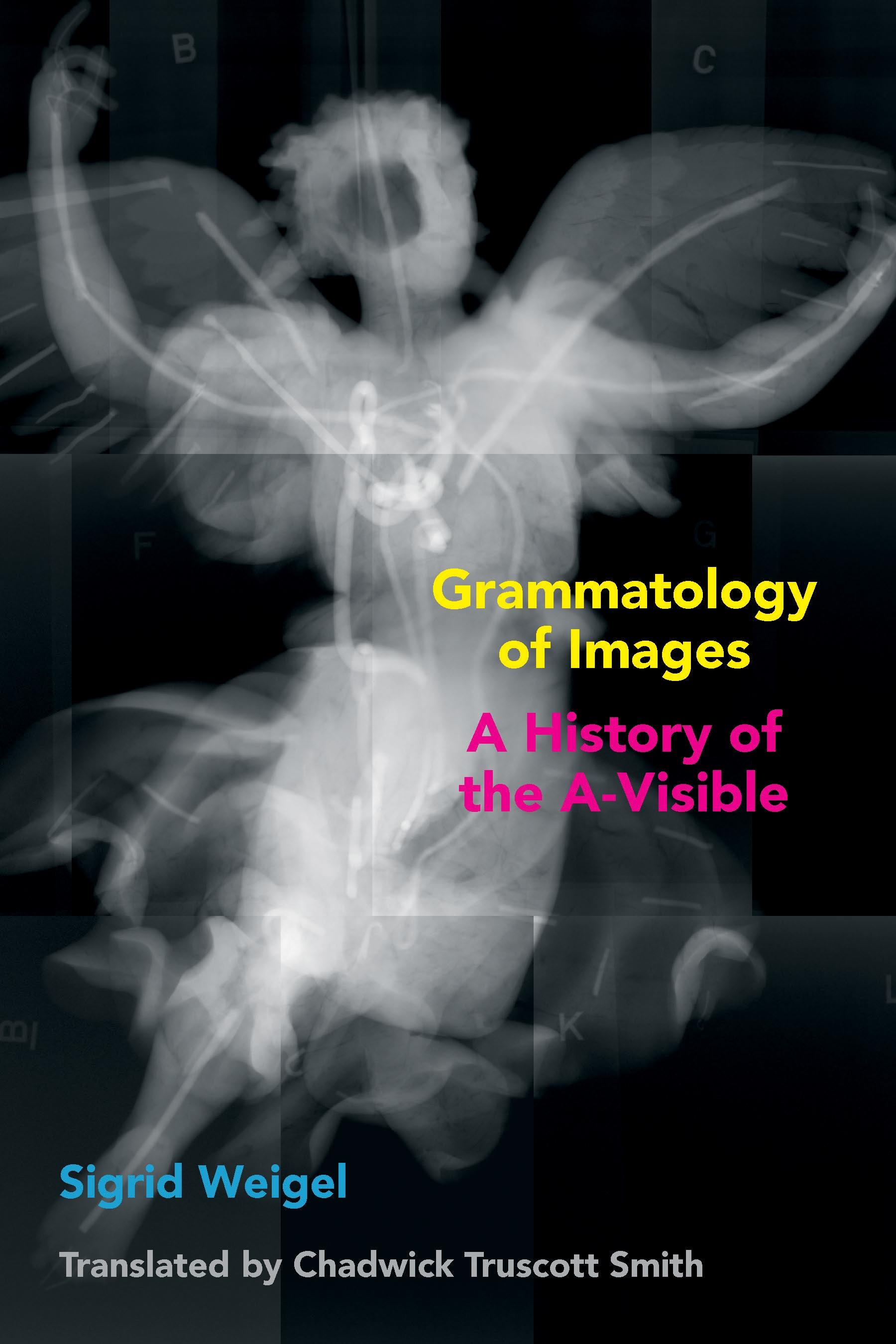
Grammatology of Images radically alters how we approach images. Instead of asking for the history, power, or essence of images, Sigrid Weigel addresses imaging as such. The book considers how something a-visible gets transformed into an image. Weigel scrutinizes the moment of mis-en-apparition, of making an appearance, and the process of concealment that accompanies any imaging.
Weigel reinterprets Derrida’s and Freud’s concept of the trace as that which must be thought before something exists. In doing so, she illuminates the threshold between traces and iconic images, between something immaterial and its pictorial representation. Chapters alternate between general accounts of the line, the index, the effigy, and the cult-image, and case studies from the history of science, art, politics, and religion, involving faces as indicators of emotion, caricatures as effigies of defamation, and angels as embodiments of transcendental ideas.
Weigel’s approach to images illuminates fascinating, unexpected correspondences between premodern and contemporary image-practices, between the history of religion and the modern sciences, and between things that are and are not understood as art.
Betal nemt med kort, Klarna, Apple Pay eller Google Pay. Ikke tilfreds? Du har altid 14 dages fortrydelsesret. Læs mere i vores vilkår. Har du spørgsmål, så send os en mail på hello@memmo.org.
Memmo gør det nemmere at studere – uanset hvor du er i verden. Hos os samler du dine kursusbøger og smarte studieværktøjer ét sted: resuméer, quizzer, podcasts og flashcards. Og så er der Ted, din studieven, der svarer på alt, du undrer dig over. Over 50 000 studerende studerer allerede her – bygget til at hjælpe dig med at lære hurtigere og stresse mindre.