
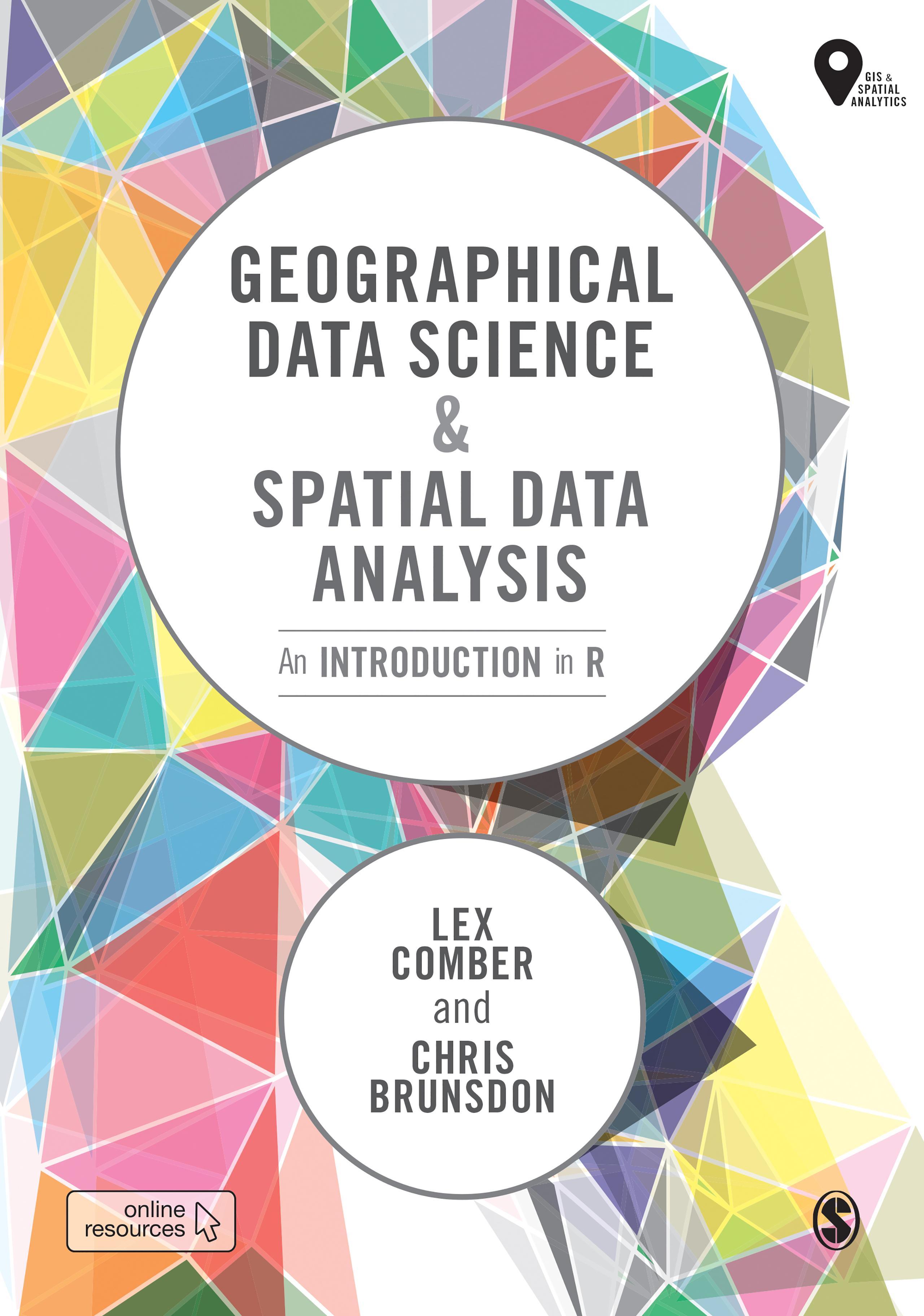
We are in an age of big data where all of our everyday interactions and transactions generate data. Much of this data is spatial – it is collected some-where – and identifying analytical insight from trends and patterns in these increasing rich digital footprints presents a number of challenges.
Whilst other books describe different flavours of Data Analytics in R and other programming languages, there are none that consider Spatial Data (i.e. the location attached to data), or that consider issues of inference, linking Big Data, Geography, GIS, Mapping and Spatial Analytics.
This is a ‘learning by doing’ textbook, building on the previous book by the same authors, An Introduction to R for Spatial Analysis and Mapping. It details the theoretical issues in analyses of Big Spatial Data and developing practical skills in the reader for addressing these with confidence.
Whilst other books describe different flavours of Data Analytics in R and other programming languages, there are none that consider Spatial Data (i.e. the location attached to data), or that consider issues of inference, linking Big Data, Geography, GIS, Mapping and Spatial Analytics.
This is a ‘learning by doing’ textbook, building on the previous book by the same authors, An Introduction to R for Spatial Analysis and Mapping. It details the theoretical issues in analyses of Big Spatial Data and developing practical skills in the reader for addressing these with confidence.
Betal nemt med kort, Klarna, Apple Pay eller Google Pay. Ikke tilfreds? Du har altid 14 dages fortrydelsesret. Læs mere i vores vilkår. Har du spørgsmål, så send os en mail på hello@memmo.org.
Memmo gør det nemmere at studere – uanset hvor du er i verden. Hos os samler du dine kursusbøger og smarte studieværktøjer ét sted: resuméer, quizzer, podcasts og flashcards. Og så er der Ted, din studieven, der svarer på alt, du undrer dig over. Over 50 000 studerende studerer allerede her – bygget til at hjælpe dig med at lære hurtigere og stresse mindre.