
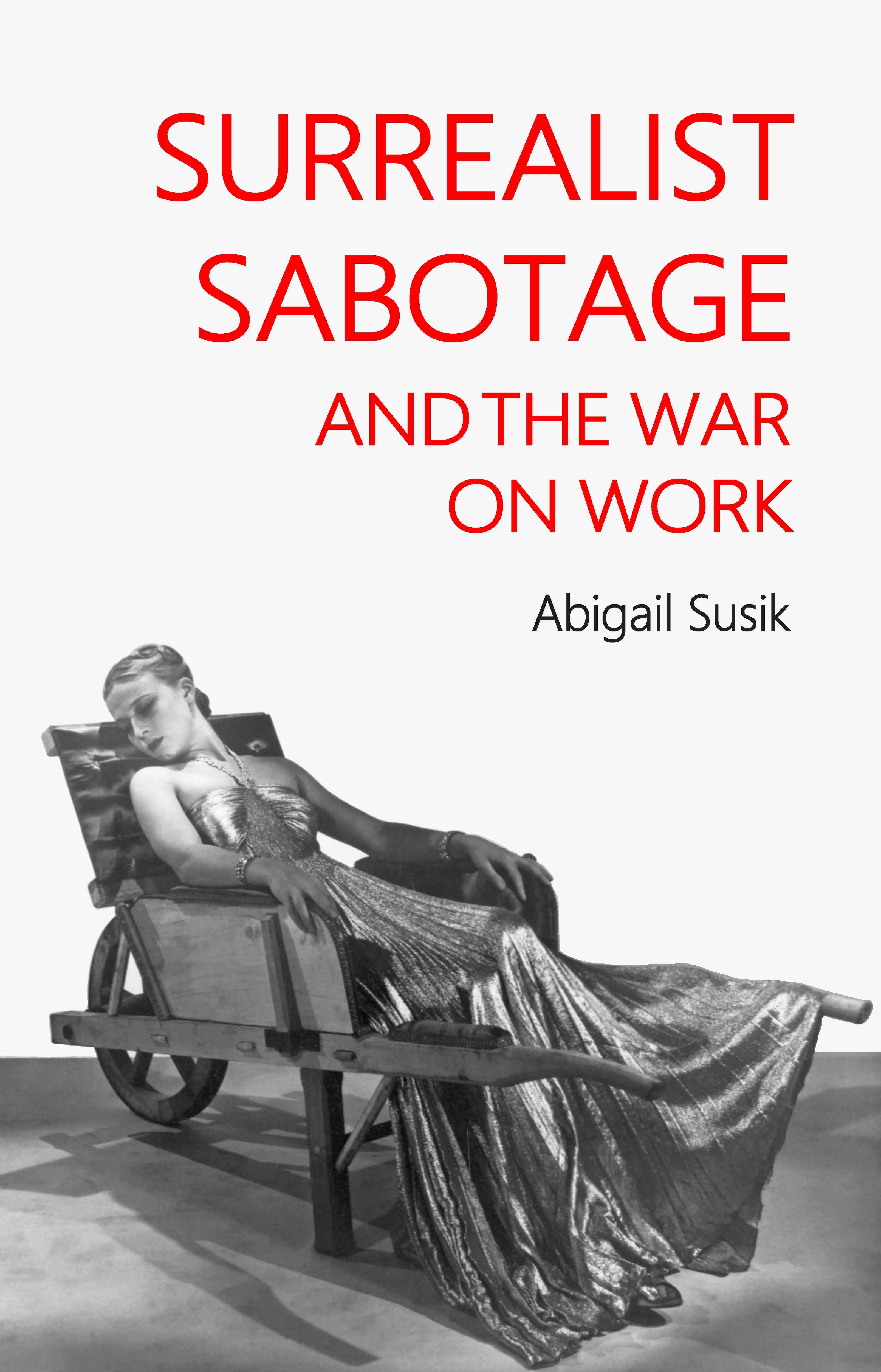
In Surrealist sabotage and the war on work, art historian Abigail Susik uncovers the expansive parameters of the international surrealist movement’s ongoing engagement with an aesthetics of sabotage between the 1920s and the 1970s, demonstrating how surrealists unceasingly sought to transform the work of art into a form of unmanageable anti-work. In four case studies devoted to surrealism’s transatlantic war on work, Susik analyses how artworks and texts by Man Ray, André Breton, Simone Breton, André Thirion, Óscar Domínguez, Konrad Klapheck, and the Chicago surrealists, among others, were pivotally impacted by the intransigent surrealist concepts of principled work refusal, permanent strike, and autonomous pleasure. Underscoring surrealism’s profound relevance for readers engaged in ongoing debates about gendered labour and the wage gap, endemic over-work and exploitation, and the vicissitudes of knowledge work and the gig economy, Surrealist sabotage and the war on work reveals that surrealism’s creative work refusal retains immense relevance in our wired world.
Betal nemt med kort, Klarna, Apple Pay eller Google Pay. Ikke tilfreds? Du har altid 14 dages fortrydelsesret. Læs mere i vores vilkår. Har du spørgsmål, så send os en mail på hello@memmo.org.
Memmo gør det nemmere at studere – uanset hvor du er i verden. Hos os samler du dine kursusbøger og smarte studieværktøjer ét sted: resuméer, quizzer, podcasts og flashcards. Og så er der Ted, din studieven, der svarer på alt, du undrer dig over. Over 50 000 studerende studerer allerede her – bygget til at hjælpe dig med at lære hurtigere og stresse mindre.
Du kan måske også lide
Køb bogen0