
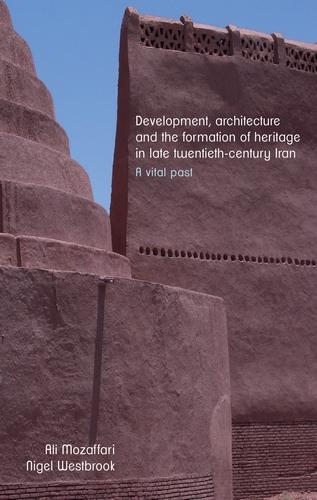
This book analyses the use of the past and the production of heritage through architectural design in the developmental context of Iran, a country that has endured radical cultural and political shifts in the past five decades. Offering a trans-disciplinary approach toward complex relationship between architecture, development, and heritage, Mozaffari and Westbrook suggest that transformations in developmental contexts like Iran must be seen in relation to global political and historical exchanges, as well as the specificities of localities.
The premise of the book is that development has been a globalizing project that originated in the West. Transposed into other contexts, this project instigates a renewed historical consciousness and imagination of the past. The authors explore the rise of this consciousness in architecture, examining the theoretical context to the debates, international exchanges made in architectural congresses in the 1970s, the use of housing as the vehicle for everyday heritage, and forms of symbolic public architecture that reflect monumental time.
Betal nemt med kort, Klarna, Apple Pay eller Google Pay. Ikke tilfreds? Du har altid 14 dages fortrydelsesret. Læs mere i vores vilkår. Har du spørgsmål, så send os en mail på hello@memmo.org.
Memmo gør det nemmere at studere – uanset hvor du er i verden. Hos os samler du dine kursusbøger og smarte studieværktøjer ét sted: resuméer, quizzer, podcasts og flashcards. Og så er der Ted, din studieven, der svarer på alt, du undrer dig over. Over 50 000 studerende studerer allerede her – bygget til at hjælpe dig med at lære hurtigere og stresse mindre.