
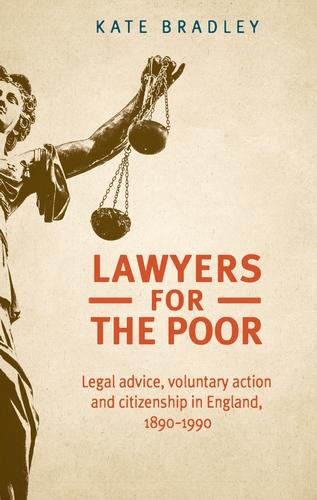
From the 1890s onwards, social reformers, volunteer lawyers, and politicians increasingly came to see access to affordable or free legal advice as a critical part of helping working-class people uphold their rights with landlords, employers, and retailers – and, from the 1940s, with the welfare state. Whilst a state scheme was launched in 1949, it was never fully implemented and help from a lawyer remained out of the reach of many people. Lawyers for the poor is the first full-length study of the development of voluntary action and mutual schemes to make the law more accessible, and the pressure put on the legal profession and governments to bring in further reforms. It offers new insights of the role of access to the law in shaping ideas about citizenship and civil rights in the twentieth century.
Betal nemt med kort, Klarna, Apple Pay eller Google Pay. Ikke tilfreds? Du har altid 14 dages fortrydelsesret. Læs mere i vores vilkår. Har du spørgsmål, så send os en mail på hello@memmo.org.
Memmo gør det nemmere at studere – uanset hvor du er i verden. Hos os samler du dine kursusbøger og smarte studieværktøjer ét sted: resuméer, quizzer, podcasts og flashcards. Og så er der Ted, din studieven, der svarer på alt, du undrer dig over. Over 50 000 studerende studerer allerede her – bygget til at hjælpe dig med at lære hurtigere og stresse mindre.
Du kan måske også lide
Køb bogen0