
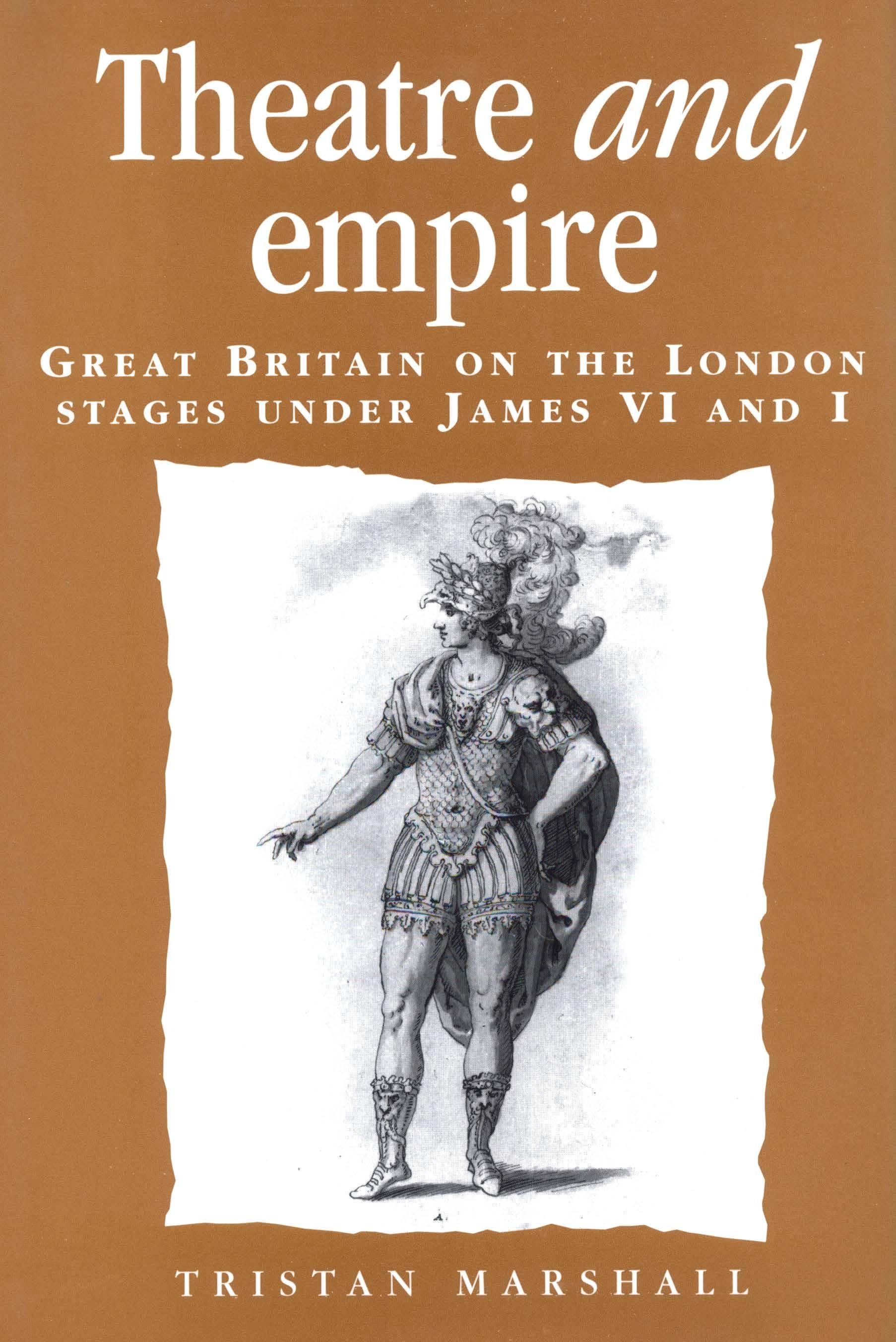
Theatre and empire looks at the genesis of British national identity in the reign of King James VI and I. While devolution is currently decentralising Britain, this book examines how the idea of a united kingdom was created in the first place. It does this by studying two things: the political language of the King's project to replace England, Scotland and Wales with a single kingdom of Great Britain; and cultural representations of empire on the public and private stages.
The book argues that between 1603 and 1625 a group of playwrights celebrated a new national consciousness in works as diverse as Middleton’s Hengist, King of Kent, Rowley’s The Birth of Merlin and Shakespeare’s Cymbeline. Specifically Jacobean interdisciplinary studies are few compared with Elizabethan and Caroline works, but the book attempts to redress the balance by offering a fresh appraisal of James Stuart’s reign. Looking at both established and little-known plays and playwrights, Theatre and empire rewrites our understanding of the political and cultural context of the Jacobean stage.
Betal nemt med kort, Klarna, Apple Pay eller Google Pay. Ikke tilfreds? Du har altid 14 dages fortrydelsesret. Læs mere i vores vilkår. Har du spørgsmål, så send os en mail på hello@memmo.org.
Memmo gør det nemmere at studere – uanset hvor du er i verden. Hos os samler du dine kursusbøger og smarte studieværktøjer ét sted: resuméer, quizzer, podcasts og flashcards. Og så er der Ted, din studieven, der svarer på alt, du undrer dig over. Over 50 000 studerende studerer allerede her – bygget til at hjælpe dig med at lære hurtigere og stresse mindre.