
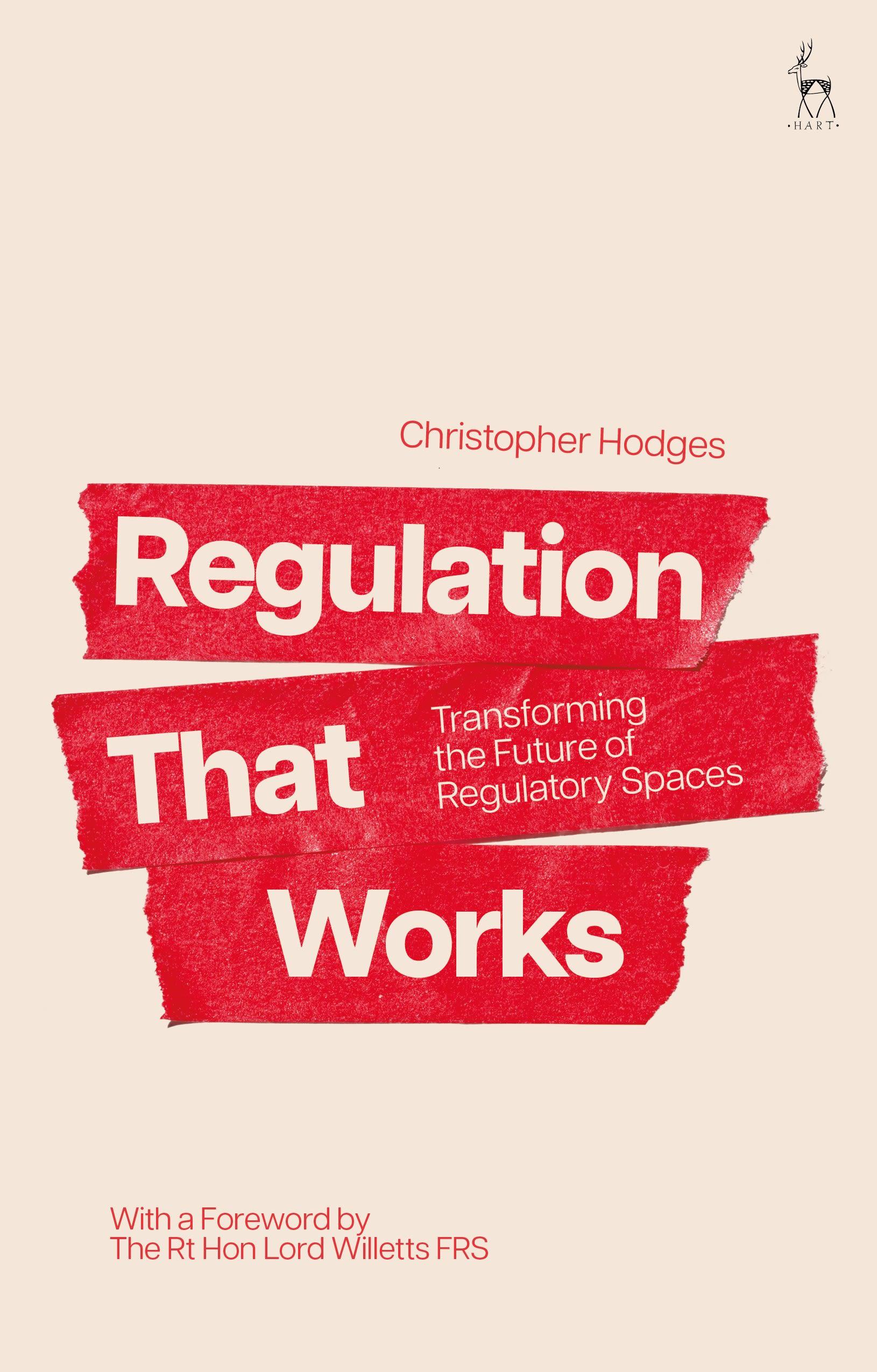
This book explains what regulation is – and is not.
It clarifies how regulation actually works, and how it can be made better. It also sets out how regulation should be done given fundamental challenges and changes to how we have done it. What is regulation trying to achieve? Is there too much red tape? Does regulation impede growth and innovation? Does regulation provide protection, and stability, and fair behaviours? Is it effective? How do we know if it succeeds?
The book illustrates competing regulatory models, and how multiple tools work – but also how things need to work differently in the future.
Given the pace of change in new technologies, creating unknown and uncontrollable risks, and the global nature of these technologies, we can only keep ourselves safe if we modernise how we 'do' regulation and work in collaborative ecosystems in which everyone works together to identify and control new harms. We should be aiming to achieve multiple outcomes, including protection as well as fair markets, facilitating innovation, and economic growth and social cohesion.
The book elucidates how this is all possible – if we organise ourselves and behave in new ways. Examples show sectors where all of this is already being applied – in Australia, Canada, New Zealand, and the UK.
This is a revolutionary book, and a must-read for anyone who wants to effect change in their regulatory spaces.
It clarifies how regulation actually works, and how it can be made better. It also sets out how regulation should be done given fundamental challenges and changes to how we have done it. What is regulation trying to achieve? Is there too much red tape? Does regulation impede growth and innovation? Does regulation provide protection, and stability, and fair behaviours? Is it effective? How do we know if it succeeds?
The book illustrates competing regulatory models, and how multiple tools work – but also how things need to work differently in the future.
Given the pace of change in new technologies, creating unknown and uncontrollable risks, and the global nature of these technologies, we can only keep ourselves safe if we modernise how we 'do' regulation and work in collaborative ecosystems in which everyone works together to identify and control new harms. We should be aiming to achieve multiple outcomes, including protection as well as fair markets, facilitating innovation, and economic growth and social cohesion.
The book elucidates how this is all possible – if we organise ourselves and behave in new ways. Examples show sectors where all of this is already being applied – in Australia, Canada, New Zealand, and the UK.
This is a revolutionary book, and a must-read for anyone who wants to effect change in their regulatory spaces.
Betal nemt med kort, Klarna, Apple Pay eller Google Pay. Ikke tilfreds? Du har altid 14 dages fortrydelsesret. Læs mere i vores vilkår. Har du spørgsmål, så send os en mail på hello@memmo.org.
Memmo gør det nemmere at studere – uanset hvor du er i verden. Hos os samler du dine kursusbøger og smarte studieværktøjer ét sted: resuméer, quizzer, podcasts og flashcards. Og så er der Ted, din studieven, der svarer på alt, du undrer dig over. Over 50 000 studerende studerer allerede her – bygget til at hjælpe dig med at lære hurtigere og stresse mindre.