
“It adopts a useful, modern approach to teaching the young generation of lawyers how to deal with the increasing internationalisation of law.” - Uniform Law Review/Revue de Droit Uniforme (review of the 1st edition)
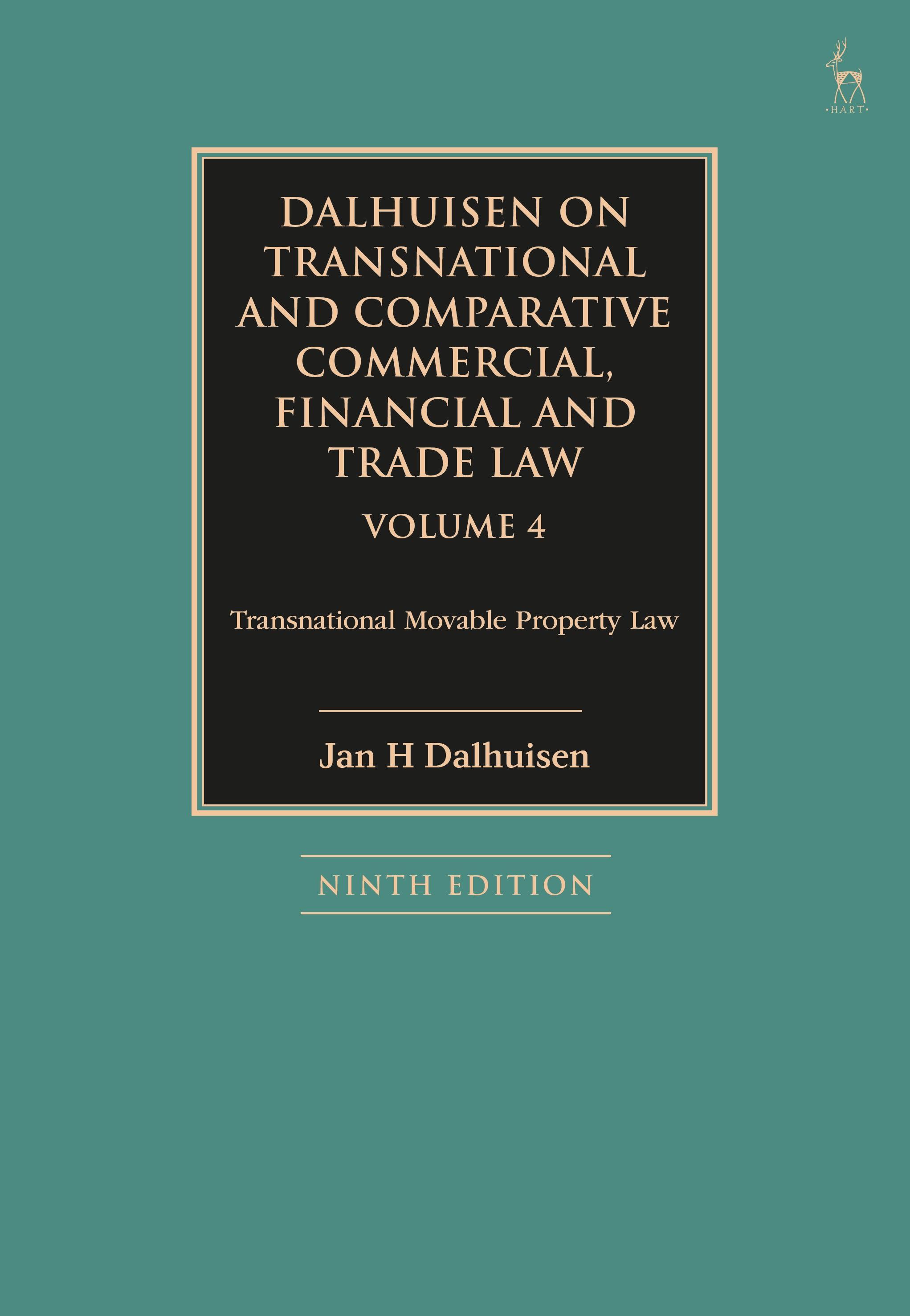
Volume 4 of this new edition deals with movable and intangible property law. The book addresses the transformation of the models of movable property in commercial and financial transactions between professionals in the international flow of goods, services, money, information, and technology. In this transnational legal order, the emphasis on the new law merchant or modern lex mercatoria of movable property turns to risk management, asset liquidity, and transactional and payment finality.
Particular attention is given to the notion of assets and asset classes, the inclusion of monetary claims, the transformation of assets in production and distribution chains, and the type of user, income and enjoyment rights that can be established in them, when they become proprietary, what that means, the role of party autonomy in the creation and operation of these rights, and how they are handled between professional participants and upon a sale to consumers.
The volume compares common law and civil law concepts - the one being geared to improving value, the other to consumption. It then identifies their relevance especially in modern finance, and concludes by indicating future directions.
This magisterial work is made up of 6 volumes. Used independently, each volume allows the reader to delve into a particular topic. Alternatively, all volumes can be read together for a comprehensive overview of transnational comparative commercial, financial and trade law.
Volume 4 of this new edition deals with movable and intangible property law. The book addresses the transformation of the models of movable property in commercial and financial transactions between professionals in the international flow of goods, services, money, information, and technology. In this transnational legal order, the emphasis on the new law merchant or modern lex mercatoria of movable property turns to risk management, asset liquidity, and transactional and payment finality.
Particular attention is given to the notion of assets and asset classes, the inclusion of monetary claims, the transformation of assets in production and distribution chains, and the type of user, income and enjoyment rights that can be established in them, when they become proprietary, what that means, the role of party autonomy in the creation and operation of these rights, and how they are handled between professional participants and upon a sale to consumers.
The volume compares common law and civil law concepts - the one being geared to improving value, the other to consumption. It then identifies their relevance especially in modern finance, and concludes by indicating future directions.
This magisterial work is made up of 6 volumes. Used independently, each volume allows the reader to delve into a particular topic. Alternatively, all volumes can be read together for a comprehensive overview of transnational comparative commercial, financial and trade law.
Betal nemt med kort, Klarna, Apple Pay eller Google Pay. Ikke tilfreds? Du har altid 14 dages fortrydelsesret. Læs mere i vores vilkår. Har du spørgsmål, så send os en mail på hello@memmo.org.
Memmo gør det nemmere at studere – uanset hvor du er i verden. Hos os samler du dine kursusbøger og smarte studieværktøjer ét sted: resuméer, quizzer, podcasts og flashcards. Og så er der Ted, din studieven, der svarer på alt, du undrer dig over. Over 50 000 studerende studerer allerede her – bygget til at hjælpe dig med at lære hurtigere og stresse mindre.