
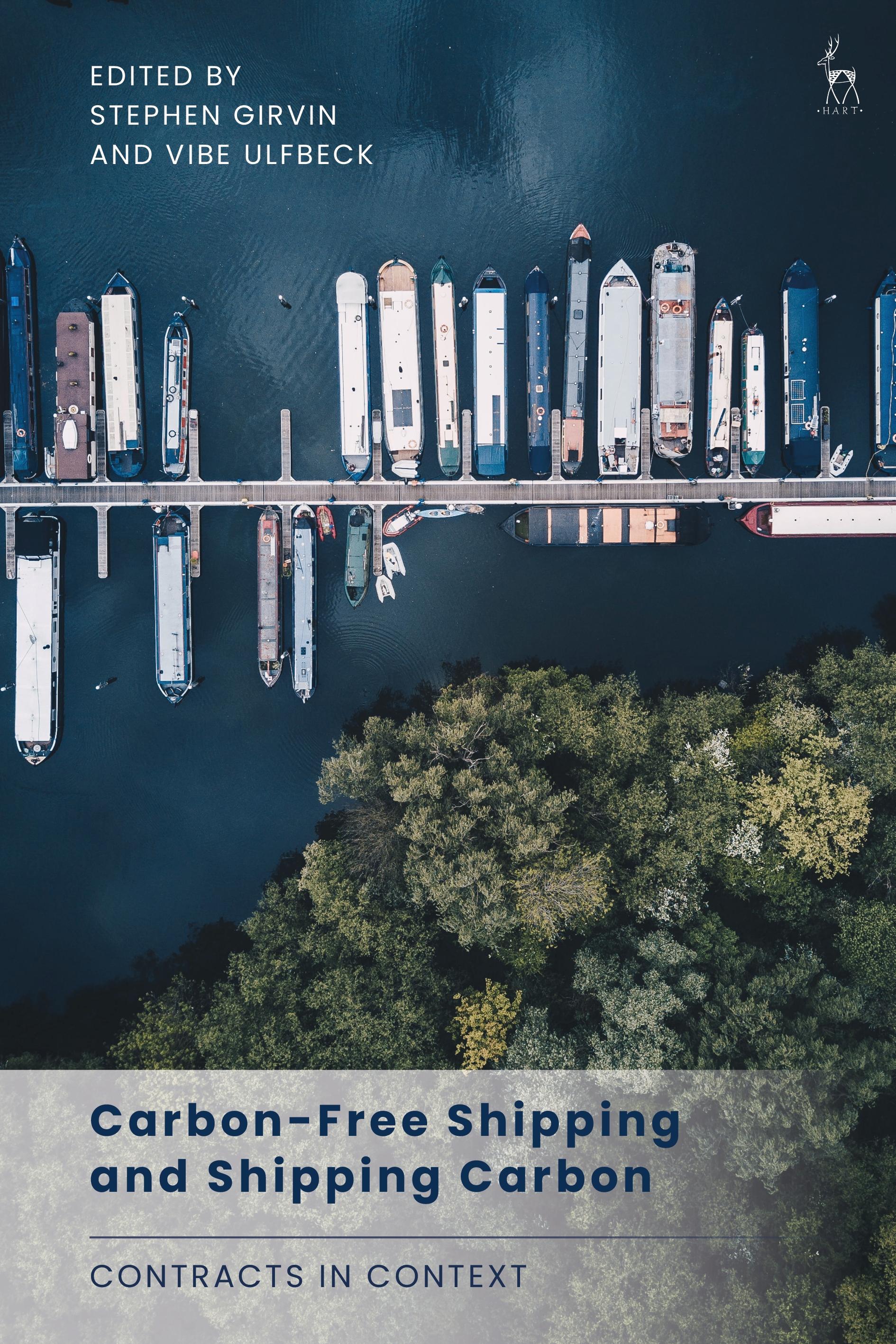
This book explores the private law implementation of the new international and EU regulatory framework targeting decarbonisation in the shipping industry.
Compared with other sectors, the shipping industry has traditionally been labelled a 'slow mover' concerning the sustainability agenda. However, new regulatory measures on carbon reduction both internationally and in the EU require fundamentally new developments in the industry. This book focuses on the goal of carbon reduction from a private law perspective and considers how the new regulatory framework can be implemented in the shipping industry.
This book studies existing contractual provisions in charterparties and bills of lading alongside new contractual model clauses designed to facilitate carbon reduction. It considers how the new clauses should be interpreted, whether they will transform traditional shipping contracts into more collaborative contracts, and how they will interact with other clauses in the contract and with other contracts in the supply chain. The contractual analysis is considered in context, reflecting on enforcement issues, such as Port State Control (PSC), the Poseidon Principles, and climate change litigation. The book also analyses the related topic of shipping contracts for carbon storage as a necessary means of meeting carbon reduction targets.
The book is intended to pave the way for understanding how core shipping contracts can work in this new context and the extent to which the new types of clauses will profoundly transform contracts.
It presents contributions by experienced and younger academics and practitioners from Asian, European and Scandinavian legal systems.
Compared with other sectors, the shipping industry has traditionally been labelled a 'slow mover' concerning the sustainability agenda. However, new regulatory measures on carbon reduction both internationally and in the EU require fundamentally new developments in the industry. This book focuses on the goal of carbon reduction from a private law perspective and considers how the new regulatory framework can be implemented in the shipping industry.
This book studies existing contractual provisions in charterparties and bills of lading alongside new contractual model clauses designed to facilitate carbon reduction. It considers how the new clauses should be interpreted, whether they will transform traditional shipping contracts into more collaborative contracts, and how they will interact with other clauses in the contract and with other contracts in the supply chain. The contractual analysis is considered in context, reflecting on enforcement issues, such as Port State Control (PSC), the Poseidon Principles, and climate change litigation. The book also analyses the related topic of shipping contracts for carbon storage as a necessary means of meeting carbon reduction targets.
The book is intended to pave the way for understanding how core shipping contracts can work in this new context and the extent to which the new types of clauses will profoundly transform contracts.
It presents contributions by experienced and younger academics and practitioners from Asian, European and Scandinavian legal systems.
Betal nemt med kort, Klarna, Apple Pay eller Google Pay. Ikke tilfreds? Du har altid 14 dages fortrydelsesret. Læs mere i vores vilkår. Har du spørgsmål, så send os en mail på hello@memmo.org.
Memmo gør det nemmere at studere – uanset hvor du er i verden. Hos os samler du dine kursusbøger og smarte studieværktøjer ét sted: resuméer, quizzer, podcasts og flashcards. Og så er der Ted, din studieven, der svarer på alt, du undrer dig over. Over 50 000 studerende studerer allerede her – bygget til at hjælpe dig med at lære hurtigere og stresse mindre.