
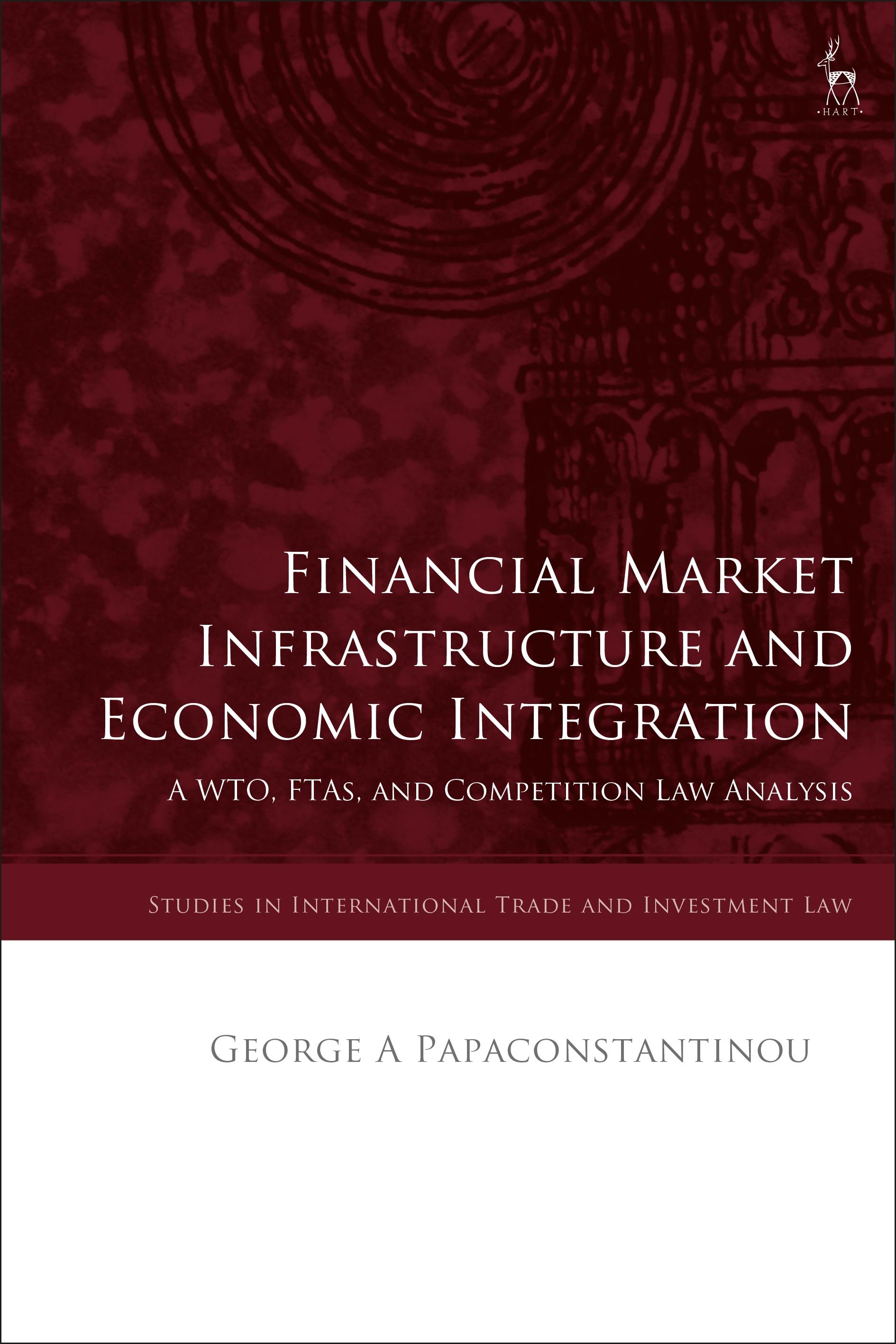
This book is the first comprehensive study of the interplay between the cutting-edge regulation of financial infrastructure and international economic integration. It tackles a series of important questions: How does the regulation of central counterparties interact with international economic law? Is the WTO able to deal with the regulatory diversity of each country's financial rulebook? Do FTAs foster deeper integration of financial infrastructure services? Can competition law effectively tackle monopolisation and anti-competitive conduct in financial infrastructure?
The book discusses how the liberalisation of financial market infrastructure is achieved within the most prominent international economic integration settings: the WTO, Economic Integration Agreements, and EU competition law. It explores whether a more harmonious relationship between financial regulation and economic integration is feasible, and how it can be achieved. The book demonstrates the existence of both structural barriers to trade and trade-facilitating tools that can impede and foster the further integration of financial market infrastructure. Measuring the depth of liberalisation of financial market infrastructure services in more than 120 FTAs, as well as surveying recent case law of the WTO, the Court of Justice of the European Union, and the practice of the European Commission, the book shows how the economic integration of financial market infrastructure occurs.
An essential read for those seeking to understand how the cutting-edge regulation of financial market infrastructure and transnational systems of economic integration interact with one another.
The book discusses how the liberalisation of financial market infrastructure is achieved within the most prominent international economic integration settings: the WTO, Economic Integration Agreements, and EU competition law. It explores whether a more harmonious relationship between financial regulation and economic integration is feasible, and how it can be achieved. The book demonstrates the existence of both structural barriers to trade and trade-facilitating tools that can impede and foster the further integration of financial market infrastructure. Measuring the depth of liberalisation of financial market infrastructure services in more than 120 FTAs, as well as surveying recent case law of the WTO, the Court of Justice of the European Union, and the practice of the European Commission, the book shows how the economic integration of financial market infrastructure occurs.
An essential read for those seeking to understand how the cutting-edge regulation of financial market infrastructure and transnational systems of economic integration interact with one another.
Betal nemt med kort, Klarna, Apple Pay eller Google Pay. Ikke tilfreds? Du har altid 14 dages fortrydelsesret. Læs mere i vores vilkår. Har du spørgsmål, så send os en mail på hello@memmo.org.
Memmo gør det nemmere at studere – uanset hvor du er i verden. Hos os samler du dine kursusbøger og smarte studieværktøjer ét sted: resuméer, quizzer, podcasts og flashcards. Og så er der Ted, din studieven, der svarer på alt, du undrer dig over. Over 50 000 studerende studerer allerede her – bygget til at hjælpe dig med at lære hurtigere og stresse mindre.