
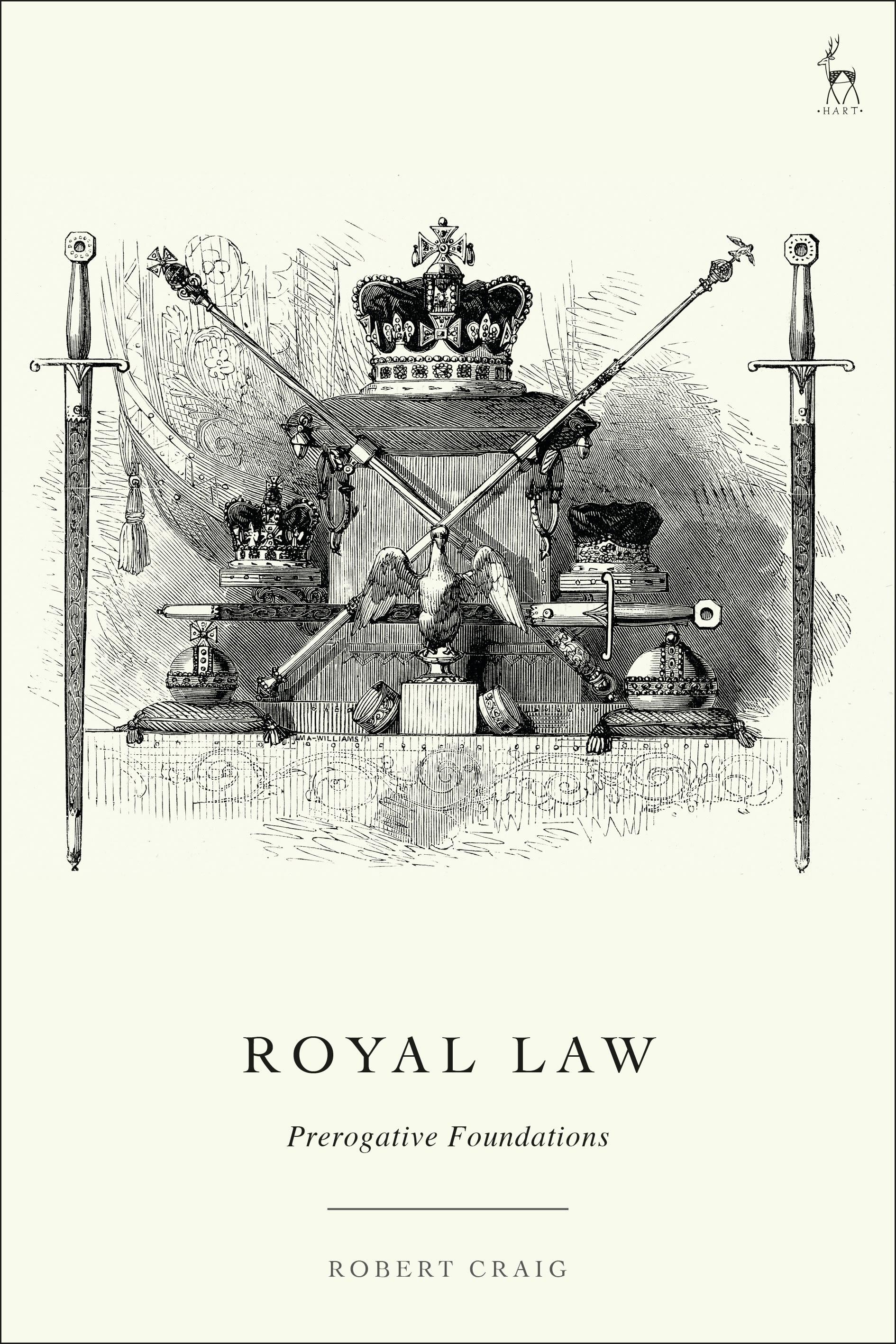
This book argues that prerogative powers encompass all the non-statutory powers of the Crown. Hence the Crown has no 'third source' powers, common law powers or 'Ram doctrine' style freedoms.
Royal Law builds on Dicey's definition of the prerogative, arguing that it comprises all residual non-statutory rights, powers, duties, and immunities historically ascribed to the Crown. However, it contends that Blackstone's alternative definition, that prerogative powers are only those powers exclusive to the Crown, is also correct. The book explains how Dicey and Blackstone can be reconciled.
The prerogative of justice is suggested as the original source of legal authority and legitimacy of common law judicial decisions. Common law is, or was, royal law. Defined as a putative non-statutory, non-prerogative third source of judicial legitimacy, authority or jurisdiction, 'common law' does not exist. There are only two ultimate sources of jurisdictional authority: statute and prerogative.
The book further argues that Wade was mistaken to contend that the Crown has 'common law powers'. It also has no 'third source freedoms', as suggested by Harris, or in the 'Ram Doctrine'. The book therefore reframes the relevant case law as examples of judicial regulation of prerogative powers, crucially including the largely-forgotten prerogative power to administer the realm. Hence the book concludes that legal powers such as a minister's power to enter contracts or make ex gratia payments of public money, are directly or indirectly grounded in prerogative power.
Royal Law builds on Dicey's definition of the prerogative, arguing that it comprises all residual non-statutory rights, powers, duties, and immunities historically ascribed to the Crown. However, it contends that Blackstone's alternative definition, that prerogative powers are only those powers exclusive to the Crown, is also correct. The book explains how Dicey and Blackstone can be reconciled.
The prerogative of justice is suggested as the original source of legal authority and legitimacy of common law judicial decisions. Common law is, or was, royal law. Defined as a putative non-statutory, non-prerogative third source of judicial legitimacy, authority or jurisdiction, 'common law' does not exist. There are only two ultimate sources of jurisdictional authority: statute and prerogative.
The book further argues that Wade was mistaken to contend that the Crown has 'common law powers'. It also has no 'third source freedoms', as suggested by Harris, or in the 'Ram Doctrine'. The book therefore reframes the relevant case law as examples of judicial regulation of prerogative powers, crucially including the largely-forgotten prerogative power to administer the realm. Hence the book concludes that legal powers such as a minister's power to enter contracts or make ex gratia payments of public money, are directly or indirectly grounded in prerogative power.
Sider: 288
Kategori: Religion & Teologi
e-ISBN: 9781509965960
Forsendelsesvægt: 1.2 kg
Sendes inden for: 1-2 dage
Betal nemt med kort, Klarna, Apple Pay eller Google Pay. Ikke tilfreds? Du har altid 14 dages fortrydelsesret. Læs mere i vores vilkår. Har du spørgsmål, så send os en mail på hello@memmo.org.
Memmo gør det nemmere at studere – uanset hvor du er i verden. Hos os samler du dine kursusbøger og smarte studieværktøjer ét sted: resuméer, quizzer, podcasts og flashcards. Og så er der Ted, din studieven, der svarer på alt, du undrer dig over. Over 50 000 studerende studerer allerede her – bygget til at hjælpe dig med at lære hurtigere og stresse mindre.