
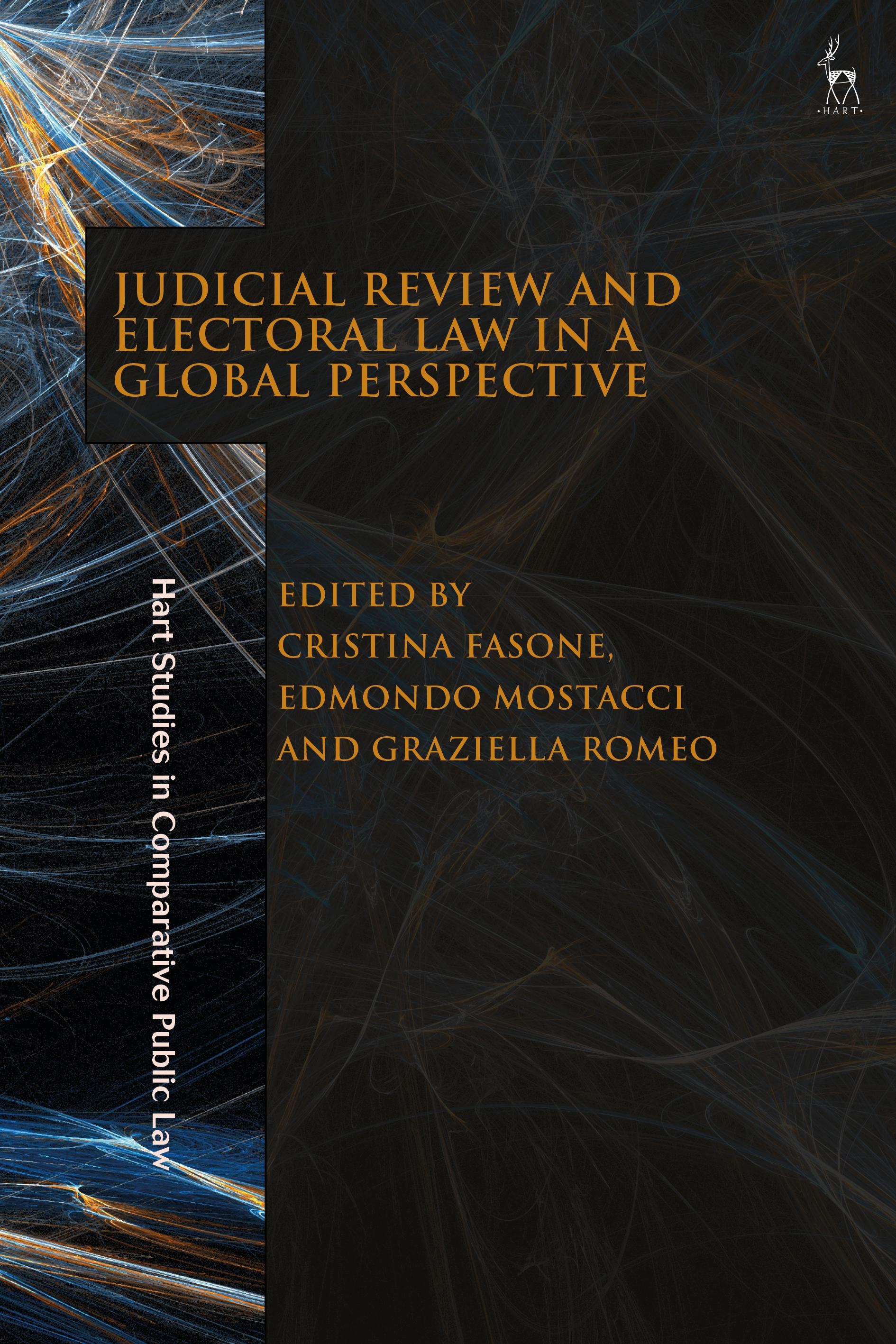
This book fills a gap in constitutional law by examining the global trend towards the substantive constitutional adjudication of electoral legislation. It explores the premises on which this judicial scrutiny is grounded, seeks to explain the trend, and examines its consequences for representative democracy.
The book offers a comparative analysis of the issue, investigating how the exchange of models and arguments among judges has catalysed the progressive departure from a traditionally deferential approach to electoral norms-an approach that still persists in a few jurisdictions.
To accomplish this, the book delves into the democratic foundations of electoral systems and their evolution. It also explores the methodological choices that constitutional judges face when dealing with electoral legislation. This groundwork sets the stage for an in-depth review of case law in more than fifteen legal systems spanning North and South America, Africa, Asia, Oceania, and Europe. The objective is to identify the underlying concept of democracy that courts aim to promote. The authors critically discuss the varying ideas of democracy evident in each jurisdiction, including the use of constitutional borrowing, and they analyse the effects of judgments on the relationship between courts, representative institutions, and voters.
Given its global scope, the combination of theoretical and practical approaches, and the comprehensive comparative assessment it provides, this work is of interest to academics in the fields of law, political science, and philosophy. It is also relevant for policymakers and judges in constitutional democracies across continents.
The book offers a comparative analysis of the issue, investigating how the exchange of models and arguments among judges has catalysed the progressive departure from a traditionally deferential approach to electoral norms-an approach that still persists in a few jurisdictions.
To accomplish this, the book delves into the democratic foundations of electoral systems and their evolution. It also explores the methodological choices that constitutional judges face when dealing with electoral legislation. This groundwork sets the stage for an in-depth review of case law in more than fifteen legal systems spanning North and South America, Africa, Asia, Oceania, and Europe. The objective is to identify the underlying concept of democracy that courts aim to promote. The authors critically discuss the varying ideas of democracy evident in each jurisdiction, including the use of constitutional borrowing, and they analyse the effects of judgments on the relationship between courts, representative institutions, and voters.
Given its global scope, the combination of theoretical and practical approaches, and the comprehensive comparative assessment it provides, this work is of interest to academics in the fields of law, political science, and philosophy. It is also relevant for policymakers and judges in constitutional democracies across continents.
Betal nemt med kort, Klarna, Apple Pay eller Google Pay. Ikke tilfreds? Du har altid 14 dages fortrydelsesret. Læs mere i vores vilkår. Har du spørgsmål, så send os en mail på hello@memmo.org.
Memmo gør det nemmere at studere – uanset hvor du er i verden. Hos os samler du dine kursusbøger og smarte studieværktøjer ét sted: resuméer, quizzer, podcasts og flashcards. Og så er der Ted, din studieven, der svarer på alt, du undrer dig over. Over 50 000 studerende studerer allerede her – bygget til at hjælpe dig med at lære hurtigere og stresse mindre.