
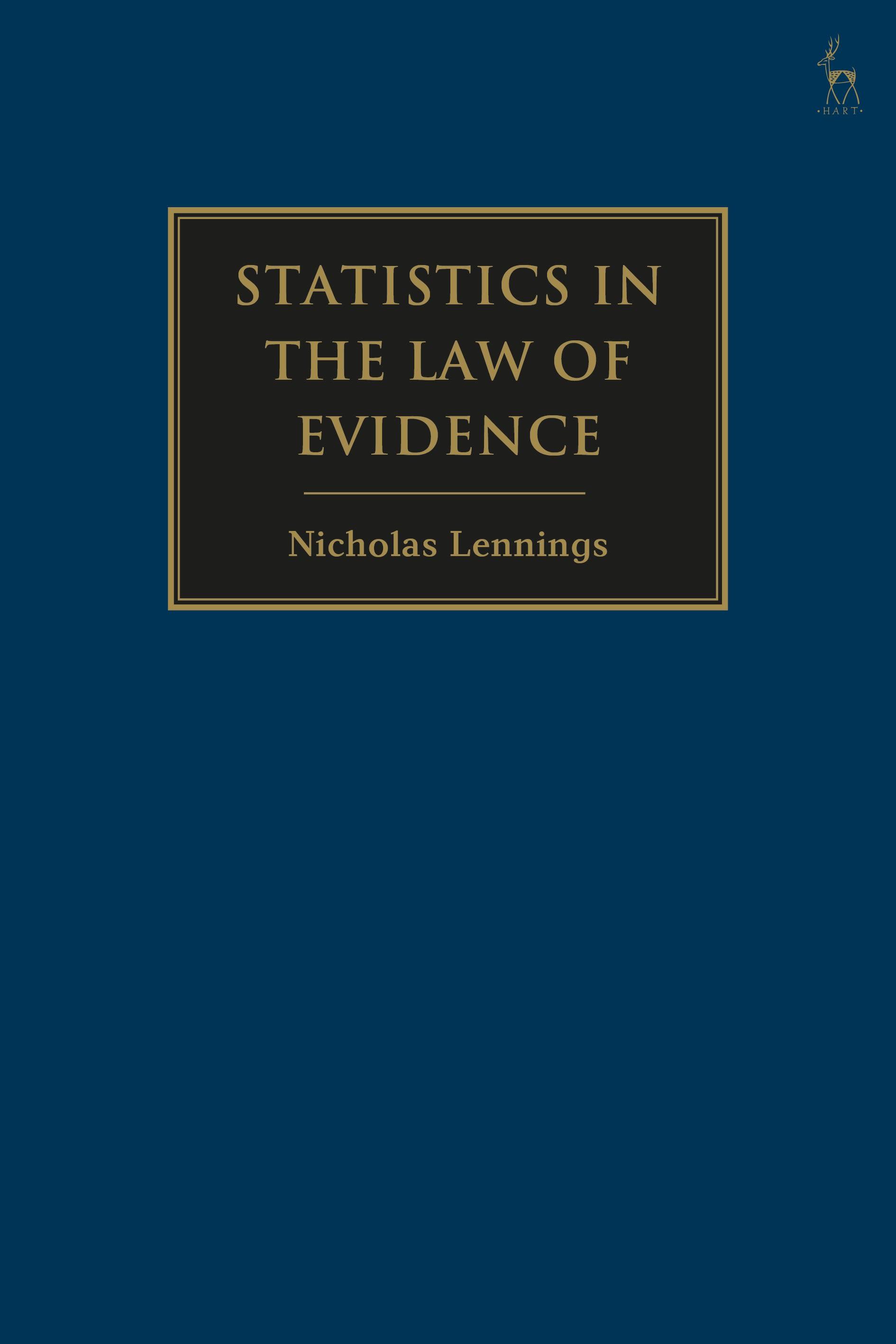
This book evaluates the role played by statistical evidence in litigation. Despite the increasing prevalence of statistical evidence in modern litigation, how such evidence should be admitted and used by courts is often inconsistent and widely criticised. Accepting that statistical evidence can lead to more accurate decisions, the book proposes criteria that could allow courts to decide that statistical evidence is good for fact-finding.
The many and varied scholarly debates regarding statistical evidence have by and large avoided judicial attention. Unlike previous works, this book contextualises those debates in the language and practice of evidence law, focusing principally on Australia, as well as the UK and the USA.
It does so by identifying that the controversy around statistical evidence follows the three-tiered statistical syllogism underlying statistical inference: first, whether statistical evidence is capable of establishing an association between phenomena in a state of nature; second, inferring that phenomena to an individual from the general association; and third, whether statistical evidence can be sufficient for proof of contested facts. Objections are said to arise at each level of this syllogism and, by mapping these objections onto evidence law, the book argues that a pathway for the judicial evaluation of statistical evidence can be constructed.
The many and varied scholarly debates regarding statistical evidence have by and large avoided judicial attention. Unlike previous works, this book contextualises those debates in the language and practice of evidence law, focusing principally on Australia, as well as the UK and the USA.
It does so by identifying that the controversy around statistical evidence follows the three-tiered statistical syllogism underlying statistical inference: first, whether statistical evidence is capable of establishing an association between phenomena in a state of nature; second, inferring that phenomena to an individual from the general association; and third, whether statistical evidence can be sufficient for proof of contested facts. Objections are said to arise at each level of this syllogism and, by mapping these objections onto evidence law, the book argues that a pathway for the judicial evaluation of statistical evidence can be constructed.
Betal nemt med kort, Klarna, Apple Pay eller Google Pay. Ikke tilfreds? Du har altid 14 dages fortrydelsesret. Læs mere i vores vilkår. Har du spørgsmål, så send os en mail på hello@memmo.org.
Memmo gør det nemmere at studere – uanset hvor du er i verden. Hos os samler du dine kursusbøger og smarte studieværktøjer ét sted: resuméer, quizzer, podcasts og flashcards. Og så er der Ted, din studieven, der svarer på alt, du undrer dig over. Over 50 000 studerende studerer allerede her – bygget til at hjælpe dig med at lære hurtigere og stresse mindre.